
Mechanical Recycled rPET Resin vs Virgin PET: Benefits, Applications, and Costs
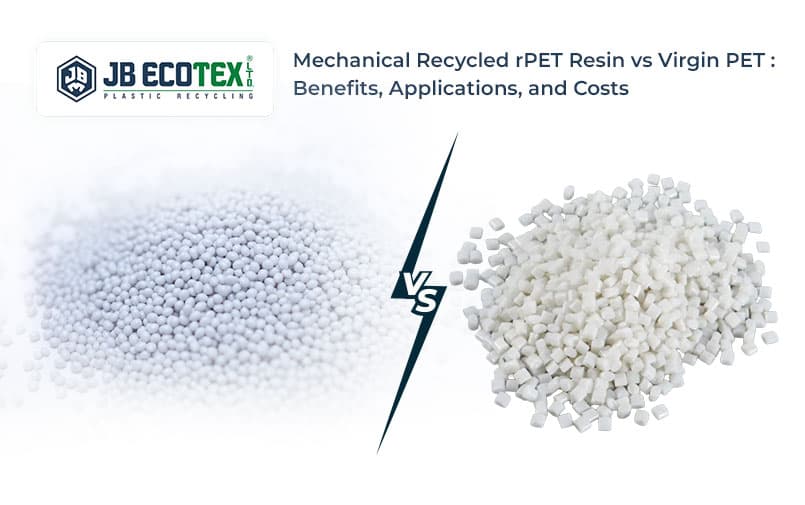
When we talk about packaging, most conversations drift toward bottles, trays, or labels on supermarket shelves. Rarely do people pause at the beginning of that chain: the resin. Yet resin defines what becomes possible. The molecules, the IV levels, the purity standards: These are the foundation. For manufacturers shaping food-grade packaging in India and beyond, the question today is less about design and more about which resin to choose. Virgin PET has long been the workhorse. Mechanically recycled rPET resin is now stepping into the same space with equal authority.
This shift has not happened in isolation. It is connected to government mandates, consumer expectations, and the global push toward circular economies. Resin producers, rPET resin suppliers, and food-grade converters are part of a system being reshaped in real time.
How India Arrived at This Moment
India’s resin landscape is a mirror of its consumption patterns. A rapidly growing middle class has meant exponential growth in beverage, food, and personal care packaging. PET became the natural material of choice because of its clarity, strength, and recyclability. Over time, the challenge was not whether PET could perform but whether the cycle of PET could be closed.
Mandates from regulators such as the Ministry of Environment, Forest and Climate Change and requirements under Extended Producer Responsibility (EPR) guidelines now set the stage. Food-grade rPET resin, once seen as experimental, is positioned as necessary. These changes are not symbolic. They are reshaping procurement strategies, production planning, and material costing for every rPET resin manufacturer active in the Indian ecosystem.
What Mechanical Recycled rPET Resin Actually Means
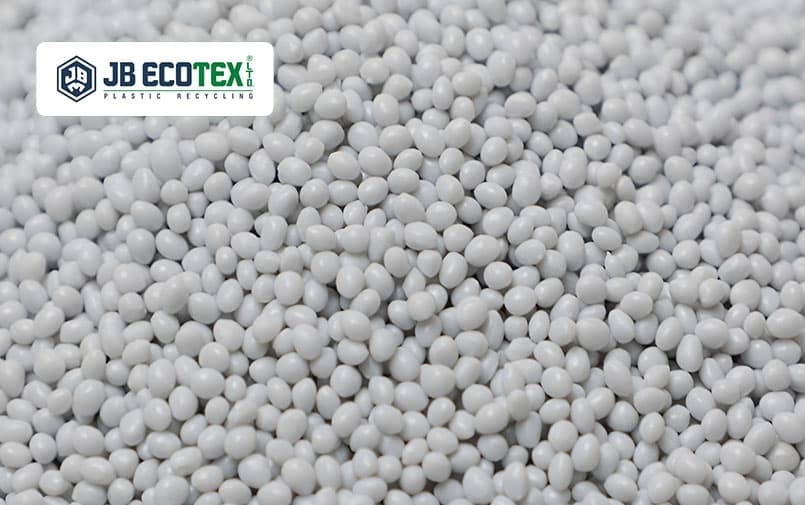
Mechanical recycling of PET bottles begins with collection. Bottles are sorted, washed, shredded, and processed into flakes. From these flakes, resins are re-extruded to create pellets or granules. When we talk about rPET resin mechanical recycled, this is the process being described.
The resin that emerges from this loop is food-grade compliant if processed under strict conditions. Manufacturers working with FSSAI-approved suppliers can rely on these resins to meet safety and performance norms. A natural call-to-action arises here: if you are a food-grade converter, check compliance. Look for FSSAI and global certifications in your rPET resin supplier. That assurance is not a luxury. It is a necessity for safe packaging production.
Comparing rPET Resin and Virgin PET
The differences between virgin PET and mechanical recycled rPET resin lie not in chemistry but in origin. Virgin PET begins from petrochemical feedstocks. rPET resin comes from post-consumer bottles.
- Performance: Modern rPET resin matches virgin PET in clarity and strength when used in food-grade packaging. Food safety compliance ensures manufacturers are not trading off quality.
- Environmental impact: Virgin PET requires fresh petrochemicals. rPET resin closes the loop, reducing reliance on fossil resources.
- Cost dynamics: Virgin PET costs move with oil prices. rPET resin costs depend on collection systems and recycling efficiencies. In India, as collection improves, rPET dana mechanical recycled options are becoming price competitive.
For converters, the decision is rarely philosophical. It is a matter of input costs, supply stability, and regulatory readiness.
Virgin PET vs Mechanical Recycled rPET Resin: A Practical Comparison
For packaging converters and resin buyers, clarity matters. The table below captures the key distinctions between virgin PET and mechanical recycled rPET resin. These are broad, industry-accepted differences that help manufacturers evaluate sourcing options without going into technical disputes.
Aspect |
Virgin PET |
Mechanical Recycled rPET Resin |
| Source |
Produced from
petrochemical feedstocks (fossil-based) |
Produced from post-consumer PET bottles through
collection and recycling |
| Regulatory Alignment |
Meets food-contact
standards when produced under compliance frameworks |
Meets food-contact standards when produced and
certified under compliance frameworks (FSSAI, FDA, EFSA etc.) |
| Environmental
Impact |
Requires fresh extraction of petrochemical resources |
Supports circular economy by reducing dependence on
virgin resources |
| Cost
Influences |
Linked to crude oil and petrochemical price
fluctuations |
Influenced by collection efficiency, recycling
technology, and certification costs |
| Applications |
Widely used in bottles, thermoform sheets, and
food-grade packaging |
Used in similar applications (bottle-to-bottle,
sheets, thermoform trays) when processed to food-grade standards |
| Market Drivers |
Longstanding availability and established supply
chains |
Rising demand driven by government mandates,
sustainability goals, and consumer preference for recycled content |
Regulations in India and abroad continue to encourage the use of rPET in food-grade applications, making it more than an environmental choice. For converters, the important takeaway is that mechanical recycled rPET resin delivers the same technical performance while aligning with evolving compliance norms.
Applications of rPET Resin
Resin defines downstream possibilities. For manufacturers using rPET resin in food-grade packaging, the following applications dominate:
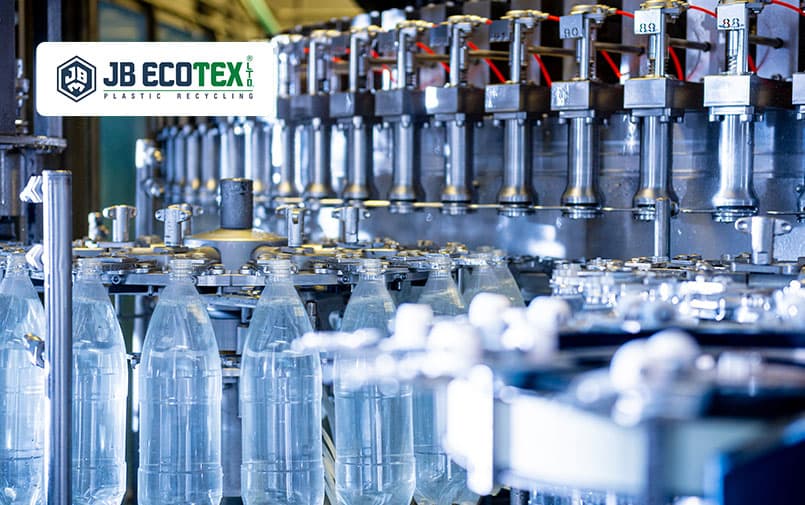
1. Bottle-to-Bottle Systems
Recycled pellets return to beverage bottles through advanced
processing. This is where rPET dana food grade demonstrates its relevance.
2. Thermoform Packaging
Sheets for trays, clamshells, and other formats are produced using rPET
granules food-grade. The clarity is suitable for fresh food
and dairy.
3. Fibres and Films
Beyond packaging, mechanical recycled rPET resin also serves textile
applications. Still, in this blog we keep focus on resin feeding packaging
systems.
As global demand accelerates, rPET resin global demand is influencing investment across India’s recycling plants. rPET chips suppliers in this network are preparing to meet converters’ requirements for consistency and certification.
Why rPET is as Good as Virgin PET
A lingering hesitation among some manufacturers is whether rPET resin can truly substitute virgin PET. That hesitation is fading. Testing standards, compliance audits, and third-party certifications prove the point. rPET resin supplier networks now demonstrate equivalence in performance and safety.
This is not simply about recycling. It is about continuity of packaging systems. Resin produced mechanically can re-enter the same applications as virgin PET. For food-grade converters, that means uninterrupted production lines, minimal adaptation, and full alignment with regulatory pathways.
The future belongs to rPET because it allows business continuity while addressing the twin pressures of cost and compliance. The story is no longer about whether rPET is ready. It is about whether businesses are ready to embrace it.
Costs and Business Considerations
Resin purchasing managers track more than price. They evaluate consistency, certification, and the ability of an rPET resin manufacturer to supply at scale. Costs are nuanced:
- Collection Costs: rPET depends on efficient waste collection networks.
- Processing Costs: Advanced wash lines and extrusion add to overheads.
- Certification Costs: Food-grade compliance requires investment in audits and approvals.
On the other side, virgin PET bears the volatility of crude oil prices and import dependencies. Manufacturers working with both inputs know that hedging between virgin PET and rPET resin mechanical recycled makes strategic sense.
For converters planning five to ten years ahead, rPET is the stabilizing choice. It aligns with both consumer demand and regulatory certainty.
Global and Indian Demand Shifts
With EPR requirements, local mandates, and multinational brand commitments, demand for rPET resin is not a passing trend. It is structural.
Resin buyers in India are beginning to integrate rPET resin supplier contracts into long-term sourcing plans. This ensures stable input material and positions converters to serve both domestic and export markets. For those seeking rPET chips supplier partnerships, the question is no longer “why” but “with whom.”
Why These Shifts Are Necessary
Environmental impact is only part of the story. Consumers today actively read packaging labels. Transparency drives preference. Brands seek alignment with sustainability targets. Governments require compliance.
For resin buyers and converters, adopting mechanical recycled rPET resin is not a symbolic choice. It is about retaining access to markets, ensuring regulatory acceptance, and safeguarding long-term profitability. rPET resin global demand demonstrates that this transition is irreversible.
A clear message emerges: food-grade manufacturers should align sourcing with certified rPET resin supplier networks. Doing so guarantees safety, compliance, and consumer trust.
What Manufacturers Should Look For
When selecting rPET resin, focus areas include:
- Certifications: FSSAI, FDA, EFSA, and other global approvals.
- Consistency: Mechanical recycled processes should deliver uniform IV grades.
- Traceability: Understanding feedstock sources adds credibility.
- Partnerships: Working with an established rPET resin manufacturer ensures continuity.
At this stage, a direct call-to-action is necessary. If your production requires FSSAI-compliant, food-grade resin, engage with suppliers who can demonstrate verified processes. Packaging safety begins at the resin level.
The Future Outlook For Recycled Packaging Materials
India is on the cusp of a resin transformation. Converters who adapt early will not only meet regulations but will also secure cost stability and consumer trust. Mechanical recycled rPET resin has matured. Virgin PET remains relevant, but the balance is shifting.
For buyers considering rPET dana food-grade or rPET dana mechanical recycled options, the question is no longer about technical feasibility. It is about strategic timing. Those who integrate rPET today will lead tomorrow’s supply chains.
Experience That Matters
At JB Ecotex, years of working in recycled feedstock allow us to see these transitions closely. We operate as both observers of global demand and contributors to India’s resin ecosystem. Our role is simple: to provide converters with safe, compliant, and consistent raw materials.
For those navigating procurement, our perspective is clear. rPET resin is not an alternative. It is the continuation of PET in a circular economy.
What the Shift to rPET Really Means
Every material choice in packaging comes with its ripple effects. For years, virgin PET was the straightforward option because supply chains were mature and regulations stayed silent. That silence is gone. Today, mandates across India and global markets are steering food-grade converters toward certified rPET resin. The shift is not framed only by sustainability pledges or environmental headlines. It is also about keeping production lines uninterrupted, meeting compliance requirements, and maintaining consumer trust.
Mechanical recycled rPET resin proves that recycled does not mean compromised. It holds up against virgin PET on technical grounds while carrying the weight of a circular economy. For manufacturers, the meaning of this transition is simple: resin choices are no longer just procurement decisions. They are strategic moves that shape competitiveness in a market where safety, compliance, and circularity converge.
Choose resin that meets FSSAI standards. Choose resin that aligns with global demand. Choose continuity through circularity. Choose JB Ecotex.