
Applications of Non Woven Polyester Materials in Industrial Manufacturing
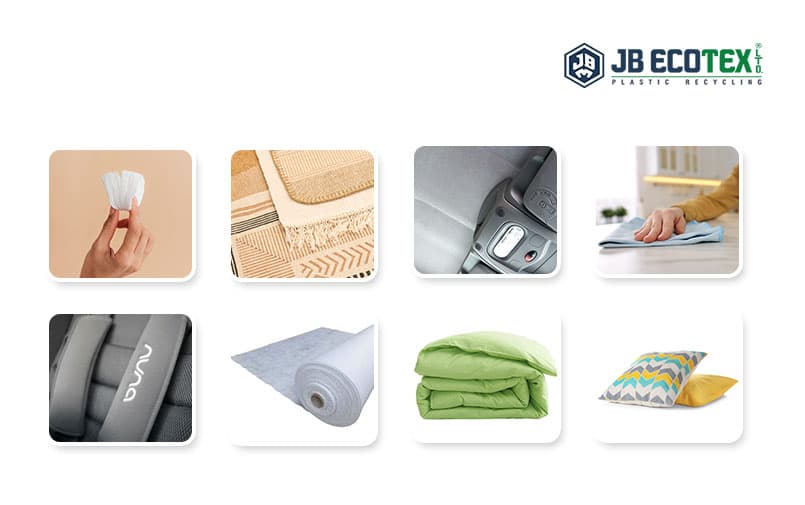
Non woven polyester materials are widely used across industrial sectors where fabrics must perform under demanding mechanical, environmental, and operational conditions. Infrastructure projects, filtration systems, automotive manufacturing, and furniture production all rely on non woven fabrics because they offer durability, structural flexibility, and cost efficiency compared with traditional woven textiles.
Unlike woven fabrics, which require yarn formation and interlacing, non woven materials are produced by directly bonding fibers into a sheet structure. Fibers are distributed into a web and stabilized through mechanical entanglement, thermal bonding, or chemical processes. This method allows manufacturers to engineer fabrics with specific properties such as strength, permeability, cushioning, or insulation.
Polyester fibers are among the most widely used materials in non woven production. Polyester offers strong tensile properties, resistance to chemicals and moisture, and long-term dimensional stability. These characteristics allow non woven polyester materials to perform reliably in environments where fabrics are exposed to stress, temperature fluctuations, and moisture.
Many non woven manufacturers also incorporate recycled polyester fibers derived from PET bottle waste. Recycled polyester staple fibers can provide consistent fiber performance while supporting circular manufacturing systems that reduce plastic waste.
Across industries, polyester non woven materials are used to reinforce infrastructure, filter air and liquids, cushion furniture, protect equipment, and improve vehicle insulation. Understanding how these materials function across different sectors helps manufacturers optimize fiber selection, production processes, and final product performance.
Why Polyester Performs Well in Non Woven Applications
Polyester fibers dominate many non woven manufacturing systems because of how they behave during production and throughout the product lifecycle.
First, polyester maintains high tensile strength even during mechanical entanglement processes such as needle punching. This allows manufacturers to produce durable fabrics without relying on traditional woven structures.
Second, polyester fibers offer excellent dimensional stability. Fabrics maintain their structure even when exposed to humidity, temperature fluctuations, or mechanical stress. This makes polyester suitable for outdoor applications such as geotextiles and agricultural fabrics.
Another advantage is resistance to chemicals and moisture. Polyester non woven materials perform well in industrial environments where fabrics may encounter oils, solvents, or water exposure.
Because polyester fibers can be engineered with different denier levels, cut lengths, and crimp structures, manufacturers can tailor non woven fabrics for specific performance requirements. These characteristics explain why polyester continues to be widely used across different non woven fibre applications.
Construction and Infrastructure Applications
Infrastructure development represents one of the largest markets for non woven polyester materials.
Large construction projects require materials that can reinforce soil structures while allowing water to pass through the fabric. Polyester non woven fabrics provide an effective solution because they combine strength with permeability.
Non Woven Polyester Geotextile
One of the most common infrastructure applications is non woven polyester geotextile.
Geotextiles are used in road construction, railway systems, landfills, and erosion control projects. These fabrics are typically produced through needle punching processes that create strong yet permeable structures.
Non woven polyester geotextiles perform several important functions in civil engineering:
Soil stabilization
Drainage and filtration
Separation of soil layers
Reinforcement of road foundations
When installed beneath roads or railways, geotextiles prevent the mixing of different soil layers while allowing water to pass through the fabric. This improves structural stability and extends the lifespan of infrastructure projects.
Polyester fibers are often preferred in geotextiles because they maintain long-term durability even when exposed to soil chemicals, moisture, and environmental stress.
Automotive Interior and Insulation
Materials Modern vehicles contain numerous textile components that improve comfort, safety, and acoustic performance. Non woven polyester materials are widely used in automotive manufacturing because they offer lightweight strength and sound absorption properties.
Common automotive applications include:
Acoustic insulation panels
Interior trim materials
Carpet backing
Trunk liners
Air filtration components
Non woven polyester materials help reduce vehicle weight while maintaining structural performance. Lower vehicle weight improves fuel efficiency and supports modern automotive design requirements.
Polyester fibers also provide excellent acoustic insulation. Non woven fabrics absorb sound vibrations within vehicle interiors, helping reduce cabin noise and improve passenger comfort.
Because polyester fibers maintain dimensional stability under temperature fluctuations, they perform reliably in vehicle environments where temperatures can vary significantly.
Filtration and Environmental Applications
Filtration is one of the most technically demanding non woven fibre applications.
Air and liquid filtration systems require fabrics capable of capturing particles while maintaining airflow or fluid movement. Polyester non woven fabrics are widely used because they provide a stable fiber structure with controlled porosity.
Common filtration applications include:
Industrial air filtration
HVAC systems
Dust collection filters
Liquid filtration in chemical processing
Wastewater treatment systems
In filtration fabrics, fiber diameter and web density influence particle capture efficiency. Polyester fibers can be engineered to achieve the specific porosity and strength required for different filtration environments.
Polyester non woven materials also resist moisture and chemical exposure, which is critical in industrial filtration systems where environmental conditions can be harsh.
Polyester Felt in Industrial Manufacturing
Another important category of non woven polyester material is non woven polyester felt.
Polyester felt is typically produced using needle punching processes that entangle fibers into dense fabric structures. This type of material is widely used in industrial manufacturing environments where fabrics must withstand mechanical stress.
Applications of polyester felt include:
Industrial dust collection bags
Thermal insulation layers
Surface polishing materials
Protective padding materials
Automotive insulation components
Polyester felt provides durability, thermal resistance, and structural stability, making it suitable for demanding industrial applications.
In dust collection systems used in industries such as cement manufacturing or metal processing, polyester felt filter bags capture airborne particles while allowing air to pass through the fabric.
Because polyester fibers resist heat and chemical exposure, they perform reliably in these environments.
Polyester Needle Punch Felt in Industrial Applications
Polyester needle punch felt is one of the most widely used forms of non woven polyester materials in industrial environments.
This material is produced through needle punching processes where polyester staple fibers are mechanically entangled to create dense felt structures.
The resulting material provides excellent durability, thermal resistance and filtration capability.
Polyester felt materials are widely used in:
- Industrial filtration systems
- Dust collector filter bags
- Acoustic insulation panels
- Industrial polishing pads
- Thermal insulation materials
Because polyester fibers offer strong chemical resistance and mechanical stability, polyester needle punch felt can perform reliably in demanding environments such as cement plants, steel processing units and industrial filtration systems.
Manufacturers producing polyester felt materials rely on consistent polyester staple fibers to maintain stable needle punching performance and uniform fabric density.
Furniture and Bedding Applications
Polyester non woven materials are widely used in furniture manufacturing and bedding systems.
Non woven fabrics serve as cushioning layers within mattresses, sofas, and upholstered furniture. Polyester fibers provide resilience and compression resistance, which helps maintain product comfort over time.
These materials are commonly used in:
Mattress padding layers
Furniture upholstery support
Cushion reinforcement
Carpet underlay materials
Non woven polyester materials help distribute pressure evenly while maintaining airflow within bedding systems.
Because polyester fibers resist moisture and microbial growth, they also contribute to improved hygiene in bedding products.
Industrial Packaging and Protective Materials
Non woven polyester materials are also used in packaging and protective textile systems.
Manufacturers often require lightweight yet durable fabrics that can protect products during transportation and storage. Non woven fabrics can be engineered to provide cushioning and abrasion resistance.
Common uses include:
Industrial protective covers
Surface protection fabrics
Transport cushioning materials
Equipment packaging
Because non woven fabrics can be produced in different thickness levels and strengths, they offer flexible solutions for industrial packaging requirements.
Polyester fibers provide durability while maintaining flexibility, allowing fabrics to conform to different product shapes during protection.
Agricultural and Environmental Applications
Agriculture represents another growing sector for non woven polyester materials.
Non woven fabrics are used to protect crops, stabilize soil structures, and manage irrigation systems.
Applications include:
Crop protection covers
Soil stabilization fabrics
Drainage systems
Agricultural filtration fabrics
Polyester non woven materials are durable enough to withstand environmental exposure while remaining lightweight and easy to install.
These fabrics help improve soil conditions, regulate moisture levels, and protect crops from environmental stress.
As agricultural technology continues to evolve, non woven polyester fabrics are expected to play an increasingly important role in sustainable farming systems.
Recycled Polyester in Non Woven Applications
Many non woven manufacturers are shifting toward recycled polyester fibers as part of their sustainability initiatives.
Recycled polyester fibers are typically produced from post-consumer PET plastic bottles. These bottles are processed into flakes and converted into polyester fibers through melt spinning processes.
Manufacturers interested in understanding this process can explore the procedure of manufacturing recycled polyester staple fibre.
Recycled polyester fibers are widely used in geotextiles, automotive components, furniture padding, and filtration fabrics.
Using recycled fibers reduces plastic waste while maintaining the performance characteristics required for industrial non woven materials.
Role of Recycled Polyester Staple Fibre in Non-Woven Manufacturing
Recycled polyester staple fibre has become one of the most widely used raw materials for producing non-woven polyester materials. Many non-woven manufacturers now rely on recycled fibres derived from post-consumer PET bottles to produce durable industrial fabrics while reducing reliance on virgin polymer.
The process begins with the collection and processing of PET bottle waste. After cleaning and shredding, the material is converted into PET flakes and then melted to form polyester filaments. These filaments are crimped and cut into staple fibres with controlled lengths suitable for non-woven processing.
Manufacturers interested in understanding this transformation from plastic waste to textile fibre can review the procedure of manufacturing recycled polyester staple fibre, which explains the recycling and fibre production stages in detail.
Once produced, recycled polyester staple fibres enter non-woven production lines where they are converted into fabric structures through several stages.
Fiber Opening and Blending
Staple fibres are opened and blended to ensure uniform distribution before entering carding or air-lay systems.
Web Formation
Fibres are distributed into a thin web structure using carding machines or air-lay equipment. The web determines the base structure of the non-woven material.
Mechanical or Thermal Bonding
The fibre web is stabilized through needle punching, thermal bonding, or chemical bonding depending on the required fabric properties.
Fabric Finishing
After bonding, the non-woven material may undergo calendaring, coating, or cutting processes to meet specific industrial requirements.
Recycled polyester staple fibres perform particularly well in these manufacturing stages because they provide strong mechanical integrity, reliable bonding behaviour, and resistance to moisture and chemicals.
As a result, recycled polyester fibres are widely used in applications such as:
Geotextiles and civil engineering fabrics
Automotive insulation materials
Industrial filtration fabrics
Furniture padding and bedding layers
Industrial packaging and protective materials
For non-woven manufacturers, recycled polyester staple fibre offers an effective combination of performance, availability, and environmental sustainability.
Importance of Fiber Quality in Non Woven Production
Fiber quality plays a critical role in determining how well non woven fabrics perform in industrial applications.
Consistent fiber properties allow manufacturers to maintain stable production conditions during web formation and bonding processes.
Manufacturers evaluating fiber suppliers
often consider factors such as:
Fiber denier
Cut length consistency
Crimp structure
Cleanliness of polymer inputs
Thermal bonding behavior
Companies seeking technical details about fiber properties often review information about polyester staple fiber used in textile and non woven manufacturing.
Reliable fiber supply ensures that non woven manufacturers can maintain consistent fabric quality and production efficiency.
Recycled Polyester Staple Fibre for Non-Woven Manufacturing
For non-woven manufacturers, the consistency of fibre specifications plays a critical role in maintaining stable production conditions. Variations in denier, cut length, or crimp structure can affect web formation, bonding behaviour, and the final fabric properties.
JB Ecotex supplies recycled polyester staple fibre engineered specifically for industrial textile and non-woven manufacturing applications. The fibres are produced from carefully processed PET bottle flakes and manufactured under controlled conditions to ensure consistent fibre properties.
Manufacturers working with non-woven polyester materials often require fibres that perform reliably across different production methods including carding, needle punching, and thermal bonding. Maintaining uniform fibre specifications helps ensure stable machine performance and predictable fabric characteristics.
Companies looking for detailed information about fibre characteristics and industrial uses can explore the technical overview of polyester staple fiber used in textile and non woven manufacturing.
With growing demand for sustainable textile materials, recycled polyester fibres continue to play a central role in non-woven manufacturing across sectors such as infrastructure, automotive, filtration, and industrial textiles.
Recycled Polyester Fiber for Non Woven Manufacturing
JB Ecotex supplies recycled polyester staple fiber used in the production of non woven polyester materials across multiple industrial sectors.
Our fibers are engineered to provide consistent denier, cut length, and crimp characteristics required for stable non woven production processes including geotextiles, filtration fabrics, automotive insulation, and industrial materials.
Manufacturers working with non woven polyester materials rely on consistent fiber quality to maintain production efficiency and product performance.
FAQ Section
What are common non woven fibre applications?
Non woven fibre applications include geotextiles for construction, filtration media for air and water treatment, automotive insulation materials, furniture padding, and industrial packaging fabrics. Polyester fibers are widely used because they provide strength, durability, and resistance to moisture and chemicals.
What is non woven polyester geotextile used for?
Non woven polyester geotextile is used in infrastructure projects such as road construction, drainage systems, and erosion control. The fabric stabilizes soil structures while allowing water to pass through, improving long-term stability of civil engineering projects.
What is non woven polyester felt?
Non woven polyester felt is produced through needle punching processes that entangle polyester fibers into dense fabrics. It is commonly used in industrial filtration systems, dust collection bags, thermal insulation materials, and protective padding.
What industries use non woven polyester materials?
Industries that use non woven polyester materials include construction, automotive manufacturing, filtration, furniture production, agriculture, and industrial packaging. Polyester fibers provide durability and stability required for these applications.
What is non woven recycled fabric?
Non woven recycled fabric refers to fabrics produced using recycled polyester fibers derived from PET plastic bottles. These fabrics provide the same structural performance as traditional polyester non woven materials while supporting sustainable manufacturing practices.