
Polyester Fiber Requirements for Non Woven Fabric Manufacturers
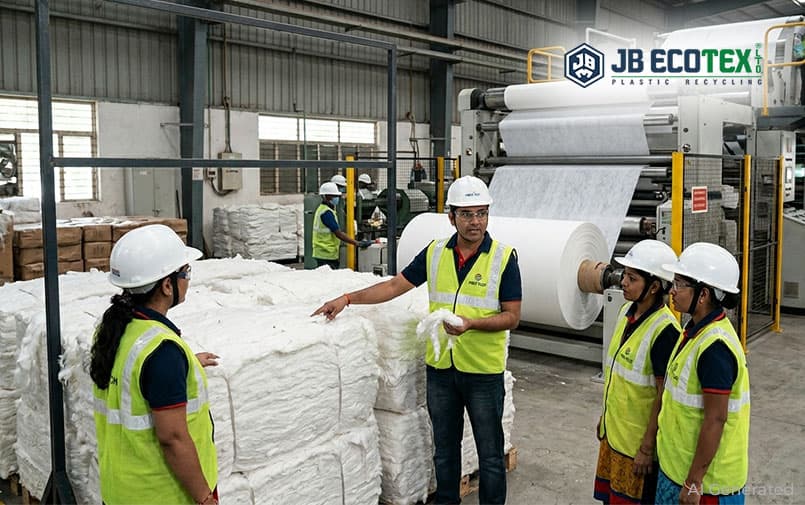
Inside a non woven manufacturing plant, fiber behaviour determines whether production runs smoothly or becomes unstable.
Unlike woven textiles where yarn structure provides inherent stability, non woven fabrics depend entirely on how individual fibers interact with each other during web formation and bonding. Every stage of the process—opening, carding, air laying, needle punching, or thermal bonding—relies on predictable fiber characteristics.
When fiber properties vary between batches, production efficiency can drop rapidly. Web uniformity may decline, bonding performance may weaken, and machines may require frequent cleaning due to fiber fly accumulation. Even small variations in fiber cut length or crimp structure can affect web stability during carding operations.
For this reason, non woven fabric manufacturers evaluate fiber suppliers based not only on price but also on fiber engineering, production consistency, and supply reliability.
Among the different fibers used in industrial textile production, polyester fiber remains the dominant material used in non woven manufacturing. Polyester fibers offer mechanical strength, thermal bonding capability, resistance to environmental exposure, and cost efficiency that make them suitable for a wide range of industrial fabrics.
Understanding how different polyester fibers behave inside non woven production systems allows manufacturers to select materials that improve both production efficiency and finished fabric performance.
Why Polyester Fiber is Widely Used in Non Woven Manufacturing
Polyester fiber has become one of the most widely used materials in non woven production because of its predictable performance across multiple processing technologies.
During carding operations, polyester fibers maintain structural integrity even when subjected to repeated mechanical contact with rollers and wires. This helps create a uniform fiber web without excessive breakage.
Another important advantage is polyester's thermal bonding behaviour. Polyester fibers soften at controlled temperatures, allowing bonding points to form within the fiber web during thermal bonding processes.
Polyester fibers also demonstrate strong resistance to moisture and chemical exposure. These characteristics allow non woven polyester materials to perform reliably in industrial environments where fabrics may encounter oils, solvents, or humidity.
Because of these processing advantages, polyester fibers are widely used in geotextiles, filtration fabrics, automotive insulation materials, furniture padding, and industrial textiles.
Types of Polyester Fibers Used by Non Woven Manufacturers
Different types of polyester fibers are used depending on the bonding method and the final fabric application.
Recycled Polyester Staple Fiber
Recycled polyester staple fiber is produced by converting post-consumer PET bottle waste into textile fibers.
The recycling process begins with sorting and cleaning PET bottles. The bottles are shredded into flakes and melted to produce polyester polymer. The molten polymer is then extruded through spinnerets to create polyester filaments.
These filaments are cooled, crimped and cut into staple lengths suitable for textile processing.
Manufacturers interested in understanding this process often review the procedure of manufacturing recycled polyester staple fibre.
Recycled polyester staple fibers provide strong mechanical properties and reliable bonding behaviour, making them suitable for many non woven applications.
Industries using recycled polyester staple fibers include:
- Geotextile manufacturing
- Automotive insulation materials
- Industrial filtration systems
- Mattress and furniture padding
- Industrial packaging materials
Because recycled polyester is produced from PET bottle waste, it also supports circular manufacturing systems that reduce plastic waste.
PET Fiber
PET fiber refers to fibers produced from polyethylene terephthalate polymer.
These fibers provide high tensile strength and strong resistance to chemical exposure. PET fibers also demonstrate excellent dimensional stability, which means fabrics maintain their structure even when exposed to environmental stress.
PET fibers are commonly used in non woven fabrics designed for filtration, reinforcement, and insulation applications.
Low Melt Polyester Staple Fiber
Low melt polyester staple fiber is engineered specifically for thermal bonding non woven processes.
These fibers typically have a sheath-core structure. The outer sheath melts at a lower temperature while the inner core maintains structural strength.
During thermal bonding processes, the outer sheath softens and forms bonding points between fibers. This creates a stable fiber network without requiring chemical binders.
Low melt polyester fibers are widely used in:
- Thermal bonded non woven fabrics
- Automotive insulation materials
- Mattress padding layers
- Furniture cushioning materials
This bonding mechanism allows manufacturers to produce lightweight fabrics with strong structural integrity.
Thermal Bonded Non Woven Polyester Fabrics
Thermal bonding is widely used in non woven polyester manufacturing to stabilise fiber webs without chemical binders.
In thermal bonded non woven production, a web of polyester fibers is exposed to controlled heat through heated rollers or ovens. Fibers designed for thermal bonding soften at specific temperatures and form bonding points with neighbouring fibers.
Low melt polyester staple fiber plays an important role in this process. These fibers are engineered with a sheath-core structure where the outer sheath melts at a lower temperature than the inner core. When heat is applied, the outer layer softens and bonds surrounding fibers together while the core maintains fiber strength.
This bonding mechanism allows manufacturers to produce lightweight fabrics with strong structural integrity.
Thermal bonded non woven polyester fabrics are commonly used in:
- automotive acoustic insulation
- mattress comfort layers
- furniture cushioning materials
- filtration and insulation textiles
For manufacturers operating thermal bonding lines, consistent fiber melting behaviour is critical to ensure uniform bonding and stable fabric properties.
Fiber Oil Finish and Carding Performance
One important parameter often overlooked outside the industry is the oil finish applied to polyester fibers.
Fiber oil finish reduces static electricity and friction during carding operations. Without proper oil finish, fibers can cling to carding wires and cause uneven web formation.
Excessively low oil finish levels may lead to fiber fly generation and machine contamination. Excessively high oil finish can create fiber clumping during opening and blending.
Maintaining the correct oil finish level is therefore critical for ensuring smooth carding performance.
Fiber Specifications Non Woven Manufacturers Evaluate
When sourcing fibers, non woven manufacturers typically evaluate several key specifications.
Cut Length
Cut length influences how fibers behave during opening and carding operations.
Fibers that are too short may reduce web cohesion. Fibers that are too long may wrap around rollers during carding.
Maintaining consistent cut length improves web formation stability.
Denier
Denier describes fiber thickness.
Fine denier fibers create fabrics with high surface area and are commonly used in filtration applications.
Coarse denier fibers provide higher mechanical strength and are used in geotextiles and reinforcement fabrics.
Crimp Structure
Crimp introduces waviness into the fiber structure.
This waviness helps fibers interlock during web formation and improves bonding performance.
Fibers with insufficient crimp may slip during processing and reduce fabric strength.
Fiber Cleanliness
Dust and polymer residues can accumulate in carding machines and disrupt production.
Clean fiber inputs help reduce machine downtime and improve web uniformity.
How Non Woven Manufacturers Evaluate Polyester Staple Fiber Suppliers
Before introducing a new polyester staple fiber into production lines, non woven manufacturers typically conduct internal evaluation trials to verify that the material performs consistently under real manufacturing conditions.
Unlike laboratory fiber testing, these evaluations focus on how fibers behave inside carding, web formation and bonding systems.
One of the first checks performed during these trials is fiber opening behaviour. Polyester fibers must separate easily during bale opening without forming clumps or generating excessive dust. Fibers that do not open properly can create uneven web formation later in the process.
Manufacturers also evaluate carding performance. During carding operations, fibers should distribute evenly across the carding cylinder and form a uniform web. Poorly engineered fibers may wrap around rollers, generate excessive fly or create inconsistent web density.
Another important observation during evaluation trials is web formation stability. Fibers must interlock consistently as the web is formed, especially in processes such as air laying or carding. If fibers slide excessively or fail to interlock, the web may lack cohesion before bonding.
For manufacturers operating needle punching lines, fibers are also tested for entanglement behaviour. Polyester staple fibers with appropriate crimp structure allow needles to effectively entangle fibers throughout the web thickness, improving fabric durability.
Thermal bonding systems require a different evaluation parameter. Fibers must respond predictably to heat so that bonding points form uniformly across the web structure. Inconsistent melting behaviour can lead to weak bonding zones or uneven fabric strength.
Manufacturers also assess machine cleanliness during production trials. Fibers that produce excessive dust or broken fragments may accumulate in carding machines and increase maintenance requirements.
These operational trials allow non woven manufacturers to determine whether a polyester fiber supplier can deliver consistent material suitable for large-scale production.
Suppliers capable of maintaining stable fiber specifications across batches are generally preferred because consistent raw material quality helps ensure stable production conditions and predictable fabric performance.
Influence of PET Intrinsic Viscosity on Fiber Performance
Intrinsic viscosity (IV) of PET polymer influences the mechanical properties of polyester fibers.
Higher IV levels generally result in stronger fibers with improved tensile strength. Lower IV levels may produce fibers with reduced mechanical stability.
Fiber manufacturers must carefully control IV levels during production to ensure consistent fiber properties.
For non woven manufacturers, stable IV levels help maintain consistent fiber strength and bonding behaviour during production.
Common Production Problems Caused by Poor Fiber Quality
When fiber specifications are inconsistent, non woven manufacturers may encounter several operational challenges.
Fiber fly accumulation can occur when fibers break during carding operations. This leads to dust buildup in machines and increases maintenance requirements.
Uneven fiber distribution can result in inconsistent fabric thickness and reduced product quality.
Poor bonding behaviour may occur when fiber surfaces do not respond uniformly during thermal bonding.
Because of these issues, manufacturers often test fiber batches before introducing them into large-scale production lines.
Fiber Compatibility with Non Woven Production Technologies
Different non woven technologies require different fiber characteristics.
Needle punched fabrics typically require fibers with strong crimp structure to ensure effective mechanical entanglement.
Thermal bonded fabrics often require low melt fibers to create bonding points within the web.
Air laid processes require fibers with consistent cut length to maintain uniform fiber distribution.
Understanding these compatibility requirements helps manufacturers select fibers suitable for their production systems.
What Non Woven Manufacturers Evaluate Before Selecting a Fiber Supplier
Non woven manufacturers typically evaluate fiber suppliers based on both fiber performance and supply reliability.
Before introducing a new fiber into production lines, manufacturers often review several technical parameters.
Consistency of denier and cut length is important for maintaining stable carding and web formation processes. Variations in fiber length can cause web irregularities or roller wrapping during production.
Fiber cleanliness is another critical parameter. Dust or polymer residues can accumulate in carding machines and increase machine maintenance requirements.
Manufacturers also evaluate how fibers behave during bonding processes. In thermal bonding systems, fibers must soften at predictable temperatures to ensure uniform bonding points across the web.
Supply reliability is equally important. Non woven manufacturing plants operate continuous production systems and require steady raw material supply to avoid production interruptions.
Because of these considerations, manufacturers often establish long-term partnerships with fiber suppliers capable of delivering consistent fiber quality and stable supply volumes.
Factors Influencing Polyester Staple Fiber Price
Polyester staple fiber price can vary depending on several factors.
The cost of PET bottle flakes used as raw material plays a major role in determining fiber price.
Fiber specifications such as denier and cut length also influence production complexity.
Additional treatments such as oil finish application may increase processing costs.
Logistics costs, transportation distance and order volume also affect final fiber pricing.
Manufacturers often evaluate suppliers based on a balance between price, fiber quality and supply reliability.
Logistics and Supply Reliability in Non Woven Manufacturing
Large non woven production plants operate continuous manufacturing systems that require consistent raw material supply.
Interruptions in fiber delivery can lead to production downtime and material shortages.
Manufacturers therefore prioritise suppliers capable of maintaining stable production capacity and consistent raw material sourcing.
Integrated recycling and fiber production facilities often provide greater supply reliability because they control multiple stages of the production chain.
JB Ecotex Recycled Polyester Fiber for Non Woven Manufacturing
JB Ecotex produces recycled polyester staple fiber from PET bottle waste using controlled recycling and fiber production processes.
The fibers are engineered to deliver consistent denier, cut length and crimp characteristics required for stable non woven manufacturing.
Manufacturers producing geotextiles, filtration fabrics, automotive insulation materials and industrial textiles rely on consistent fiber supply to maintain stable production conditions. Reliable fiber quality helps ensure predictable web formation, efficient bonding behaviour and consistent fabric performance.
FAQs
What fiber is used to manufacture non woven fabric
Polyester fiber is one of the most widely used materials in non woven fabric manufacturing because it provides strength, durability and thermal bonding capability.
What is recycled polyester staple fiber
Recycled polyester staple fiber is produced by converting PET plastic bottles into polyester fibers through recycling and melt spinning processes.
What is PET fiber
PET fiber is a synthetic fiber made from polyethylene terephthalate polymer widely used in textiles and industrial materials.
What is low melt polyester fiber
Low melt polyester fiber is a sheath-core fiber used in thermal bonding non woven production where the outer layer melts at lower temperatures to form bonding points.
What affects polyester staple fiber price
Polyester staple fiber price depends on PET raw material cost, fiber specifications, processing treatments and logistics costs.
What properties do non woven manufacturers look for in polyester fibers
Non woven manufacturers typically evaluate fiber denier, cut length, crimp structure, cleanliness and thermal bonding behaviour when selecting suppliers.