
Global Standards for rPET Materials You Should Know
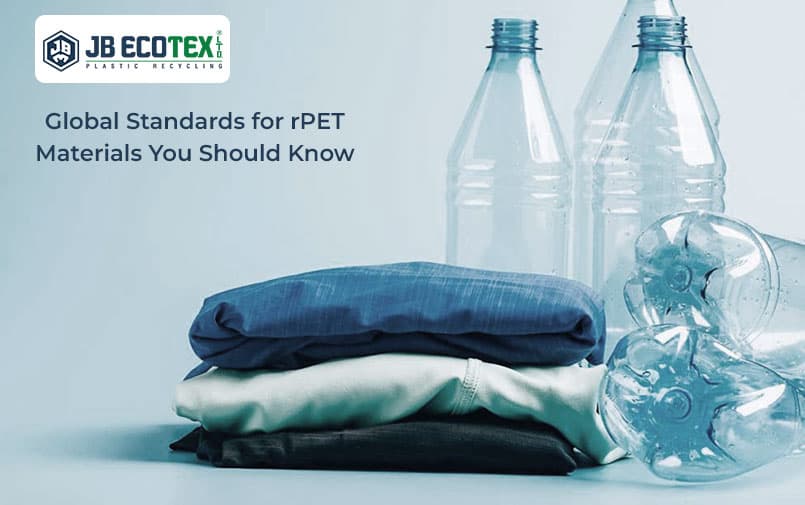
Manufacturers working with rPET materials are operating in a very different environment than even five years ago. Plastic waste is no longer a downstream concern handled by municipalities alone. It now sits directly inside procurement decisions, material approvals, export eligibility, and brand contracts.
Across packaging and textile supply chains, recycled PET is moving from an optional sustainability input to a regulated material class with defined quality, traceability, and compliance expectations. Governments are introducing recycled content mandates. Regulators are tightening rules for recycling plastic bottles. Brands are asking suppliers for proof of compliance with EPR packaging regulations. At the same time, global recycling infrastructure is evolving at uneven speeds across regions.
For manufacturers using PET and rPET resins, understanding global standards for rPET materials is no longer about future readiness. It is about present-day access to markets.
This guide breaks down how rPET materials are defined, regulated, tested, and approved across major regions. It also explains how rPET flake, rPET pellets, and finished recycled products fit into these frameworks, and what manufacturers should practically prepare for.
Understanding rPET Materials in the Global Supply Chain
At its core, rPET materials are derived from post-consumer or post-industrial polyethylene terephthalate that has been collected, sorted, cleaned, and reprocessed into usable raw material forms. What differentiates rPET today is not the polymer itself, but the standards governing how it is produced, traced, and used.
In most markets, rPET materials begin their journey as discarded PET bottles. These bottles move through collection systems shaped by plastic recycling laws and municipal infrastructure. Once collected, they are sorted by resin type and color, washed to remove labels and residues, and converted into rPET flake.
From there, rPET flake may be directly used in textile applications or further processed into rPET pellets through extrusion and pelletization. For packaging and food contact uses, rPET materials often undergo additional decontamination and solid-state processes to restore intrinsic viscosity and reduce migration risk.
What matters globally is that each step must align with region-specific rules for recycling plastic bottles and material safety. The same rPET flake may be acceptable for fiber production in one country and restricted from food contact use in another.
Why Global Recycling Standards Are Shaping rPET Demand
The surge in demand for rPET materials is closely linked to how global recycling policy has evolved. Plastic recycling worldwide remains uneven, with overall recycling rates still in the single digits in many regions. PET, however, stands apart due to its recyclability, economic value, and suitability for closed-loop systems.
Governments increasingly view PET as a priority material within global waste management strategies. This is reflected in national roadmaps, recycled content mandates, and extended producer responsibility frameworks.
Global recycling initiatives also receive visibility through events such as World Recycling Day, observed annually on March 18. While symbolic on the surface, World Recycling Day has become a policy signal. Many regulatory announcements, funding programs, and public commitments around rPET recycling are timed around this period to reinforce momentum.
For manufacturers, this means rPET materials are being regulated not only as inputs, but as instruments of national recycling targets.
European Union Standards for rPET Materials
The European Union has one of the most structured regulatory environments for rPET materials, particularly for packaging and food contact applications.
Under EU food contact regulations, recycled plastics must meet strict safety criteria. Mechanical recycling processes intended for food contact use require authorization following scientific assessment by European Food Safety Authority. These assessments focus on decontamination efficiency and potential chemical migration.
Specific regulations outline how rPET materials may be produced, including requirements for challenge testing using surrogate contaminants. These tests evaluate how effectively recycling processes remove unknown contaminants that could be present in post-consumer PET bottles.
Alongside food safety rules, EPR packaging regulations in the EU place financial and operational responsibility on producers for packaging waste. This has directly influenced the demand for compliant rPET flake and rPET pellets, as producers seek materials that support national recycling targets.
The Single-Use Plastics Directive further mandates minimum recycled content in PET bottles, pushing packaging manufacturers toward consistent rPET recycling supply chains. Plastic recycling laws across EU member states also enforce separate collection systems, improving feedstock quality for rPET materials.
For manufacturers exporting into Europe, documentation such as Declarations of Compliance and process traceability records is essential. rPET materials without clear process approval often face commercial barriers regardless of physical quality.
United States Framework for rPET Materials
In the United States, oversight of rPET materials used in food contact applications falls under U.S. Food and Drug Administration. Rather than a centralized approval list, the FDA evaluates recycling processes through Letters of No Objection.
These letters confirm that rPET recycling processes reduce potential contaminants to levels comparable with virgin PET. The focus is on process validation rather than individual product approval.
Outside food contact, rPET materials are influenced by a growing patchwork of state-level plastic recycling laws. Several states have introduced EPR packaging regulations that shift recycling costs to producers and set long-term recycling performance targets.
Rules for recycling plastic bottles in the US emphasize curbside collection and material recovery facility performance. Feedstock quality remains a challenge, which directly affects rPET flake consistency.
From a global waste management perspective, the US approach places significant responsibility on manufacturers to audit suppliers, document sourcing, and ensure rPET pellets meet application-specific requirements.
Asia-Pacific Regulations and rPET Materials Adoption
Asia-Pacific presents a diverse regulatory landscape for rPET materials, shaped by varying levels of infrastructure and policy maturity.
Japan operates under a long-standing container and packaging recycling framework that emphasizes material recovery efficiency. Recent policy updates encourage recycled content use through fiscal incentives rather than mandates.
South Korea has moved toward explicit recycled content requirements for PET bottles, with staged increases over the coming years. Traceability labeling and reporting obligations form part of these rules.
China’s approach focuses on reducing virgin plastic consumption while scaling domestic recycling capacity. Recycled content targets in beverage packaging are accelerating demand for domestically produced rPET pellets.
Across Southeast Asia, plastic recycling laws increasingly prioritize segregation and collection, laying groundwork for future rPET recycling expansion. Manufacturers sourcing rPET flake from the region often face variability in quality and documentation.
How rPET Standards Affect Export Approvals and Customer Audits
Manufacturers often experience the impact of rPET standards not at the policy level, but at the point of export approval and customer audits. Even when rPET materials meet internal quality benchmarks, gaps in regulatory alignment can delay shipments or restrict market access.
In export markets, customs authorities and brand compliance teams assess rPET materials against region-specific plastic recycling laws rather than general material performance. This creates situations where the same rPET flake or rPET pellets are accepted in one geography and questioned in another.
Common audit checkpoints include:
- Confirmation that rPET materials originate from approved recycling processes
- Alignment with rules for recycling plastic bottles in the destination country
- Verification of recycled content claims under EPR packaging regulations
- Traceability of rPET recycling inputs back to post-consumer PET streams
- Documentation showing compliance with food contact or textile safety standards
For packaging manufacturers, these audits increasingly occur before commercial contracts are finalized. Textile manufacturers face similar scrutiny from global brands that align sourcing with global recycling commitments. As plastic recycling worldwide becomes a reporting requirement rather than a voluntary metric, audits now focus on documentation depth as much as material consistency.
India’s Regulatory Environment for rPET Materials
India has emerged as one of the most important markets shaping the future of rPET materials, both as a consumer and producer.
India’s Plastic Waste Management Rules place extended producer responsibility obligations on brand owners, importers, and manufacturers. These EPR packaging regulations require companies to meet collection and recycling targets through registered recyclers.
The Central Pollution Control Board manages the national EPR portal, where certificates are generated and traded to demonstrate compliance. This system has directly increased formal rPET recycling capacity.
For food contact applications, the Food Safety and Standards Authority of India has permitted the use of recycled PET subject to strict process controls. Only rPET materials produced through approved super-clean processes are eligible, and testing requirements focus on migration limits and contaminant removal.
India’s approach aligns closely with global waste management principles while supporting domestic recycling infrastructure. Restrictions on importing unprocessed PET waste further encourage local rPET recycling and pellet production.
For textile manufacturers, rPET flake and rPET pellets produced in India are widely used in fiber applications, with increasing scrutiny on traceability and source certification.
rPET Products and Their Compliance Context
Understanding rPET products also means understanding the different product forms and where they fit within regulations.
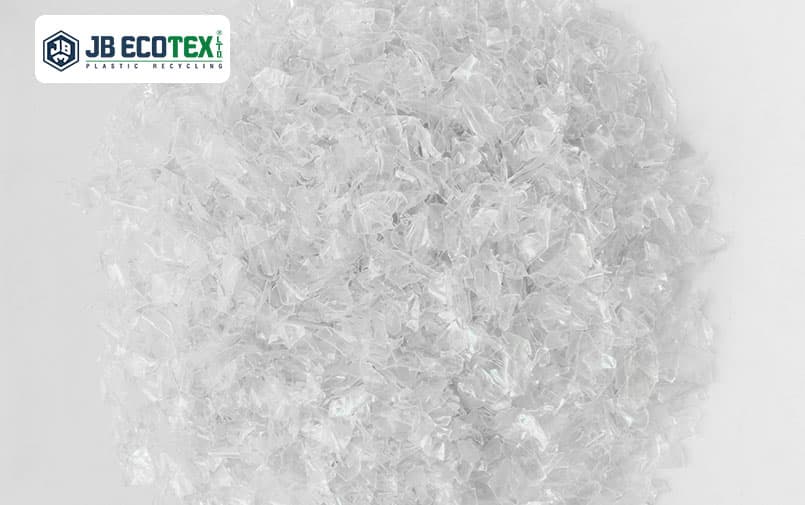
rPET flake serves as the base raw material. Its acceptance depends on contamination levels, moisture content, and color consistency. For textiles, rPET flake is often directly processed into fiber. For packaging, further purification is required.
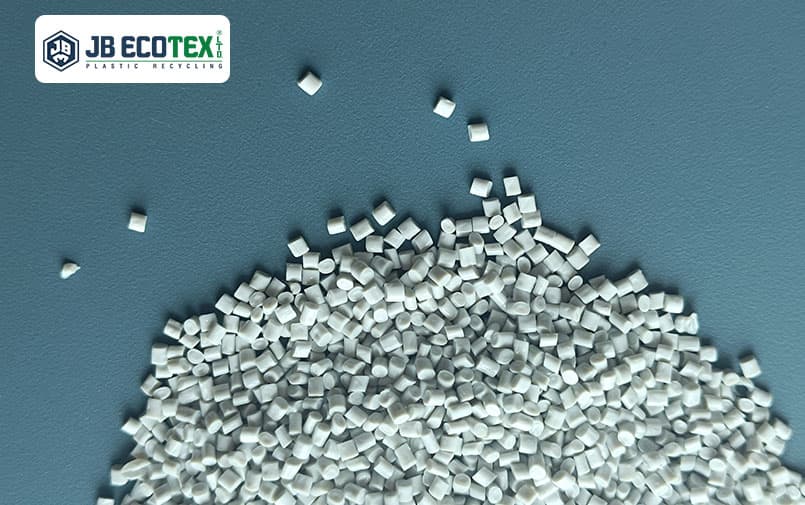
rPET pellets offer uniformity and processing stability. They are preferred in injection molding and extrusion applications where consistency is critical. Compliance focuses on intrinsic viscosity, acetaldehyde levels, and residual contamination.
Finished rPET resins intended for food contact must meet migration limits defined by regional authorities. Documentation linking pellets back to approved recycling processes is essential.
Across all forms, rPET recycling documentation plays a central role. Without traceability, even technically sound materials face commercial limitations.
Common Compliance Mistakes Manufacturers Make with rPET Materials
Despite growing familiarity with rPET materials, several compliance issues continue to appear across markets. These gaps often surface during audits, EPR reporting, or customer due diligence. Common issues include:
- Using rPET pellets for food or cosmetic packaging without linking them to an approved rPET recycling process
- Assuming rPET flake purity alone satisfies regulatory requirements without process validation
- Treating EPR certificates as interchangeable across countries, despite country-specific EPR packaging regulations
- Mixing export-grade and domestic-grade rPET materials without separate traceability records
- Relying on supplier declarations without independent verification of plastic recycling laws compliance
- Overlooking changes in rules for recycling plastic bottles when exporting to new regions
These mistakes rarely stem from intent. They usually arise from treating rPET materials as conventional PET inputs rather than regulated recycled materials. As global recycling frameworks mature, regulators and brands increasingly expect manufacturers to manage rPET materials with the same rigor as controlled raw materials.
Traceability and Documentation Expectations for rPET Materials
Traceability has become one of the defining elements of rPET materials acceptance across global markets. Beyond physical specifications, manufacturers are expected to demonstrate where rPET materials come from, how they were processed, and which regulatory frameworks they align with.
Typical documentation requested during audits or approvals includes:
- Process approval references for rPET recycling facilities
- Test reports covering migration, contaminants, and intrinsic viscosity
- Supplier declarations linking rPET flake or rPET pellets to post-consumer PET sources
- EPR certificates or transaction records under EPR packaging regulations
- Annual recycled content statements aligned with plastic recycling laws
In some regions, digital reporting systems are being introduced to track recycled materials across supply chains. These initiatives are part of broader global waste management strategies aimed at reducing material leakage and improving accountability.
For manufacturers supplying multiple regions, documentation systems must account for variations in plastic recycling worldwide rather than relying on a single compliance template.
How Plastic Recycling Laws Affect Manufacturers
Plastic recycling laws increasingly influence how manufacturers design products, select materials, and structure supply chains.
Many countries now require reporting on recycled content usage. Some mandate minimum percentages. Others link compliance to financial penalties under EPR packaging regulations.
Rules for recycling plastic bottles also affect feedstock availability. Deposit return systems, where implemented, significantly improve rPET flake quality, reducing processing losses.
From a global recycling perspective, manufacturers who understand regulatory direction gain a planning advantage. Investments in compliant rPET materials reduce future exposure to sudden policy shifts.
World Recycling Day and Its Industry Impact
World Recycling Day has evolved into more than a symbolic event. It has become a reference point for industry commitments, regulatory announcements, and corporate reporting.
In recent years, World Recycling Day communications have increasingly highlighted PET and rPET recycling due to its scalability and impact. Many brands time recycled content announcements around this date.
For manufacturers, World Recycling Day reinforces a reality that regulators and customers are watching recycling performance more closely than ever before.
Preparing Your Business for Global rPET Standards
Manufacturers working with rPET materials should focus on practical readiness rather than reactive compliance.
This includes supplier audits for rPET flake and rPET pellets, documentation alignment with EPR packaging regulations, and internal testing protocols tied to end-use requirements.
Tracking updates to plastic recycling laws across export markets helps avoid disruptions. Collaboration with certified recyclers strengthens supply reliability.
Understanding global waste management trends also helps manufacturers anticipate where standards are converging, even if timelines differ by region.
How Manufacturers Like JB Ecotex Align rPET Materials with Global Standards
Translating global standards into day-to-day manufacturing decisions requires more than regulatory awareness. It requires operational discipline across sourcing, processing, and documentation. This is where manufacturers working closely with rPET materials build practical systems that align with evolving expectations.
At JB Ecotex, rPET materials are handled as regulated inputs rather than interchangeable raw materials. This approach reflects how plastic recycling laws and EPR packaging regulations now influence both domestic and export markets.
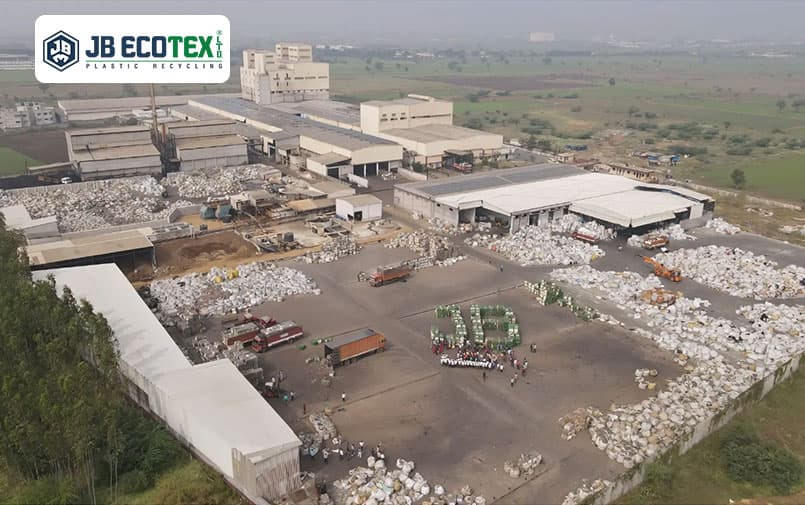
JB Ecotex works across multiple rPET material forms, including rPET flakes, rPET pellets, recycled PET resins, and recycled polyester fibre. These materials are supplied for use in textile spinning, nonwoven applications, strapping, and rigid packaging, with processing aligned to application-specific requirements rather than a single end use.
Key practices that support alignment include:
- Sourcing rPET flake only from audited recycling streams linked to post-consumer PET bottles
- Maintaining separate processing and traceability records for textile and packaging-grade rPET materials
- Testing rPET pellets at defined intervals to ensure consistency with application requirements
- Structuring documentation to support EPR reporting, customer audits, and cross-border shipments
This operational approach mirrors the direction of global recycling systems, where compliance is evaluated through process transparency rather than end-product claims alone. As plastic recycling worldwide becomes more structured, manufacturers with integrated documentation and quality controls are better positioned to respond to regulatory changes without supply disruption.
Rather than treating rPET recycling as a downstream sustainability function, aligning it with core manufacturing systems allows rPET materials to remain usable across markets with differing regulatory thresholds.
Mechanical and Chemical rPET Recycling in Global Standards
Global standards increasingly urge the use of both mechanical and chemical rPET recycling, keeping in mind material suitability for different applications.
Mechanical rPET recycling remains widely accepted for textile fibers, strapping, and food packaging. Regulations focus on feedstock control, washing efficiency, and contamination limits. This pathway supports high-volume rPET flake production and remains central to global recycling systems.
Chemical rPET recycling is gaining regulatory attention in regions seeking to address hard-to-recycle streams or restore polymer quality for sensitive applications. Authorities evaluate these processes based on conversion efficiency, impurity removal, and alignment with plastic recycling laws.
Key regulatory considerations include:
- Whether chemical recycling outputs qualify as recycled under national definitions
- How recycled content from chemical processes is reported under EPR packaging regulations
- Energy use and emissions within global waste management frameworks
Manufacturers evaluating both routes must align process selection with end-market acceptance rather than technical capability alone.
The Future Direction of rPET Materials Standards
Global standards for rPET materials are moving toward greater harmonization, deeper traceability, and broader application coverage.
Chemical recycling pathways are gaining regulatory attention, particularly for applications where mechanical recycling faces limitations. Digital product passports and material tracking systems are being discussed across multiple jurisdictions.
As global recycling targets tighten, rPET materials will increasingly be treated as regulated inputs rather than alternative materials.
Manufacturers that build systems around compliance, transparency, and material understanding will find themselves better positioned in this evolving landscape.
How Buyers and Brands Evaluate rPET Materials Today
Brands and converters sourcingr PET materials now evaluate suppliers using criteria that extend beyond recycled content percentages. These expectations are shaped by internal sustainability reporting, regulatory exposure, and public commitments tied to global recycling goals.
Evaluation factors commonly include:
- Alignment of rPET materials with applicable plastic recycling laws in sales markets
- Consistency of rPET flake or rPET pellets quality across production batches
- Transparency in rPET recycling sourcing and documentation
- Ability to support EPR packaging regulations reporting requirements
- Readiness to respond to audits linked to plastic recycling worldwide disclosures
World Recycling Day campaigns and global sustainability benchmarks have increased visibility into recycling claims. As a result, buyers increasingly favor suppliers who demonstrate structured compliance rather than reactive documentation.
The Direction of rPET Materials in a Regulated Global Market
rPET materials sit at the intersection of regulation, manufacturing, and environmental responsibility. Their role in textiles and packaging is expanding not because of marketing narratives, but because policy, infrastructure, and economics are aligning.
Understanding global standards for rPET materials allows manufacturers to move with confidence across markets, reduce regulatory risk, and participate meaningfully in global recycling systems.
As plastic recycling worldwide continues to evolve, informed manufacturers will shape how rPET materials are produced, applied, and trusted across industries.