
Sustainability 3.0: The Next Era of Sustainability Innovation Beyond Recycling
The sustainability conversation has changed. Ten years ago, brands were applauded for simply “recycling.” Five years ago, they were asked about carbon footprintsThe sustainability conversation has changed.
Ten years ago, brands were applauded for simply “recycling.” Five years ago, they were asked about carbon footprints. Today, the questions are deeper.
- How circular is your supply chain?
- Where does your waste actually go?
- Is your material truly traceable?
- Are you innovating or just complying?
This is where sustainability innovation enters its next phase.
We are no longer in an era where basic recycling is enough. We are moving toward Sustainability 3.0, a model built on technology, systems thinking, material science, and accountability. It moves beyond waste management and into value creation.
Defining Sustainability Innovation in Industrial Context
Sustainability innovation refers to the structured integration of new technologies, operational systems, and circular material flows that enhance environmental performance without compromising industrial reliability.
Unlike incremental environmental programs, sustainability innovation redesigns systems at their foundation.
It integrates:
- Circular material recovery
- Sustainable technology for processing efficiency
- Renewable energy deployment
- Advanced recycling technology
- Closed loop recycling models
- Traceable supply chains
In manufacturing, sustainability innovation influences:
- Raw material procurement
- Energy sourcing strategy
- Water treatment and reuse
- Process optimization
- Lifecycle planning
Sustainability innovation becomes measurable when it produces quantifiable improvements in renewable energy share, recycled content integration, water reuse rates, and circular economy participation.
Under Sustainability 3.0, sustainability innovation is a structural requirement rather than a competitive differentiator.
The Role of Lifecycle Thinking in Sustainability Innovation
Sustainability innovation is most effective when viewed through a lifecycle lens.
Lifecycle thinking evaluates the environmental performance of a product from raw material sourcing to production, use, recovery, and reintegration. It strengthens circular economy participation by ensuring that sustainability measures are not isolated but interconnected.
In a Sustainability 3.0 framework, lifecycle integration considers:
- Energy sourcing during manufacturing
- Water intensity across processing stages
- Recycled content integration
- End-of-life recoverability
- Closed loop recycling potential
This approach aligns sustainable technology with measurable industrial outcomes.
By integrating lifecycle thinking into material recovery and renewable energy systems, sustainability innovation becomes a continuous improvement model rather than a one-time intervention.
Sustainability 3.0: A Structured Evolution
The evolution toward Sustainability 3.0 can be understood through three phases:
Sustainability 1.0: Awareness
Focused on pollution control, waste diversion, and environmental compliance.
Sustainability 2.0: Efficiency
Integrated energy efficiency, ESG reporting, carbon accounting, and renewable targets.
Sustainability 3.0: System Architecture
Sustainability 3.0 integrates:
- Circular material flows
- Renewable energy infrastructure
- Zero Liquid Discharge systems
- Advanced recycling technology
- Sustainable technology for precision processing
- Transparent circular economy metrics
This phase reflects industrial maturity. Sustainability innovation becomes aligned with productivity, resource stability, and long-term operational continuity.
Circular Economy as the Structural Core
The circular economy is a material systems model that seeks to eliminate waste through continuous reuse.
In industrial terms, circular economy integration requires:
- Efficient waste collection networks
- High-precision sorting systems
- Mechanical recycling process optimization
- Chemical recycling technology for advanced material restoration
- Reintegration into manufacturing supply chains
Within the plastic circular economy, the objective is to maintain polymer value through multiple lifecycles.
This involves:
- Designing for recyclability
- Strengthening closed loop recycling systems
- Integrating recycled feedstock into production
- Supporting traceability mechanisms
Sustainability innovation ensures that circular economy principles operate at scale rather than at pilot level.
Designing for Circularity: Product-Level Integration
Sustainability 3.0 begins at the design stage.
Products designed for circularity prioritize:
- Material compatibility
- Recyclability
- Reduced composite complexity
- Efficient recovery pathways
In the plastic circular economy, design alignment supports smoother mechanical recycling process performance and improved feedstock quality.
By integrating sustainable technology considerations during product development, manufacturers like JB Ecotex strengthen closed loop recycling potential.
Design integration ensures that sustainability innovation extends from concept to recovery.
Sustainability Innovation and Advanced Recycling Technology
Advanced recycling technology strengthens material recovery and product consistency.
It includes:
- High-efficiency washing systems
- Automated optical sorting
- Polymer stabilization techniques
- Chemical recycling technology for depolymerization
- Sustainable technology for contamination control
Advanced recycling technology enhances feedstock quality, enabling higher-value recycled outputs.
By combining mechanical recycling process systems with chemical recycling technology where appropriate, industries can expand the scope of circular recovery.
Sustainability innovation aligns these technologies with renewable energy sourcing to maximize environmental performance.
Mechanical Recycling Process in Depth
The mechanical recycling process is central to PET recovery within the plastic circular economy.
Key stages include:
1. Collection and segregation
2. Sorting through automated and manual systems
3. Removal of contaminants
4. Washing and drying
5. Flake production
6. Melt filtration
7. Pelletization or fiber conversion
Continuous advancements in sustainable technology improve:
- Sorting precision
- Polymer stability
- Process efficiency
- Yield consistency
Within Sustainability 3.0, the mechanical recycling process operates within renewable-powered infrastructure, strengthening both circular economy outcomes and emissions reduction performance.
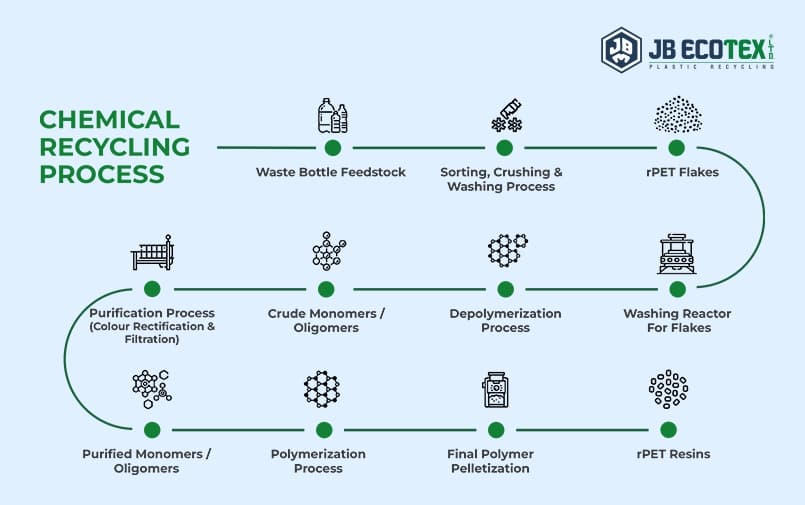
Chemical Recycling Technology Integration
Chemical recycling technology operates at the molecular level, enabling restoration of polymer building blocks.
It supports:
- Enhanced circularity in complex streams
- High-quality resin regeneration
- Broader integration into advanced applications
In a Sustainability 3.0 framework, chemical recycling technology complements mechanical systems to expand recovery capacity.
Together, these systems support a resilient plastic circular economy.
Renewable Energy Infrastructure in Sustainability 3.0
Energy sourcing defines the carbon intensity of industrial operations.
Sustainability innovation integrates renewable energy systems to strengthen environmental performance.
Key components include:
- Wind power installations
- Solar photovoltaic capacity
- Energy efficiency optimization
- Load balancing and grid integration
Renewable energy integration improves:
- Operational stability
- Long-term energy predictability
- Carbon performance metrics
Within a circular economy structure, renewable energy enhances the environmental value of recycled materials.
Sustainability Innovation and Scope-Based Emissions Alignment
Industrial sustainability performance is increasingly evaluated across three emission categories:
- Scope 1: Direct operational emissions
- Scope 2: Emissions from purchased electricity
- Scope 3: Value chain emissions
Sustainability innovation contributes to Scope 1 and Scope 2 improvements through renewable energy integration and process optimization.
Circular economy participation influences Scope 3 performance by reducing virgin material demand and increasing recycled content integration.
By combining advanced recycling technology, renewable energy systems, and closed loop recycling, Sustainability 3.0 strengthens emissions alignment across the value chain.
This structured approach enhances environmental transparency and measurable performance.
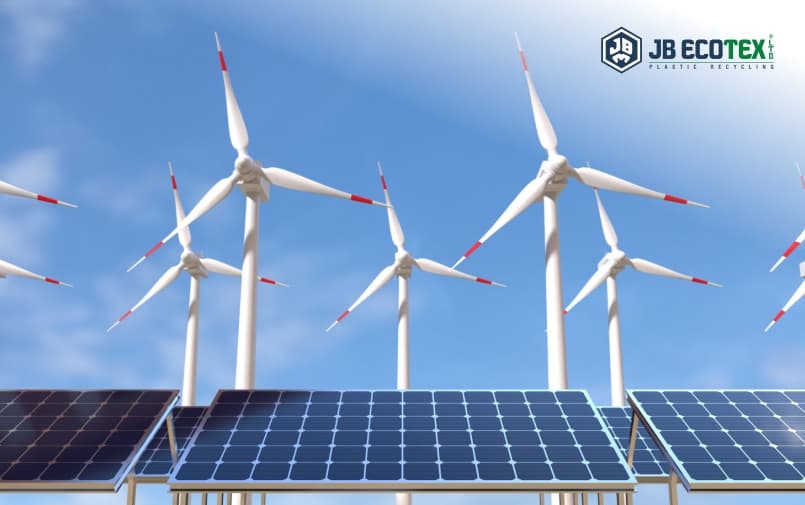
The Convergence of Renewable Energy and Circular Material Systems
Sustainability 3.0 reflects the convergence of two critical systems: circular materials and renewable energy.
Circular economy frameworks maintain material value. Renewable energy systems reduce the carbon intensity of processing those materials.
When advanced recycling technology operates within renewable-powered infrastructure, sustainability innovation achieves compounded impact.
Closed loop recycling combined with wind and solar integration strengthens:
- Carbon performance
- Energy resilience
- Material recovery efficiency
- Operational sustainability
This convergence defines the structural maturity of Sustainability 3.0.
Water Circularity and Zero Liquid Discharge
Water stewardship is integral to Sustainability 3.0.
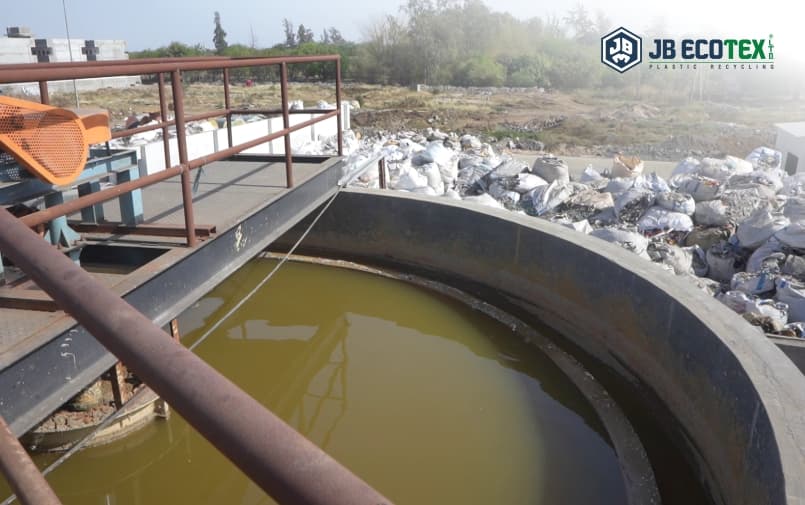
Zero Liquid Discharge systems ensure that wastewater is treated, recycled, and reused internally.
This approach strengthens sustainability innovation by:
- Reducing freshwater dependency
- Supporting compliance
- Protecting surrounding ecosystems
- Improving operational efficiency
Water circularity complements material circularity within a comprehensive sustainability innovation framework.
Digital Traceability and Sustainable Technology
Modern circular economy systems rely on digital infrastructure.
Sustainable technology enables:
- Material flow tracking
- Recycled content verification
- Energy consumption monitoring
- Water reuse measurement
- Lifecycle analysis integration
Traceability strengthens transparency and builds trust across supply chains.
Within Sustainability 3.0, digital systems reinforce measurable sustainability innovation.
Regulatory Alignment and Market Expectations
Sustainability 3.0 aligns with evolving regulatory landscapes.
Extended Producer Responsibility models encourage circular material recovery.
International buyers increasingly prioritize:
- Recycled content
- Renewable energy sourcing
- Water stewardship compliance
- Transparent ESG reporting
Sustainability innovation enables companies to meet these expectations while strengthening their circular economy participation.
Economic Stability Through Sustainability Innovation
Sustainability innovation enhances economic resilience.
Circular material recovery supports:
- Reduced dependency on virgin feedstock
- Improved supply stability
- Enhanced resource efficiency
Renewable energy integration provides:
- Greater long-term predictability
- Reduced exposure to fossil price volatility
Sustainable technology investments strengthen operational consistency and long-term industrial performance.
How Sustainability 3.0 Strengthens Supply Chain Resilience
Sustainability 3.0 enhances industrial stability by integrating circular material systems and renewable energy infrastructure.
Circular economy models reduce reliance on linear extraction pathways by reintegrating recovered materials into production cycles. Within the plastic circular economy, this supports material continuity and improves predictability of feedstock availability.
Renewable energy systems contribute to operational stability by diversifying power sourcing.
Through sustainability innovation, companies can strengthen:
Material flow reliability- Energy sourcing continuity
- Resource efficiency
- Production predictability
In this way, Sustainability 3.0 reinforces long-term industrial resilience.
Measurable Indicators of Sustainability 3.0
Sustainability 3.0 requires quantifiable metrics. Key indicators include:
- Renewable energy percentage
- Total installed green capacity
- Closed loop recycling integration
- Water recycling rate
- Zero liquid discharge compliance
- Recycled material throughput
- Circular economy participation
Data-backed performance reinforces sustainability innovation credibility.
Material Traceability and Transparency in the Circular Economy
Traceability is an essential component of Sustainability 3.0.
In a circular economy framework, material tracking ensures that recycled content is verifiable, responsibly sourced, and reintegrated into production systems transparently.
Sustainable technology platforms now enable:
- Batch-level material tracking
- Recycled content verification
- Energy consumption monitoring
- Water reuse documentation
Transparent systems reinforce sustainability innovation by providing measurable evidence of circular performance.
Traceability strengthens trust across supply chains and enhances circular economy credibility.
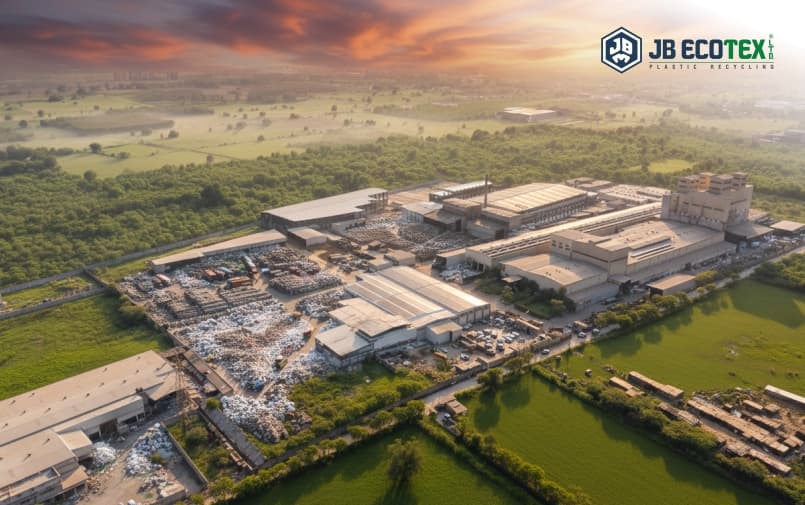
JB Ecotex: Sustainability Innovation in Practice
JB Ecotex integrates circular material recovery, renewable energy adoption, and water stewardship within a structured Sustainability 3.0 framework.
Circular Material Recovery
Through structured PET bottle processing, JB Ecotex supports closed loop recycling within the textile ecosystem.
The mechanical recycling process converts post-consumer PET into recycled polyester fiber, strengthening the plastic circular economy.
Renewable Energy Commitment
By FY 2025, 80–85 percent of electricity consumption is sourced from renewable energy.
Total installed green energy capacity: 15.8 MW.
Wind Energy
- 7.2 MW total capacity
- 3 windmills in Gujarat
- 2.1 MW at Khiri
- 2.1 MW at Gondal
- 3.0 MW at Gondal
Solar Energy
- 8.6 MW total capacity
- 1.2 MW operational
- 2.0 MW expected January 2025
- 5.4 MW at Jetda expected January 2025
Renewable integration strengthens sustainability innovation across energy systems.
Zero Liquid Discharge
- 100 percent wastewater recycled
- Zero liquid discharge from operations
Water circularity reinforces circular economy principles beyond material recovery.
Industry Collaboration in Advancing Sustainability Innovation
Sustainability innovation operates most effectively within collaborative ecosystems.
Circular economy systems require coordination between:
- Material producers
- Recycling infrastructure operators
- Energy providers
- Technology developers
- Regulatory bodies
Partnership-driven frameworks strengthen advanced recycling technology deployment and renewable energy scaling.
Through collaborative integration, Sustainability 3.0 evolves from isolated initiatives into systemic industrial transformation.
Sustainability 3.0 as the Future of Industrial Systems
Sustainability innovation continues to evolve through:
- Renewable energy scaling
- Advanced recycling technology refinement
- Closed loop recycling expansion
- Sustainable technology integration
- Digital traceability systems
- Circular economy collaboration
Sustainability 3.0 reflects the convergence of circular material systems, renewable infrastructure, and measurable industrial performance.
It represents the maturation of sustainability innovation from concept to operational architecture.
Industries that integrate circular economy principles with renewable energy systems and water stewardship are shaping the next phase of resilient manufacturing.
At JB Ecotex, sustainability 3.0 is not a marketing narrative. It is a structured industrial transformation built on sustainability innovation.
Frequently Asked Questions on Sustainability 3.0 and Sustainability Innovation
What is sustainability innovation?
Sustainability innovation refers to the development of new technologies, processes, and systems that improve environmental performance while maintaining industrial efficiency. It integrates circular economy principles, renewable energy adoption, advanced recycling technology, and sustainable technology into core manufacturing and supply chain operations.
What is Sustainability 3.0?
Sustainability 3.0 is the third phase of industrial sustainability, where environmental responsibility is embedded into operational systems rather than treated as compliance. It combines sustainability innovation, circular economy participation, renewable energy integration, and measurable performance indicators to create resilient production models.
How is Sustainability 3.0 different from traditional sustainability?
Traditional sustainability focuses on waste reduction and energy efficiency. Sustainability 3.0 integrates circular material recovery, renewable energy systems, closed loop recycling, and digital traceability into the entire production lifecycle, making sustainability innovation a structural component of industrial strategy.
What is a circular economy?
A circular economy is an economic model that keeps materials in continuous use through reuse, recycling, and regeneration. It reduces dependency on virgin resource extraction and strengthens material efficiency through closed loop recycling systems and sustainable technology integration.
What is a plastic circular economy?
A plastic circular economy maintains polymer value by collecting, processing, and reintegrating plastics into new production cycles. It combines mechanical recycling process systems, chemical recycling technology, and advanced recycling technology to extend material lifecycles and improve resource efficiency.
What is advanced recycling technology?
Advanced recycling technology refers to enhanced processing methods that improve material recovery and quality. It includes optimized mechanical recycling process systems and chemical recycling technology that restore polymers for reintegration into manufacturing within a circular economy framework.
What is the mechanical recycling process?
The mechanical recycling process involves collecting, sorting, washing, shredding, and reprocessing plastic materials into reusable feedstock. It supports closed loop recycling systems and plays a central role in the plastic circular economy.
What is chemical recycling technology?
Chemical recycling technology breaks plastic polymers into molecular components, allowing them to be regenerated into high-quality materials. It complements mechanical recycling process systems and strengthens sustainability innovation by expanding circular recovery pathways.
What is closed loop recycling?
Closed loop recycling is a system in which a product is recycled and converted back into the same or similar product. It reduces virgin resource dependency and supports circular economy goals by maintaining material value within continuous production cycles.
How does renewable energy support sustainability innovation?
Renewable energy reduces operational carbon intensity and strengthens the environmental value of recycled materials. When combined with advanced recycling technology and circular material systems, renewable energy enhances the overall effectiveness of Sustainability 3.0 frameworks.
Why is sustainability innovation important for industry?
Sustainability innovation strengthens supply chain resilience, supports regulatory alignment, improves energy efficiency, enhances circular economy participation, and reduces environmental intensity. It enables long-term industrial stability while maintaining performance standards.
How does sustainability innovation improve supply chain resilience?
By integrating circular material recovery and renewable energy systems, sustainability innovation reduces dependency on linear extraction pathways and fossil-based power sources. This enhances material continuity, energy stability, and operational predictability within industrial systems.
What are measurable indicators of Sustainability 3.0?
Key indicators include renewable energy percentage, installed green capacity, recycled content integration, water recycling rate, zero liquid discharge compliance, and closed loop recycling participation. These metrics demonstrate structured sustainability innovation performance.
How does sustainable technology contribute to the circular economy?
Sustainable technology improves sorting precision, process efficiency, material traceability, energy optimization, and water reuse. It strengthens advanced recycling technology systems and supports measurable circular economy outcomes.
How do companies implement Sustainability 3.0?
Companies implement Sustainability 3.0 by integrating sustainability innovation into energy sourcing, material recovery, water stewardship, digital traceability, and circular economy frameworks. This structured approach aligns environmental responsibility with operational performance.