Biyo: Biodegradable Polyester Staple Fibre with CiCLO® Technology
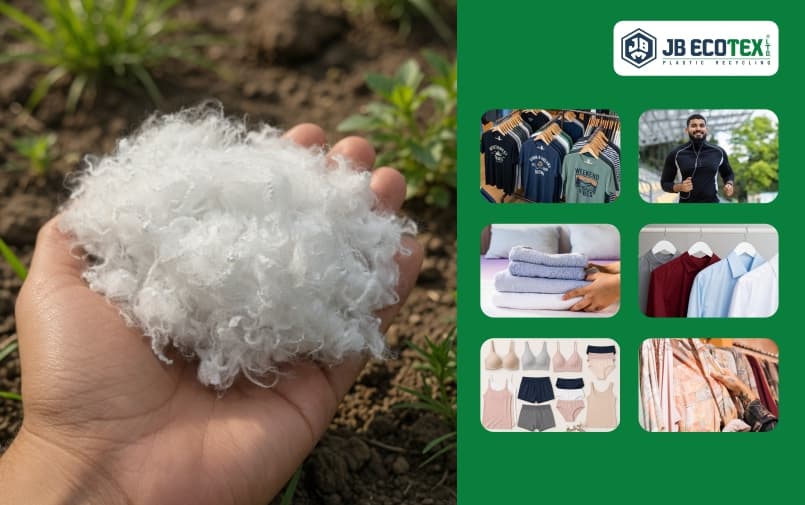
Biyo is a biodegradable polyester staple fibre manufactured at our Surat plant from post-consumer PET bottles, with CiCLO® technology embedded into the polymer during melt spinning. It is specified by sustainability sourcing teams, product developers and spinning mills that have made public commitments on microfibre shedding from synthetic apparel. What separates Biyo from a standard recycled grade is its end-of-life behaviour, because the microfibres it releases carry pathways that allow naturally occurring microbes to digest them under seawater, soil, landfill and wastewater sludge conditions.
Who Biyo Is Built For
Buyers come to this fibre when they already have a sustainability claim to defend and need a material input that holds up to supply chain documentation. Biyo fits programmes where the microfibre question has moved out of marketing language and into the technical specification sheet. It serves:
- Sustainability and sourcing teams at apparel brands carrying microfibre pollution commitments
- Activewear and athleisure labels sourcing biodegradable recycled polyester for activewear ranges
- Intimates and base layer brands needing certified skin-contact inputs
- Brands and converters working against extended producer responsibility targets
- Spinning mills supplying these brands and requiring batch-level traceability
Where your requirement sits outside biodegradability, our wider polyester staple fibre range covers cotton-like, flame-retardant, dope-dyed, high-tenacity and ocean-bound plastic grades.
What CiCLO® Technology Does To A Synthetic Fibre
Synthetic garments shed microfibres continuously. Fragments release during manufacturing, through everyday wear, and in every wash cycle, then travel through wastewater systems into soil and marine environments. Conventional polyester microfibres persist in those environments for decades, which is the specific problem sustainability teams are now being asked to answer for.
CiCLO® technology addresses that shedding at the fibre level rather than the garment level. The additive enters through a CiCLO masterbatch during fibre production and locks into the polymer at the melt spinning stage. Because the chemistry becomes part of the fibre structure, it survives spinning, dyeing, finishing and repeated laundering, with dye behaviour and mechanical properties preserved.
Biodegradation responds to prolonged exposure to moisture and microbial activity, which means it begins after disposal rather than during wear. CiCLO fibres have been tested for breakdown in seawater, soil, wastewater sludge and landfill conditions. Rates vary by environment, temperature and microbial load, so we share laboratory results and the applicable test protocols with buyers on request rather than publishing a fixed timeline. Background on the science behind CiCLO textiles is published by Intrinsic Advanced Materials at ciclotechnology.com
J B Ecotex As A CiCLO® Certified Fibre Manufacture
Brands making a biodegradability claim need that claim to trace back to a certified production route with a controlled feedstock behind it. J B Ecotex operates as a CiCLO® certified fibre manufacturer, and our CiCLO® certification sits alongside GRS, OEKO-TEX® and ISO certification in our compliance file. CiCLO® documentation is available for your vendor onboarding pack.
Biyo is produced on our own line from bottle to bale. Post-consumer PET bottles are procured, segregated and inspected to remove non-PET material, then sorted by polymer type and colour before caps and labels come off and the bottles are crushed into uniform flakes. Those flakes pass through intensive washing and drying to clear dirt, adhesives, oils and moisture. The clean rPET flakes are dried under controlled conditions to build thermal stability ahead of melt spinning, where the CiCLO masterbatch is introduced. Molten polymer extrudes through spinnerets into continuous filament, collects as tow, and is drawn under controlled tension to align the polymer chains and build tensile strength. The drawn tow is crimped, heat-set, dried and cut to staple length, then baled for dispatch.
Holding that full chain inside one facility is what makes per-lot documentation possible. Every Biyo batch ships with confirmation of CiCLO® content for that specific lot, which is the record your compliance team uses to connect a finished garment back to a verified fibre input.
Biyo Fibre Specifications
Biyo runs on standard polyester staple fibre lines with your existing settings. The recycled route uses 100 percent post-consumer PET bottles under GRS certification, and a virgin PET route is available where an application calls for it. Available specifications.
- Denier: 1.2D and 1.4D
- Cut lengths: 32 mm, 38 mm and 44 mm
- Routes: recycled PET (GRS-certified, 100 percent post-consumer) and virgin PET
- Documentation: batch-wise confirmation of CiCLO® content per lot
- Packing: baled for dispatch
- Customisation: available against larger volume requirements
Blended programmes can be planned against our full recycled polyester staple fibre product line, where denier and cut length options extend well beyond the Biyo range
Performance Parity Through Garment Life
A biodegradable rPET fibre earns a place in a commercial range only when it behaves like the fibre it replaces. Biyo holds the tensile strength, colourfastness and abrasion resistance of conventional polyester across the usable life of the garment. Dyeing, spinning and finishing follow your existing polyester routines, with machinery changes and reformulation both avoided.
Biodegradation stays dormant while the garment is in service. The mechanism responds to sustained moisture and microbial exposure, conditions that occur after disposal rather than inside a wardrobe or a wash cycle. Your customer gets the garment life they expect, and the shed fibres get an end-of-life pathway.
Blend Compatibility Across Natural And Synthetic Yarns
Biyo blends with cotton, viscose, modal and synthetic fibres, letting mills build hybrid constructions that hold biodegradability alongside stretch or moisture management. Cotton and viscose blends suit everyday knits and shirting. Elastane and other synthetic blends support performance constructions where recovery matters. Blending behaviour matches the rest of our speciality grades, so mills already running our recycled staple fibre can bring Biyo into an existing programme with minimal trial work.
Applications For Biodegradable Recycled Polyester
Biyo is specified across apparel and light home textile categories where synthetic content runs high and wash frequency is heavy:
- Knit t-shirts and athleisure
- Sportswear and leggings
- Intimates and base layers
- Uniforms and institutional wear
- Bed linens and light home textiles
Sourcing teams comparing microfibre pollution reduction polyester options will find the strongest case in high-wash categories, because that is where shedding volume accumulates fastest across the product life.
How Biyo Differs From Compostable And Bio-Based Polyester
These three categories get used interchangeably in sourcing conversations, and the difference matters the moment a claim reaches a regulator.
Compostable polyester requires industrial composting facilities with controlled temperature, humidity and microbial activity, and performance falls away outside those facilities. Bio-based polyester describes the feedstock, meaning the polymer derives partly or wholly from renewable raw material, while end-of-life behaviour may stay unchanged from fossil-based polyester. Biyo occupies a third position. It is a petroleum-derived polymer recovered from post-consumer bottles and engineered to biodegrade in the natural environments where textile microfibres actually collect. Feedstock circularity and end-of-life behaviour are addressed together, and you can see how that sits inside our broader fibre portfolio.
Certifications And Compliance
Biyo is supplied under the certification framework governing our full fibre output:
- Global Recycled Standard (GRS) Scope Certificate
- OEKO-TEX® Standard 100, Class I
- ISO 14001:2015
- ISO 9001:2015
- CiCLO® certification
Class I under OEKO-TEX® covers articles for babies and toddlers, which is the level relevant to intimates, base layers and skin-contact apparel. Copies of all current certificates are issued with your first order and refreshed on renewal.
Related Grades in the RPSF Range
Biyo is one grade within J B Ecotex’s full recycled polyester staple fibre range. If your application calls for a different colour, chemical or performance specification, the following grades may be relevant:
3002 Low BPA Super-White RPSF – For babywear and skin-contact programmes, with BPA below 1.0 ppm confirmed by lot-wise third-party testing.
3001 Super-White RPSF – Optimised for high optical brightness in spun yarn and home textile applications where shade consistency matters.
Black 6002 Low BPA Dope-Dyed Black RPSF – Dope-dyed black with BPA below 1.0 ppm for babywear, innerwear and next-to-skin black fabric.
RPSF for Spun Yarn – Grades set up for clean running on ring, open-end and vortex spinning lines.
View the full RPSF product range
Request Biyo Samples And Technical Data
Ask our technical sales team for the Biyo Technical Data Sheet, covering denier, cut length, tenacity and elongation values along with the CiCLO® batch documentation format. Trial samples are supplied for spinning evaluation, with dispatch timelines confirmed at enquiry. Bulk quantities ship in bales, and quotations include lead time against your denier and cut length combination.
Write to connect@jbecotex.com with your target construction, blend ratio and volume, and we will respond with specifications, sample availability and pricing.
Frequently Asked Questions
What is biodegradable polyester staple fibre?
It is a polyester staple fibre engineered so that shed microfibres break down through microbial activity in natural environments. Biyo achieves this through CiCLO® technology embedded during melt spinning, using post-consumer PET bottles as the feedstock.
How does CiCLO® technology make polyester biodegrade?
A CiCLO masterbatch is introduced during fibre production, creating pathways within the polymer structure. Naturally occurring microbes use these pathways to digest the fibre once it meets sustained moisture and microbial activity after disposal.
Does Biyo lose strength or colourfastness during use?
Biyo holds the tensile strength, abrasion resistance and colourfastness of conventional polyester throughout garment life. Biodegradation requires prolonged moisture and microbial exposure, conditions that arise after disposal rather than during wear or laundering.
What deniers and cut lengths are available?
Biyo is supplied in 1.2D and 1.4D, with cut lengths of 32 mm, 38 mm and 44 mm. Customised specifications are available for larger volume orders. Both recycled and virgin PET routes are offered.
Can biodegradable rPET fibre be blended with cotton or elastane?
Yes. Biyo blends with cotton, viscose, modal and synthetic fibres including elastane, supporting hybrid fabrics that combine biodegradability with stretch or moisture management for activewear, intimates and everyday knitwear.
Is biodegradable polyester the same as compostable polyester?
These are different categories. Compostable polyester requires industrial composting conditions. Biyo is engineered to biodegrade in seawater, soil, landfill and wastewater sludge environments, where textile microfibres from everyday apparel actually accumulate.
Can fabrics made with Biyo still be recycled?
Yes. Collected before substantial degradation occurs, Biyo re-enters mechanical and chemical polyester recycling streams. CiCLO® technology leaves the recyclability of the fibre intact, which supports circular programmes alongside the biodegradability claim.
How do I order biodegradable polyester fiber samples?
Email connect@jbecotex.com with your denier, cut length, blend ratio and volume requirement. Our technical team issues the Technical Data Sheet, arranges trial quantities for spinning evaluation, and shares CiCLO® and certificate documentation.