
Hot Washed rPET Flakes: How We Ensure Credible, Traceable Recycled Content
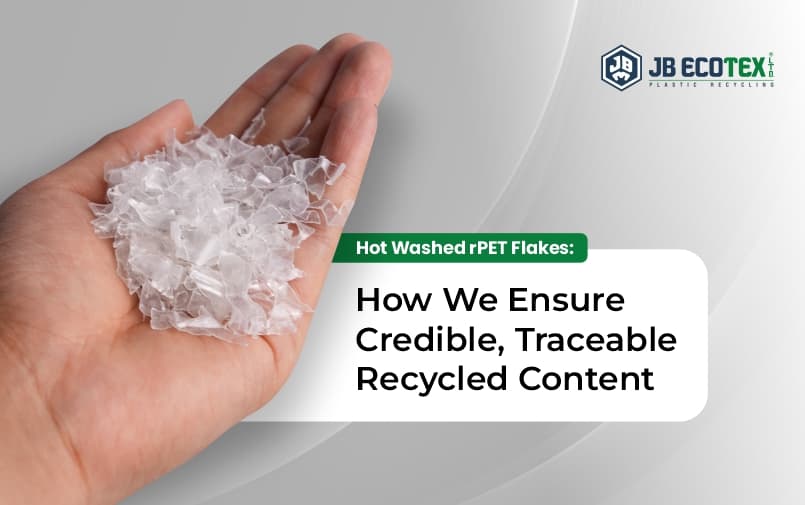
There is a quiet moment in every manufacturing operation when recycled material stops being a sustainability idea and starts becoming a production decision.
It happens when a trial run begins. When a procurement team reviews documentation instead of marketing slides. When a brand asks whether recycled content can be defended six months later, not just announced today.
This is where hot washed rPET flakes sit today. No longer a niche input, yet still scrutinised more closely than virgin material. They are expected to behave consistently, move cleanly through processing lines, and come with a history that can be explained without hesitation.
At JB Ecotex, our work with hot washed rPET flakes has grown alongside this shift. The focus is not just on producing recycled material, but on building systems that manufacturers, converters, and brands can rely on over time.
This article looks at how hot washed rPET flakes are produced, how they are used across industries, why they are steadily replacing virgin inputs, and how traceability has become central to recycled PET sourcing.
Hot Washed rPET Flakes and the Reality of Recycled Inputs Today
The conversation around recycled PET has matured.
Earlier, the question was availability. Now, the question is credibility.
Manufacturers using rPET flakes are no longer satisfied with visual cleanliness or basic specifications. They want to understand how the material behaves during extrusion, spinning, or sheet forming. They want documentation that aligns with audits. They want to know where variability enters the system.
This is why hot washed rPET flakes matter. They are not simply washed material. They are the outcome of controlled processing steps designed to reduce surface contamination, adhesive residues, and inconsistent flake behaviour.
Across industries, plastic flakes buyers increasingly associate hot washing with predictability rather than appearance. That distinction has become important for them when sourcing PET flakes.
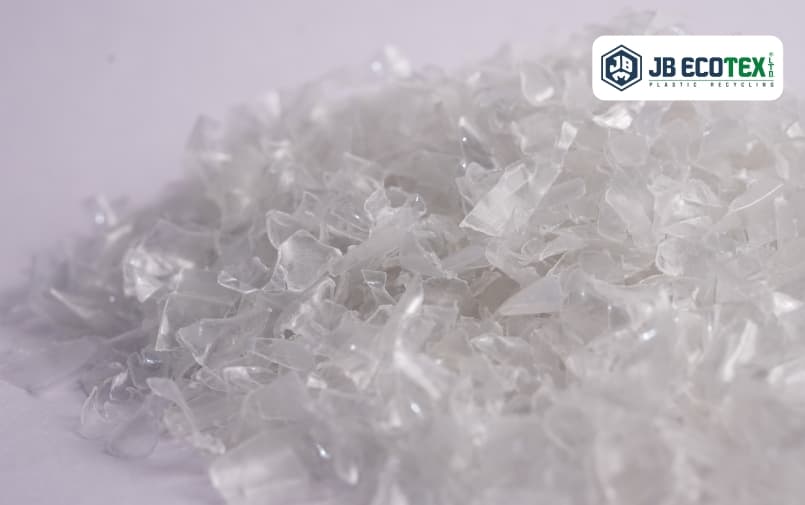
From Post-Consumer Bottles to Manufacturing-Ready Flakes
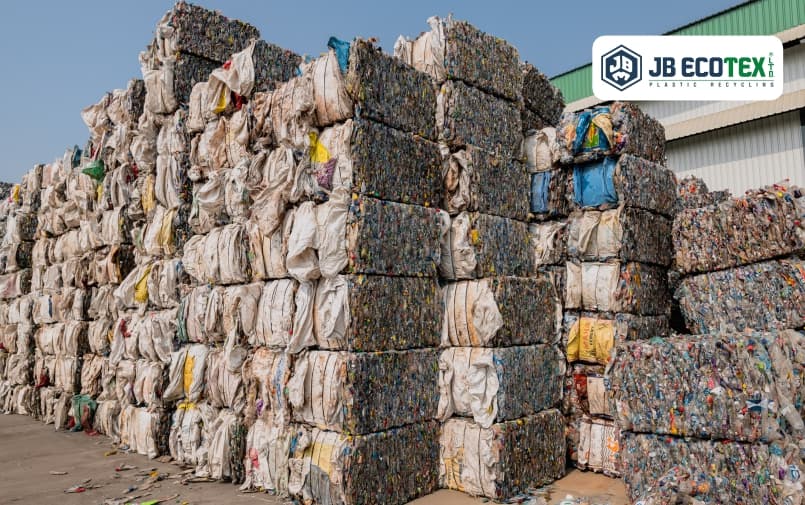
Every recycled input carries the history of its source. PET bottles collected after use arrive with significant variation. Some are clean. Many are not. Labels, caps, dirt, and non-PET materials often travel together.
This variability is why PET flakes recycling cannot rely on a single step. It requires a sequence where contamination is addressed at multiple points. Let’s look at the process of rPET flakes manufacturing in detail:
Bottle Handling and Early Sorting
The journey begins with the handling of post-consumer bottles. At this stage, visible non-PET materials are removed manually, followed by automated sorting systems that help separate PET from other polymers and metals.
Early sorting reduces the burden on later processes. It also prevents contamination from spreading further downstream.
Cleaning Before Size Reduction
Bottles are washed before being reduced into flakes. This stage focuses on removing mud, loose residues, and surface contamination that would otherwise embed itself deeper during size reduction.
Conversion Into Bottle Flake
Once bottles are crushed into bottle flake, the material becomes easier to clean but also more sensitive to process control. Flake size uniformity and contamination levels at this stage influence everything that follows.
Multi-Stage Washing at Flake Level
This is where washed PET flakes earn their classification. Hot washing at the flake stage helps remove adhesive residues, label fragments, and fine contaminants that mechanical washing alone does not fully address.
Multiple washing and rinsing stages are used, not for visual effect, but to stabilise the material for industrial use.
Drying and Conditioning
After washing, flakes are dried to controlled moisture levels. Moisture consistency plays a significant role in extrusion and spinning processes, especially when flakes are used directly as feedstock.
Advanced Sorting After Washing
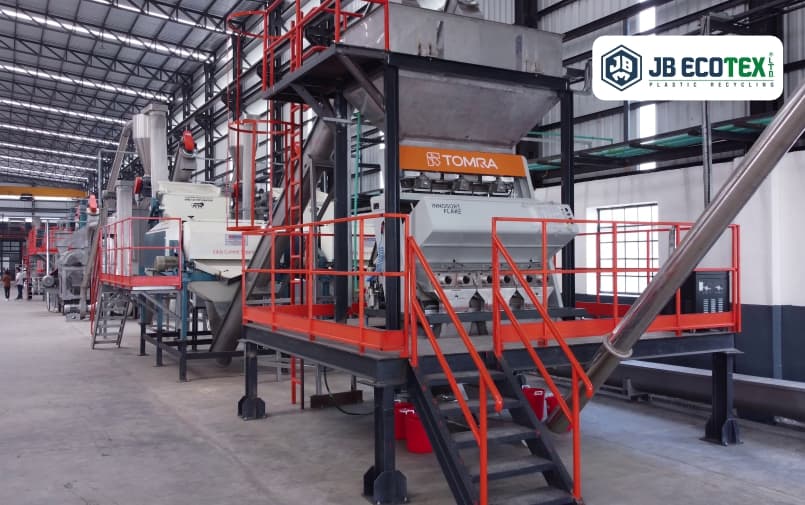
Even after washing and drying, flakes pass through additional sorting stages. Metal separation systems and optical sorters like the ones from TOMRA help remove residual non-PET particles and colour deviations.
This step reflects an important industry reality. Washing reduces contamination, but sorting ensures consistency.
Types of PET Flakes and How They Are Used Across Industries
Not all PET flakes behave the same way, and experienced manufacturers know this well. The way PET bottles are collected, sorted, washed, and processed determines how the final flakes perform in manufacturing environments.
Across the market, PET plastic flakes are broadly differentiated by colour, contamination tolerance, and intended end use. Understanding these differences helps manufacturers select material that aligns with both process requirements and product outcomes.
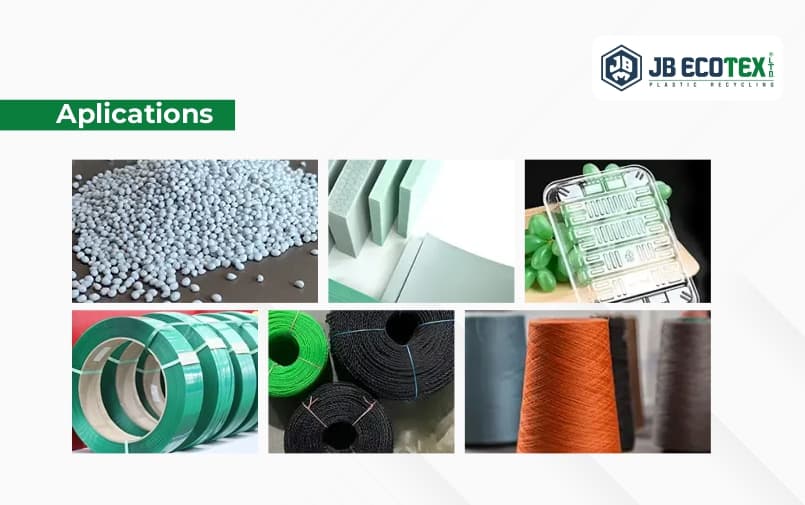
Clear PET flakes are typically preferred for applications that demand visual consistency and controlled processing behaviour. These flakes are commonly used in bottle-to-bottle resin production, rPET sheets, and certain textile applications where colour stability matters.
Green PET flakes are widely used in industrial applications such as strapping and black yarn manufacturing. In these cases, mechanical performance and extrusion stability take priority over optical clarity.
Mixed-colour PET flakes are used where appearance is managed downstream or is not a limiting factor. Foam boards, industrial strapping, and selected textile applications often rely on this category.
At JB Ecotex, we supply multiple grades across these categories to match how manufacturers actually operate. This allows plastic flakes buyers to choose material based on application needs rather than forcing a one-grade-fits-all approach.
This range also reflects how PET flakes recycling has evolved, shifting from commodity output to application-aligned supply.
Hot Washed rPET Flakes: What “Hot Washing” Actually Changes
Hot washing is often misunderstood as a single operation. In reality, it influences multiple material characteristics.
For manufacturers, the value of hot washed rPET flakes lies in how they reduce variability during processing. Adhesive residues that soften unpredictably, fine contaminants that interfere with melt flow, and surface residues that affect colour stability are all concerns addressed through controlled hot washing. This is an important factor when considering the contaminants in rPET and their solutions.
This matters across applications where PET plastic flakes are expected to perform similarly from batch to batch.
Where rPET Flakes Are Used Across Industries
The use of PET flakes today extends well beyond a single end market.
Packaging and Bottle Applications
Clear rPET flakes are commonly used for bottle-to-bottle resin production, thermoformed sheets, and packaging films. These applications require flakes that support consistent extrusion and forming behaviour.
Textile and Fibre Manufacturing
Textile converters use rPET flakes to produce filament yarn, PSF, mono-filament yarn, and non-woven fabrics. Flake consistency influences spinning stability and yarn quality.
Strapping and Industrial Products
Green and mixed-colour flakes are used in rPET straps, rope making, FIBC bags, and foam boards. These applications prioritise mechanical performance and reliability over appearance. Across these sectors, the role of PET flakes manufacturers in India has expanded as domestic and export demand continues to grow.
What Makes PET Flakes a Versatile Raw Material
The versatility of PET flakes lies in how widely they can be adapted across industries without changing the base polymer.
The use of PET flakes spans packaging, textiles, automotive components, industrial strapping, and non-woven materials. This flexibility comes from PET’s inherent properties combined with processing control at the recycling stage.
When PET flakes are washed, sorted, and graded correctly, they can be directed toward vastly different outcomes. The same bottle flake may eventually become a food-grade container, a polyester filament, or a structural packaging component depending on how it is processed and tested.
This adaptability is one reason rPET flakes have become a preferred recycled input across manufacturing sectors to drive circularity. They allow manufacturers to integrate recycled content without redesigning entire production systems.
For many converters, this versatility also supports phased adoption. Recycled material can be introduced into select product lines before being scaled further, reducing operational risk.
Hot Washed rPET Flakes in Manufacturing: Why Virgin Material Is Being Replaced
The gradual replacement of virgin PET with recycled alternatives is driven by several factors.
Manufacturers are under increasing pressure to reduce material footprints. Brands are committing to recycled content targets. Regulators are paying closer attention to sourcing claims.
In this environment, hot washed rPET flakes offer a balance. They provide recycled content while supporting operational stability when processed correctly.
Replacement rarely happens overnight. Many manufacturers begin with partial substitution. Over time, as confidence builds, recycled content increases.
The shift is less about ideology and more about performance consistency.
Understanding PET Flakes Price Per Kg in Context
Questions around PET flakes price per kg often arise early in procurement discussions. Pricing varies based on flake colour, contamination tolerance, washing intensity, and documentation requirements.
Experienced plastic flakes buyers tend to evaluate price alongside factors such as yield consistency, downtime risk, and quality assurance processes. In many cases, variability carries higher hidden costs than the material itself.
How We Maintain Traceability and Credibility in Hot Washed rPET Flakes
Traceability has become one of the most important expectations in recycled material sourcing. Manufacturers and brands no longer look only at material performance. They want to understand how recycled content is verified, documented, and audited over time.
At JB Ecotex, traceability for hot washed rPET flakes is built through process visibility and documentation rather than marketing claims.
Batch-wise quality checks are conducted to track key parameters such as contamination levels, moisture, and consistency. These checks support manufacturers who require predictable behaviour during extrusion, spinning, or forming.
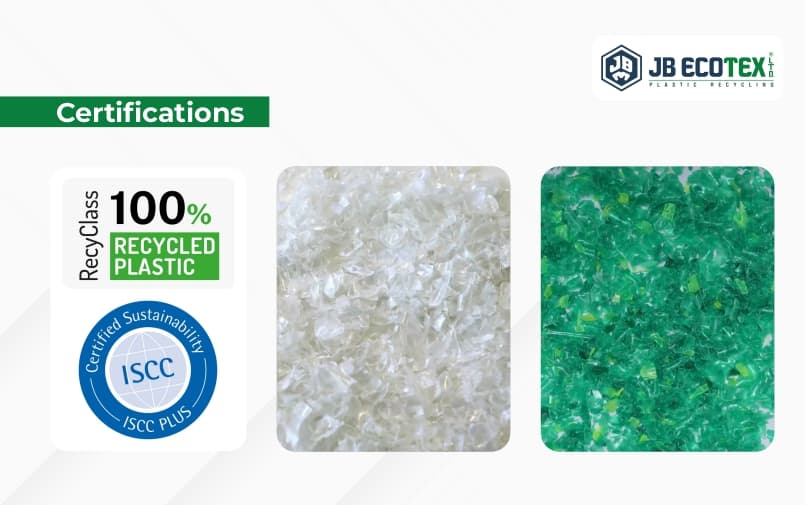
Certifications also play a role in establishing credibility, but each certification serves a different purpose.
- ISCC supports traceability and chain-of-custody verification, which is important for brands tracking recycled content across supply chains.
- GRS focuses on recycled content verification and social and environmental compliance.
- ISO certifications relate to management systems that support process consistency and quality control.
Together, these frameworks help create confidence for buyers who need material traceability aligned with internal audits, customer expectations, and regulatory reviews.
This structured approach is particularly important for hot washed rPET flakes, where application requirements are tighter and documentation often travels further downstream.
Hot Washed rPET Flakes Documentation: What Procurement Teams Look For
Documentation has become central to recycled material sourcing.
Procurement teams increasingly expect:
- Batch-wise testing records
- Certificates of Analysis
- Impurity and contamination reports
- Clear grade definitions
- Traceability across processing stages
For PET flakes manufacturers in India, providing this level of documentation supports long-term relationships rather than transactional supply.
The Present Scenario of PET Flakes Recycling
Globally, PET recycling capacity has increased. At the same time, expectations have risen.
PET flakes recycling today operates within a framework shaped by audits, brand protocols, and evolving regulations. Recycled material is no longer accepted on intent alone. It is assessed on process transparency and repeatability.
This shift has influenced how rPET flakes are produced, tested, and communicated across the value chain.
Other Recycled PET Products by JB Ecotex
While PET flakes form a foundational part of recycled PET supply chains, many manufacturers look for partners who can support broader material needs over time.
Beyond flakes, JB Ecotex operates across multiple recycled PET product categories that serve packaging, textile, and industrial applications. This includes recycled PET resins and downstream material solutions aligned with food-grade and non-food-grade use cases as well as recycled polyester staple fiber for spun yarn, nonwovens, interlining and technical applications.
For manufacturers, this breadth supports continuity. It allows sourcing teams to work with a single supplier ecosystem as material needs evolve, rather than requalifying new partners at each stage.
This integrated approach reflects how PET flakes manufacturers in India are increasingly expected to operate, supporting both material supply and long-term manufacturing planning.
Our Approach to Hot Washed rPET Flakes at JB Ecotex
At JB Ecotex, our approach to hot washed rPET flakes focuses on process discipline rather than claims.
We work with structured sorting at bottle and flake stages, multi-stage washing, controlled drying, and batch-wise testing. These steps are designed to support manufacturers who rely on stable feedstock for continuous operations.
We supply different grades of rPET flakes, including clear, green, and mixed-colour variants, aligned with application requirements across packaging, textiles, and industrial uses.
Traceability and documentation are treated as integral parts of material supply, not as afterthoughts.
A Practical Checklist for Plastic Flakes Buyers
Manufacturers evaluating suppliers often benefit from asking a few practical questions:
- How is contamination addressed at both bottle and flake stages?
- What parameters are tested batch-wise?
- How are grades differentiated and defined?
- What documentation accompanies each shipment?
- How is consistency maintained across production runs?
These questions help align expectations early and reduce friction later.
Why Manufacturers Choose JB Ecotex as Their PET Flakes Manufacturer in India
Choosing a recycled material supplier today involves more than comparing specifications. Manufacturers look for consistency, documentation, and alignment with how their own operations function.
JB Ecotex’s role as one of the PET flakes manufacturers in India is shaped by this reality. Our focus remains on structured processing, application-aligned grades, and traceability that supports real manufacturing environments.
For plastic flakes buyers, this means clearer communication, defined grades, and documentation that supports both procurement and compliance teams.
For manufacturers integrating hot washed rPET flakes into production lines, it means working with material designed to behave predictably, supported by transparent quality checks.
As recycled materials continue to move from sustainability initiatives into core manufacturing inputs, supplier reliability becomes central. That is the role we aim to play within India’s evolving PET recycling ecosystem.