
PET Flakes Recycling: The Building Blocks Your Line Starts With
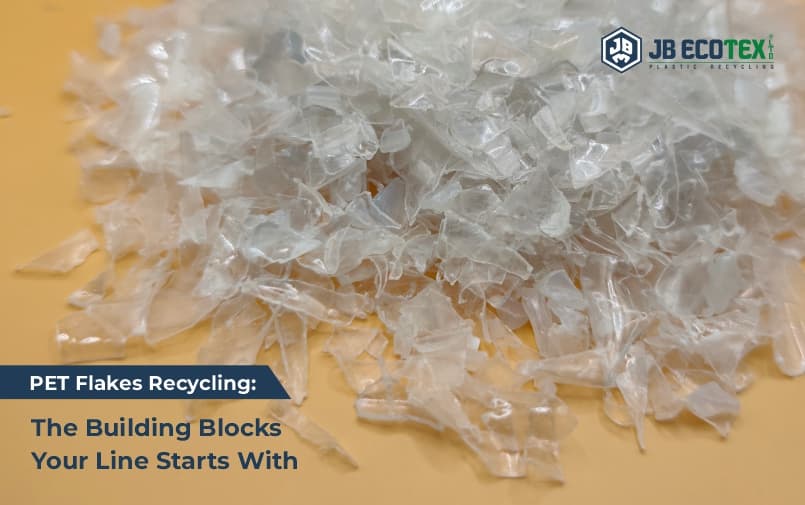
Whatever you build from recycled PET starts as a flake. A water bottle, a filament yarn, a thermoformed tray, a roll of BOPET film, a strapping reel: each one traces back to a small chip of washed PET that had to be clean, consistent, and traceable before it could become anything. Get that flake right, and the products downstream fall into place. Get it wrong, and every issue compounds as the material moves along your line.
At J B Ecotex, rPET Flakes are that starting point. We produce recycled hot-washed PET flakes from 100% post-consumer PET bottles, and we run them through our own lines to make recycled polyester staple fibre and food-grade resin. That gives you a supplier whose flakes prove themselves in production every day. This is what PET flakes recycling looks like when the flake is treated as a building block for everything that follows.
Why the Flake Decides Everything Downstream
Here is the thing a specification sheet can hide: the flake you buy carries every upstream decision with it. How the bottles were sorted, how the material was washed, how carefully other polymers were removed, all of it travels into your melt, your extruder, your spinneret. You inherit that work, for better or worse.
That is why we treat the flake as the foundation of the products it becomes. Clean, low-contamination flake with stable colour opens the widest set of uses, including the demanding ones. Flake with more variation still has a home in applications that tolerate it. The recycling process sets the ceiling, so when you read a flake grade, you are really reading how far that flake can travel before quality gives way.
Where Your Flakes Start: 100% Post-Consumer Bottles
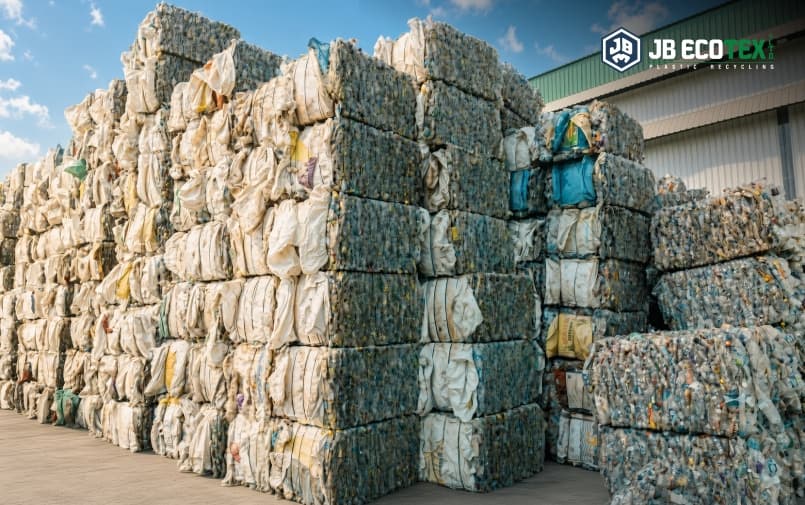
Every flake we make begins as a used PET bottle, sourced entirely from post-consumer streams. That 100% post-consumer basis matters for two reasons. It keeps genuine plastic waste moving back into use, and it gives your recycled-content claims a clean origin to point to.
We draw these bottles from a diversified sourcing network rather than a single channel, which supports steady supply for your line. For you, that means the flake behind your product rests on a feedstock base built for continuity, so the material you qualified stays the material you can keep buying.
How We Turn Post-Consumer Bottles into Clean rPET Flakes
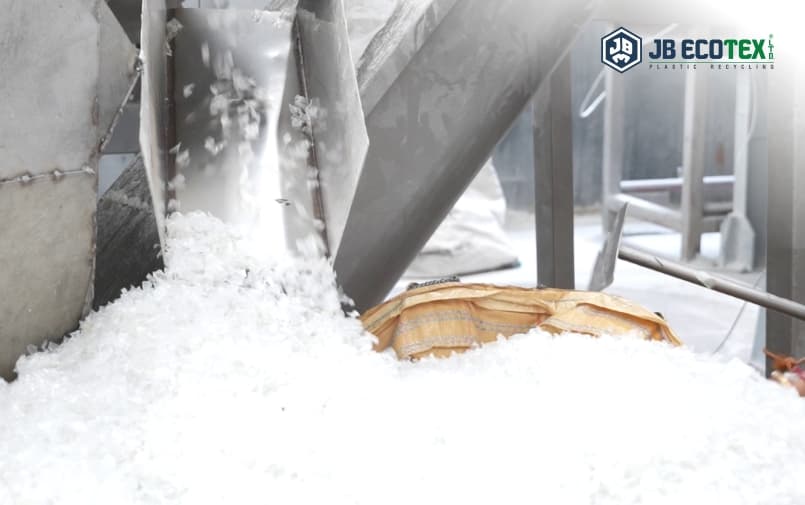
Our rPET Flakes begin as 100% post-consumer PET bottles. From there, the process is built to remove one category of contamination after another until what remains is clean, uniform PET. We run it inside our own PET flakes manufacturing plant, which keeps the whole route under one roof.
We start by sorting. Manual and automated sorting separates PET from other materials and pulls out non-PET content, since whatever stays in the stream at this point carries through to you. The bottles are then crushed.
Washing does the heavy lifting. It lifts labels, adhesives, and residual impurities that a simple rinse would leave behind. After washing, the flake passes through metal separation to remove any metal fragments, then drying to a controlled moisture level, and a final sorting pass to catch residual off-colour or contaminated chips.
What you receive at the end is flake with the purity, consistency, and traceability we design the process around. Because we run these steps together, we can trace a question about any batch back to the stage that produced it.
The Grades You Can Order: Clear, Green, and Mixed
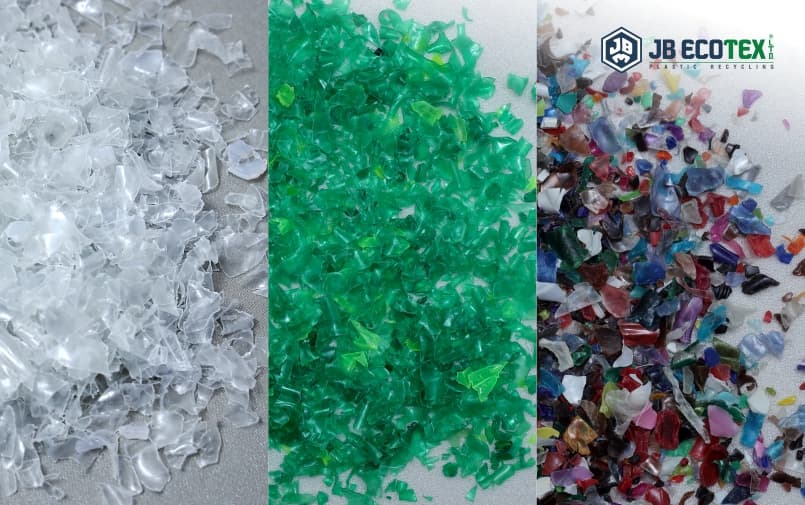
You will rarely want flake in the abstract. You want a grade that matches what you are making, so we produce rPET flakes in clear, green, and mixed-colour grades, each available at different purity and contamination levels.
Clear flake is the most flexible. Because it carries little colour, it keeps the widest set of options open, moving toward clear packaging, bright fibre, and food-grade resin. Green flake suits products where that base colour works with the end result. Mixed-colour flake fits darker end products and dope-dyed fibre, where a clean melt leads the requirement. Matching the grade to your product is the first decision, and it shapes everything after it. Tell us the application and the purity you need, and we point you to the rPET flake grade that fits.
The Six Products Your Flakes Are Built to Become
This is where the building-block idea becomes concrete. Our rPET Flakes are made to become six downstream products, and each one asks something specific of the flake.
Recycled polyester staple fibre (RPSF) is the first. Clean flake melts and extrudes into staple fibre for spun yarn and apparel, often blended with cotton, and into carpets, quilts, curtains, and nonwoven home furnishings. Beyond textiles, the same fibre reaches pillows, cushions, soft toys, car interiors, industrial filters, geotextiles, insulation, and more.
Food-grade B2B rPET resins come next, and they set the highest bar. Flake bound for food-grade resin feeds a process that produces resin for bottles for packaged drinking water, carbonated soft drinks, juices, and alcoholic beverages, along with PET jars, sheets, thermoformed trays, films, and personal care packaging. Here, food-contact compliance sits at the resin stage.
PET sheets and BOPET films follow, where clarity and consistency guide the flake you need, since visible defects and colour drift carry straight into a transparent product. PET straps draw the flake into high-strength banding for logistics, where mechanical strength leads over appearance. Filament yarns take the flake into products that balance strength and cost. Six products, one starting material. This is why we grade and document each batch carefully, so the flake you order suits the block you are building. You can explore the wider use of PET flakes across these applications.
From Flakes to Granules and Food-Grade Resin
Some of your applications use flake directly. Others take it a step further, into granules or resin. Knowing which route your material follows tells you what to weigh.
Fibre runs from clean flake without a granule stage, so the flake feeds spinning as direct feedstock. Food-grade resin takes the flake further. There, the rPET flakes are processed using EREMA VACUNITE or EREMA VACUREMA technology, followed by Solid State Polycondensation from Polymetrix, to produce food-grade resin at specified intrinsic viscosity grades such as 0.76, 0.80, and 0.84 for different processing and packaging needs.
The parameters that lead change with the route. At the flake stage, purity, colour, and contamination guide your choice. At the resin stage, intrinsic viscosity and food-contact compliance move to the front. That shift is why two buyers can read the same flake and prioritise different things. Our page on PET flakes to granules covers that transition in more detail.
What to Check Before You Buy
Before you commit to a flake, a few things are worth confirming. A flake that suits one line can struggle on another, so the checklist below is less about a single number and more about matching the material to what you make. These are what we document, and what you should ask any supplier to show you:
- Colour grade. Clear, green, or mixed, matched to your end product.
- Purity and contamination level. This decides how the flake behaves in your melt and where it can be used.
- Consistency across batches. So the flake you qualify is the flake you receive on the tenth order.
- Traceability. Tying each batch back to its post-consumer source and its processing.
- Application fit. Whether the flake is headed to fibre, resin, sheet, film, strap, or yarn.
Reading these together tells you more than any single line on a spec sheet. A flake can look right on colour and still carry contamination that shows up later, so the full picture is what counts. When we make rPET Flakes available for sale, we start from your application and work back to the grade and documentation that fit it.
One Flake, Consistent Order After Order
A trial tells you whether a flake works once. What you actually need is the same flake on the next order, and the one after that. Consistency is one of the attributes we design our rPET flakes around, alongside purity and traceability, because a converter builds a production plan on it.
We hold that consistency through controlled sorting, washing, and grading, and through batch records that let us compare one lot against the last. For you, that turns flake from a variable you manage into a constant you can plan around. The colour grade, purity level, and application fit you qualified to stay steady as your volume grows.
Proven in Our Own Production
Most flake suppliers ask you to trust the specification. We can show you something more: we use our own rPET flakes as the feedstock for our recycled polyester staple fibre and our food-grade resins. The flake you buy is the same building block that runs through our own lines.
That vertical link matters to you in a practical way. A flake that has to perform in our fibre spinning and our food-grade resin production faces the same demands your line will place on it. When the material clears our internal use, it arrives with a track record behind it. You get flakes that are made to be built on, because we build on it ourselves.
This is grounded in time, beyond intent. We have produced recycled polyester staple fibre since 2015, added rPET flakes in 2020, and brought food-grade B2B rPET resin online in 2024. Across those years, our flakes have fed our own fibre and resin production, which is the clearest test a feedstock can face before it reaches a customer.
Certifications and Traceability You Can Document
Certifications turn a promise into something you can put in front of your own auditors. Our recycling is certified under the Global Recycled Standard, which verifies recycled content and traces it through the supply chain. For flake that goes on to food-grade resin, the resin is produced to comply with the Food Safety and Standards Authority of India and the United States Food and Drug Administration requirements for food-contact applications.
Traceability runs through all of it. Each batch ties back to its post-consumer PET source and its processing conditions, which supports your audits and the recycled-content documentation your customers increasingly ask for. When you make a recycled-content claim, that chain of custody is what turns your statement into evidence.
Building with a Flake You Can Rely On
Everything you make from recycled PET is only as good as the flake it starts with. At J B Ecotex, we produce rPET Flakes from 100% post-consumer PET bottles, clean them through sorting, hot washing, and metal separation, and back them with GRS certification and batch-level traceability. Then we prove them on our own fibre and resin lines before they reach yours. That is what makes them a building block you can rely on across a long production run.
If you are sourcing flakes for fibre, resin, sheet, film, strapping, or yarn, the next step is simple. Tell us your application, your colour grade, and your volume, and we will match you to the flake and the documentation that fit. Our team can share samples and specifications so you can qualify the material on your own line before you scale.
Frequently Asked Questions
What are rPET flakes made from?
J B Ecotex rPET flakes are made from 100% post-consumer PET bottles. The bottles are sorted, crushed, deep cleaned, hot washed, metal separated, dried, and sorted into clean flake with consistent purity and traceability for downstream manufacturing.
What can rPET flakes be used to make?
rPET flakes are used to manufacture recycled polyester staple fibre, food-grade B2B rPET resins, PET sheets, BOPET films, PET straps, and filament yarns. Clean, low-contamination flake serves demanding uses such as food-grade resin.
What grades of rPET flakes are available?
J B Ecotex produces rPET flakes in clear, green, and mixed-colour grades, each at different purity and contamination levels. Clear flake carries the widest application range, and colour grade is matched to your end product.
Are rPET flakes suitable for food-grade packaging?
Flake bound for food-grade resin feeds a process that produces resin for food-contact packaging. The resin is produced to comply with FSSAI and US FDA requirements, with food-contact compliance sitting at the resin stage rather than the raw flake.
How does J B Ecotex ensure flake quality?
Manual and automated sorting removes non-PET material, hot washing removes labels, adhesives, and impurities, and metal separation and final sorting clean the flake further. Each batch is traceable and certified under the Global Recycled Standard.
Can I get samples before ordering rPET flakes?
Yes. We start from your application, colour grade, and volume, then share samples and specifications so you can qualify the flake on your own line before scaling. Documentation and batch records support your audits.