
rPET Flake Market in India: Clear and Green PET Flakes Overview
The rPET flake market in India has expanded rapidly over the last few years, largely driven by regulatory shifts rather than voluntary sustainability goals. With mandatory recycled content targets being introduced across packaging categories, recycled PET is no longer an optional input. It is now a compliance-critical raw material for brands operating in food, beverage, and consumer goods sectors.
As Extended Producer Responsibility frameworks and recycled content obligations take effect, companies are required to demonstrate not just intent, but actual usage of recycled materials in their packaging and products. This has brought rPET flake into sharp focus. Every bottle-to-bottle conversion, every recycled PET sheet, and every downstream rPET product begins at the flake stage.
However, regulatory pressure alone does not guarantee material suitability. Clear and green PET flakes differ significantly in origin, processing requirements, and end-use performance. Understanding these differences is essential for meeting compliance targets without compromising product quality or operational efficiency.
This overview looks at the rPET flake market in India through a practical, material-first lens. It examines where rPET flakes come from, how they are processed, and how clear and green PET flakes are applied across packaging and industrial use cases, based on real supply and processing considerations rather than surface-level claims.
rPET Flake: The Foundation of Recycled PET Value Chains
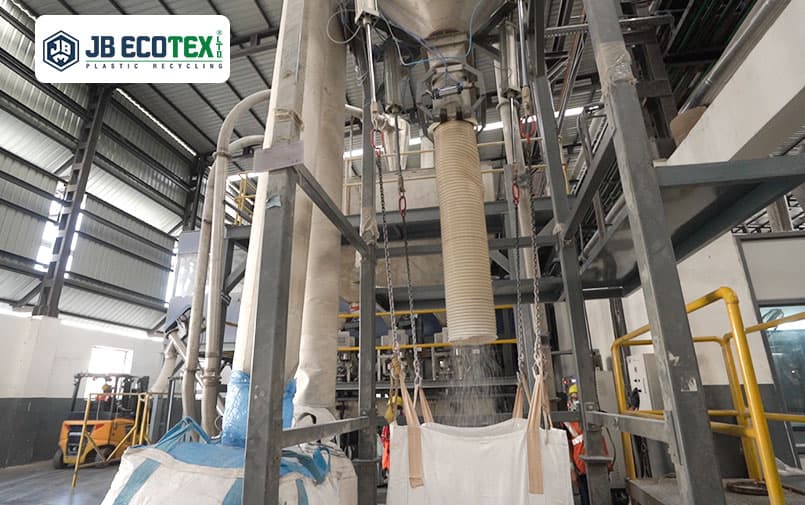
An rPET flake is produced by mechanically recycling post-consumer PET products, primarily bottles, into cleaned, processed plastic flakes. These flakes act as a secondary raw material that can be converted into rPET resin, fibre, sheets, or other downstream products.
India’s rPET flake supply is largely driven by PET bottle consumption, which continues to rise across beverages, edible oils, and packaged consumer goods. Once collected, these bottles enter formal and informal recycling streams before being processed into flakes suitable for industrial reuse.
What differentiates usable rPET flake from low-grade scrap is not origin alone, but processing discipline. Washing quality, contamination control, and sorting accuracy directly impact the final flake’s application suitability and this is exactly what rPET flakes buyers are looking for.
rPET Flake Market in India: Supply, Demand, and Structure
India has emerged as a significant hub in the global rPET flake ecosystem. The market is supported by a strong base of bottle collection networks, processing units, and downstream converters.
The demand for rPET flake in India comes primarily from three sectors:
- rPET resin and bottle-to-bottle applications
- Polyester fibre and nonwoven manufacturing
- Sheet and thermoforming applications
Domestic demand is also influenced by regulatory requirements, particularly Extended Producer Responsibility obligations, which push brands toward recycled content adoption.
However, the Indian market is not uniform. Quality varies widely depending on processing capabilities, input control, and compliance standards followed by suppliers.
Where rPET Flakes in India Actually Come From
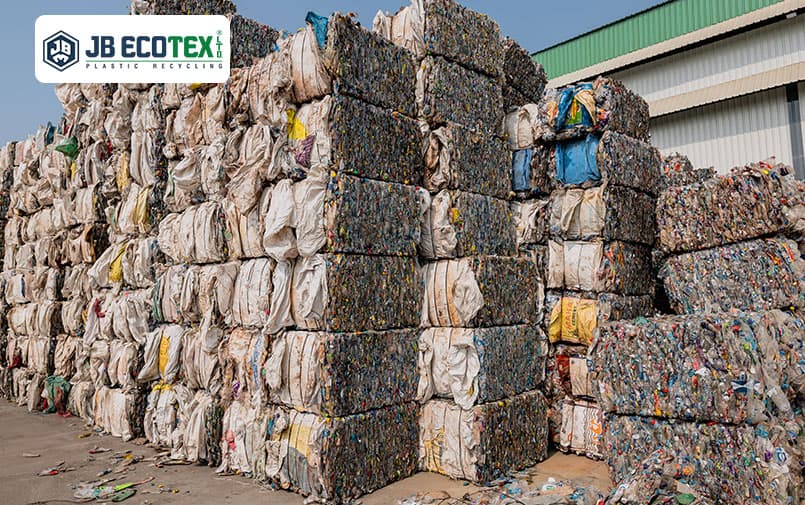
The majority of rPET flake produced in India originates from post-consumer PET bottles collected through a combination of municipal systems, scrap aggregators, and informal recovery networks. Unlike closed-loop collection systems seen in some developed markets, Indian PET recovery is decentralised and highly variable.
This reality directly impacts rPET flake quality. Bottles may differ in age, prior use, exposure conditions, and contamination levels before reaching a recycling facility. As a result, consistent rPET flake output depends heavily on sorting accuracy and washing discipline rather than source alone.
Recyclers who understand this variability design their processes to absorb inconsistency at the input stage and stabilise material quality at the output stage. This is where experience and infrastructure play a defining role in the Indian rPET flake market.
PET Bottle Flakes and Their Role in Recycling Systems
PET bottle flakes are the most common form of recycled PET material traded in India. These flakes originate from post-consumer bottles collected through municipal systems, aggregators, and buy-back programs.
The transformation from bottle to flake involves
sorting, shredding, washing, and drying.
Each step influences flake purity and
performance.
Well-processed PET bottle flakes exhibit:
- Low moisture content
- Minimal PVC and label contamination
- Consistent size and colour
- Stable intrinsic viscosity
For buyers seeking deeper insight into quality expectations, this detailed reference on what buyers evaluate in rPET flakes is useful.
Not all PET bottle flakes are interchangeable. Differences in washing technology and sorting accuracy can significantly affect downstream processing behaviour.
rPET Flake Quality Parameters That Matter to Buyers
From a procurement standpoint, evaluating rPET flake quality involves measurable parameters rather than visual inspection alone.
Key quality indicators include:
- PVC content levels
- Moisture percentage
- Colour consistency
- Flake size uniformity
- Presence of metals or non-PET polymers
An rPET flake that meets stringent quality benchmarks can be directly used in food-grade, fibre-grade, or sheet-grade applications, depending on certification and processing alignment.
Suppliers who control these parameters consistently are able to support long-term supply contracts rather than spot trading.
Yield, Recovery, and Why All Flakes Are Not Equal
From a processing standpoint, yield is one of the most overlooked aspects of rPET flake evaluation. Yield refers to how much usable polymer remains after washing, sorting, and contamination removal.
Lower-quality PET bottle flakes may appear cheaper at first glance, but often result in higher material loss during processing. Contaminants, fines, and inconsistent flake geometry reduce effective output, impacting downstream cost and efficiency.
High-quality rPET flake delivers better recovery rates, more predictable melting behaviour, and lower rejection during extrusion or fibre conversion. For buyers operating at scale, yield consistency often matters more than nominal price.
Clear PET Flakes and Their Industrial Significance
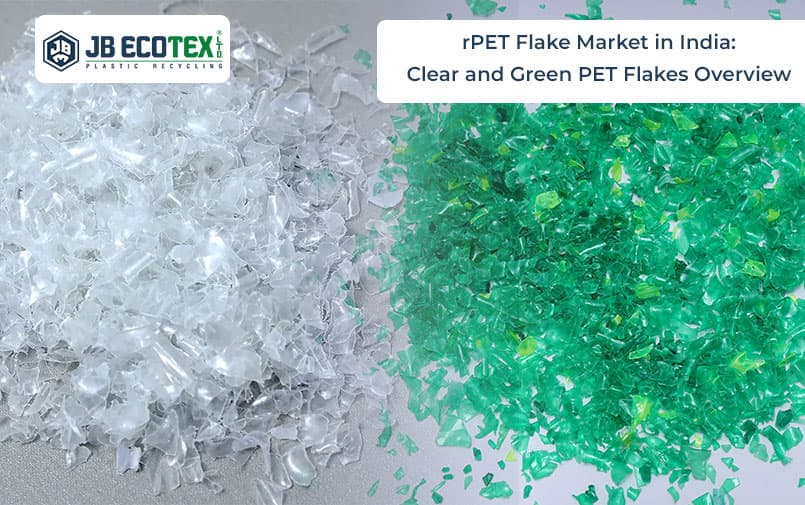
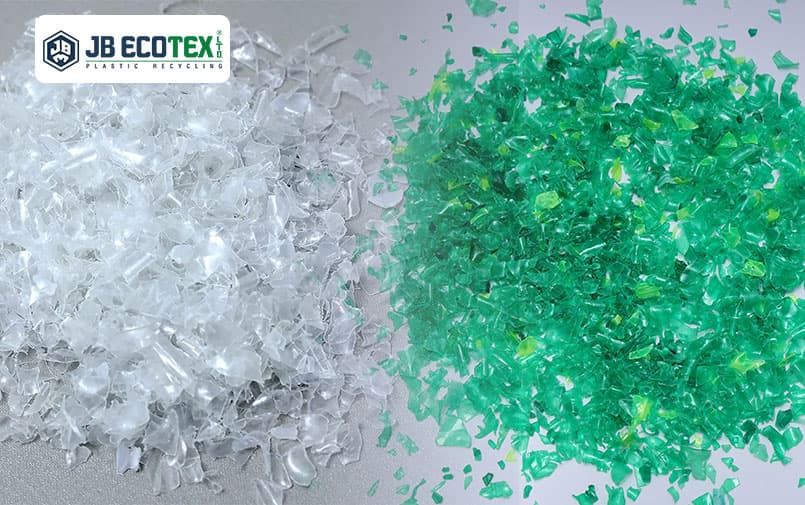
Clear PET flakes are derived primarily from transparent PET bottles. These flakes are highly valued because they retain the polymer clarity required for high-value applications.
Clear PET flakes are widely used in:
- Food-grade rPET resin manufacturing
- Bottle-to-bottle recycling
- Clear sheets and thermoformed packaging
- High-quality polyester fibre
The demand for clear PET flakes continues to grow as global brands push for higher recycled content in food and beverage packaging. Consistency in colour and contamination control is critical for these applications.
Clear PET flakes that are processed under strict quality control systems offer higher yield during resin conversion and lower rejection rates. At JB Ecotex, our processes are structured to ensure the above.
Green PET Flakes and Their Market Applications
Green PET flakes originate from colored PET bottles, commonly used for beverages and household products. While they are not suitable for clear packaging applications, they play an important role in the recycled PET ecosystem.
Green PET flakes are commonly used in:
- Textile and fibre manufacturing
- Nonwoven and insulation products
- Strapping and industrial applications
Because green PET flakes carry inherent colour, they are better suited for applications where transparency is not required. Their use helps maximize recycling efficiency by ensuring that colored PET waste is also diverted from landfills.
In the Indian market, green PET flakes are often blended or directed toward fibre-based end uses, supporting circularity beyond packaging.
Bottle Flake Processing and Its Impact on End Use
The term bottle flake broadly refers to PET flakes derived from bottles, regardless of color. However, the processing route determines whether a bottle flake is suitable for high-end or limited applications.
Key processing stages include:
- Pre-sorting by colour and polymer type
- Hot washing to remove adhesives and oils
- Density separation to eliminate contaminants
- Drying and quality inspection
Well-processed bottle flake supports stable melting behaviour and predictable output in downstream extrusion systems.
rPET Flake Applications Across Industries
The versatility of rPET flake lies in its ability to serve multiple industries depending on processing and certification.
Packaging and Food Contact Applications
Clear PET flakes are converted into rPET resin for food-grade bottles and containers, subject to regulatory approvals and super-clean recycling processes.
Textile and Fibre Applications
Both clear and green PET flakes are used to manufacture recycled polyester fibres for apparel, home textiles, and nonwovens.
Sheet and Thermoforming
rPET flakes are used to produce sheets for trays, clamshells, and packaging components, particularly in food and consumer goods sectors.
PET Strapping Applications
rPET flakes are also used in the manufacture of PET strapping for load securing and packaging applications across logistics, warehousing, and industrial supply chains.
Each application places different demands on flake purity, colour, and consistency.
Common Mistakes Buyers Make When Sourcing rPET Flakes
One of the most common mistakes buyers make is treating all rPET flake as interchangeable. Visual inspection alone does not reveal contamination levels, moisture content, or processing behaviour.
Another frequent issue is sourcing flakes without aligning them to the intended application. Clear PET flakes used for fibre, or green PET flakes evaluated for clarity-sensitive applications, often lead to avoidable performance issues.
Experienced buyers prioritise specification matching, process compatibility, and supplier transparency over short-term cost advantages.
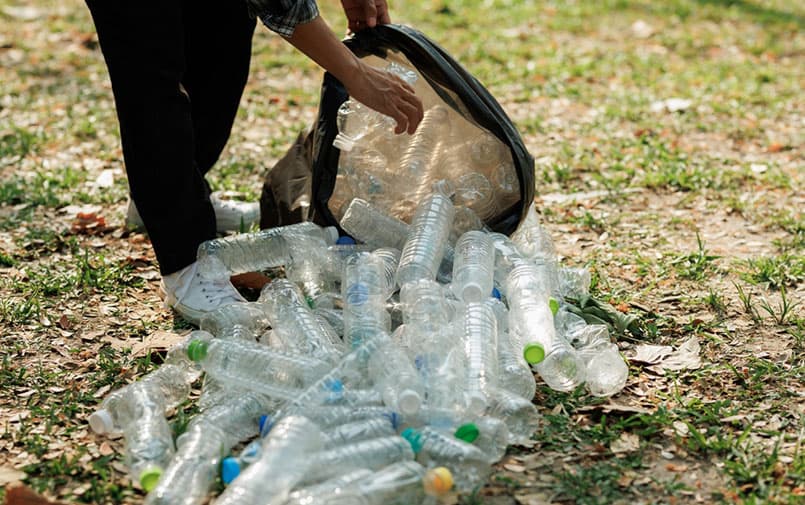
rPET Flake Supply Chain in India India’s
rPET flake supply chain is characterized by a mix of organized recyclers and informal collection networks. This structure provides volume but also introduces variability.
Reliable suppliers invest in:
- Consistent input sourcing
- Modern washing and sorting infrastructure
- Batch-level quality checks
- Traceability documentation
As buyers increasingly demand consistency and compliance, the market is gradually shifting toward organized, technology-driven recyclers.
What Actually Drives rPET Flake Pricing in India
rPET flake pricing in India is influenced by a combination of material, operational, and regulatory factors rather than recycled content alone.
Key drivers include:
- Availability and quality of PET bottle feedstock
- Level of sorting and washing required
- Energy and water costs
- Compliance and documentation requirement
- Demand from resin and fibre manufacturers
Clear PET flakes generally command a premium due to their suitability for food-grade and bottle-to-bottle applications. Green PET flakes follow a different demand curve, driven primarily by fibre and industrial usage.
Understanding these drivers helps buyers evaluate offers beyond surface-level pricing.
Regulatory and Sustainability Context
The growth of the rPET flake market in India is closely tied to sustainability regulations and EPR frameworks. Brands are required to meet recycled content obligations, which directly increases demand for quality rPET flakes.
This regulatory push has elevated the importance of traceable, compliant suppliers who can support audits and reporting requirements.
JB Ecotex and the rPET Flake Market
As an experienced recycler and supplier, JB Ecotex operates within this evolving rPET flake ecosystem with a focus on quality, consistency, and application alignment.
JB Ecotex processes both clear and green PET flakes with controlled systems designed to meet the expectations of resin manufacturers, fibre producers, and industrial users. The emphasis remains on producing flakes that perform reliably across downstream processes rather than treating recycling as a volume-only operation.
By aligning processing parameters with end-use requirements, JB Ecotex supports long-term supply partnerships rather than transactional trade.
The Future of rPET Flake in India
The Indian rPET flake market is moving toward higher standards driven by global brand requirements, regulatory oversight, and performance expectations. Clear and green PET flakes will continue to play complementary roles across packaging and textile value chains.
For buyers of recycled PET flakes, understanding the origin, processing quality, and application fit of rPET flakes is becoming essential. For recyclers, the ability to deliver consistent, traceable material will define long-term relevance.
JB Ecotex’s Perspective
As demand for recycled materials accelerates, rPET flake has moved from the margins of recycling into the core of industrial supply chains. In India, this shift brings both opportunity and responsibility.
Clear and green PET flakes serve different roles, but their success depends on the same fundamentals: disciplined processing, realistic sourcing strategies, and application-aligned quality control. Buyers who understand these fundamentals are better positioned to secure consistent supply and long-term value.
For recyclers and manufacturers alike, the future of rPET flake in India will be shaped not by volume alone, but by the ability to deliver material that performs reliably, integrates smoothly, and supports the broader goals of circular manufacturing.