
How Post-Consumer Recycled PET Powers Circular Solutions for the Textile Industry
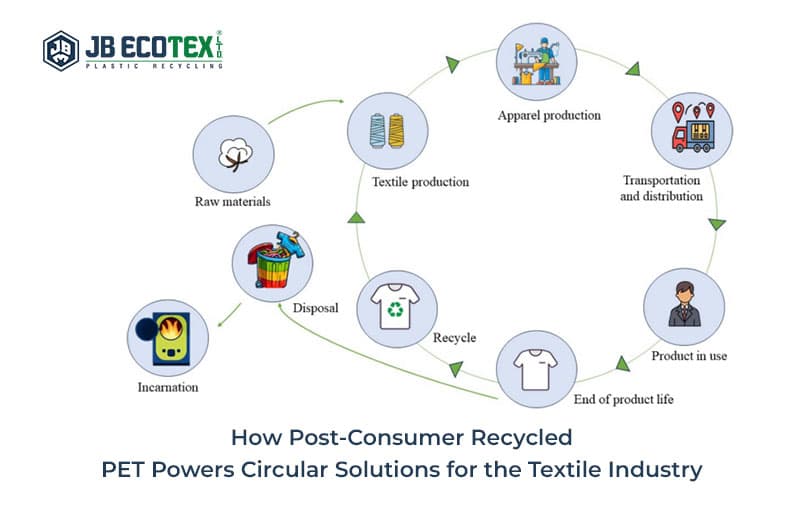
Every textile mill has a moment when material choices stop being theoretical. It usually happens on the shop floor. A spinning line behaves differently than expected. A dye batch shows variation. A buyer asks questions about sourcing that go deeper than price and lead time.
This is where post-consumer recycled PET for industry begins to matter in a practical way.
Across spinning, nonwovens, home furnishing, and technical textile segments, recycled inputs are no longer niche experiments. They are part of regular production planning. Yet, not all recycled materials behave the same. The difference often lies in how post-consumer PET is collected, processed, traced, and converted into fiber that works within existing textile systems.
At JB Ecotex, we operate at the intersection of recycling infrastructure and textile manufacturing realities. This article explains how post-consumer recycled PET for industry supports circular textile systems, what manufacturers need to evaluate when sourcing recycled polyester staple fiber, and how applications across apparel, home furnishing, and technical textiles are evolving based on fiber performance.
Why Post-Consumer PET Has Become Central to Textile Circularity
Textile manufacturing has always balanced cost, performance, and availability. What has changed is the growing need to account for material origin and end-of-life outcomes. Post-consumer PET introduces a loop where discarded plastic bottles re-enter the value chain as textile raw material.
Post-consumer recycled PET for industry refers to PET waste generated after consumer use, collected through formal and informal channels, then processed into usable polymer feedstock. When this feedstock is converted into polyester staple fiber, it allows mills to maintain familiar processing routes while increasing recycled content.
For manufacturers, the appeal lies in continuity. PET recycling allows existing spinning, carding, drawing, and nonwoven systems to function without structural overhaul. The fiber behaves within known parameters when produced under controlled conditions, which makes adoption viable at scale.
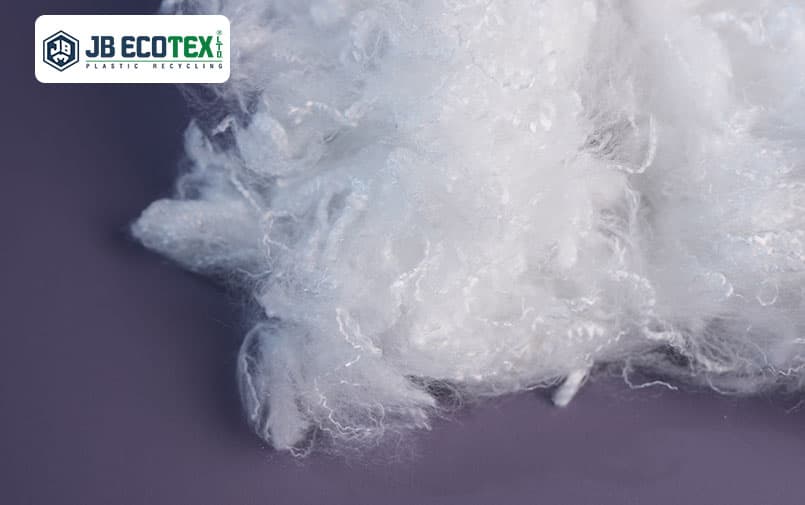
From Bottle to Fiber: What Manufacturers Actually Care About
A recycled input is only useful when it behaves predictably. Mills rarely ask where sustainability narratives begin. They ask where variability ends.
In a recycled polyester staple fiber plant, consistency depends on three core areas:
- Quality of incoming PET feedstock
- Stability of processing conditions
- Batch-level control of denier and cut length
Post-consumer PET bottles vary widely by source. Sorting, washing, and filtration determine how usable that material becomes for fiber production. When these steps are controlled, the resulting recycled PSF supports steady performance across spinning and nonwoven lines.
This is why many buyers evaluate recycled fiber suppliers not just on recycled content, but on their ability to maintain repeatability across batches.
What Manufacturers Evaluate Before Approving Recycled Polyester Staple Fiber
Before any recycled fibre moves into bulk procurement, manufacturers usually run internal trials. These trials are rarely about sustainability narratives. They focus on how the fibre behaves inside real production conditions.
1. Spinning mills and nonwoven producers typically evaluate recycled polyester staple fiber across a few core parameters.
2. Denier consistency plays a central role. Fibre that stays close to its specified denier supports stable drafting and reduces uneven yarn formation. Even small fluctuations can show up during long production runs.
3. Cut length accuracy matters next. Fibres that align well during carding and drawing support smoother fibre flow and reduce lapping issues. This becomes especially relevant in blended yarns where multiple fibres interact during processing.
4. Crimp uniformity influences fibre cohesion. Consistent crimp supports fibre opening, improves blending behaviour, and contributes to smoother spinning performance.
5. Dye uptake behaviour is also observed carefully. Manufacturers look for even shade development across batches, particularly when producing PET polyester fabric or PET yarn fabric for apparel and furnishing applications.
6. Waste generation during processing offers another signal. Mills track fibre loss during carding and spinning to understand real material efficiency.
When post-consumer recycled PET for industry is processed with attention to these parameters, mills are able to qualify recycled PSF alongside existing fibre inputs without altering core production setups.
Recycled PSF and Regenerated Polyester Staple Fiber in Manufacturing
The textile industry often uses terms interchangeably, though they refer to distinct processing routes.
Recycled PSF typically comes from post-consumer PET bottles and PET waste. Regenerated polyester staple fiber refers to recycled material that has undergone additional purification steps to improve uniformity and process behaviour.
Both forms are used across spinning, open-end, and nonwoven applications. The decision between them depends on end-use sensitivity, dyeing requirements, and performance expectations relative to virgin polyester fiber.
In many applications, regenerated polyester staple fiber supports stable blending with cotton, viscose, and other fibers while maintaining acceptable yarn strength and fabric consistency.
Where Recycled Polyester Staple Fiber Fits Best in Textile Manufacturing
Recycled polyester staple fiber supports a wide range of textile applications when aligned with the right use cases. Manufacturers typically match fibre selection with end-product requirements rather than using a single fibre across all product lines.
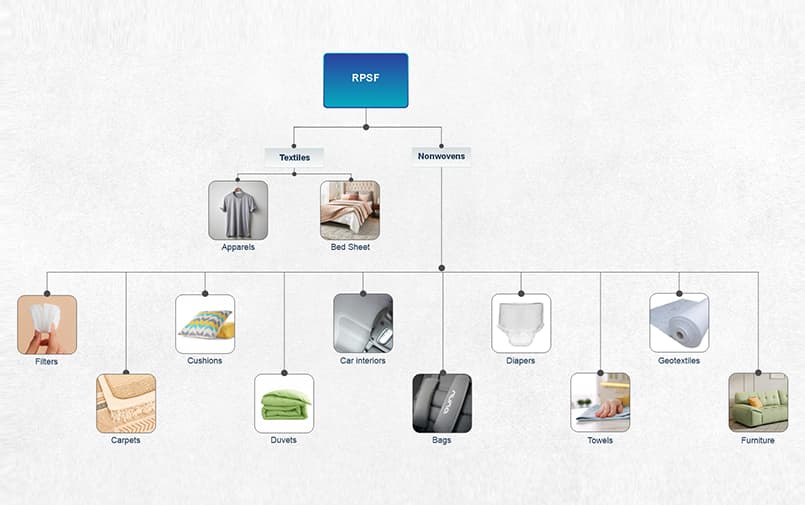
In spun yarn manufacturing, recycled PSF performs well in apparel blends, uniforms, home textiles, and knitted fabrics where strength, durability, and process stability are expected.
In nonwoven production, higher denier variants support applications such as filtration media, automotive interiors, insulation layers, and geotextiles. These segments value dimensional stability and predictable fibre geometry.
Certain applications benefit from regenerated polyester staple fiber, especially where appearance, dye uniformity, or fine yarn control plays a larger role. Mills often evaluate regenerated fibre for products positioned closer to premium apparel or detailed furnishing fabrics.
Understanding where recycled polyester staple fibre applications align best helps manufacturers integrate recycled content while maintaining product performance and consistency.
Understanding Fiber Variants: Solid and Hollow Structures
Polyester staple fiber performance is influenced by its internal structure.
Solid recycled polyester staple fiber is widely used in spun yarns, woven fabrics, and knitted textiles where dimensional stability and strength matter.
Hollow recycled polyester staple fiber contains air pockets that improve bulk, insulation, and softness. This makes it relevant for filling materials, bedding, cushions, and certain home furnishing products.
Manufacturers choose between solid and hollow variants based on thermal performance, weight targets, and tactile expectations rather than sustainability labels alone.
Blending Recycled Polyester Staple Fiber in Commercial Yarn Production
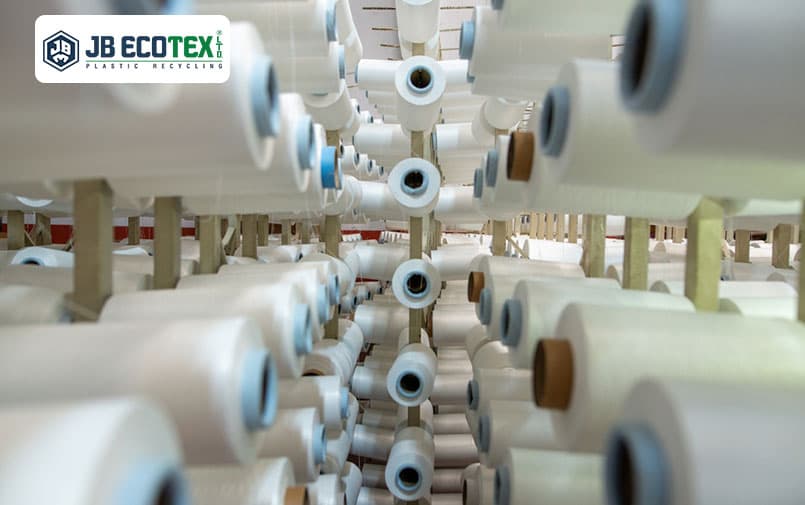
Most spinning mills work with blended yarns. Recycled polyester staple fiber is commonly blended with natural and regenerated fibres to balance performance, cost, and fabric characteristics.
In cotton blends, recycled PSF contributes strength, dimensional stability, and durability. Manufacturers often use recycled polyester staple fiber for apparel and home furnishing blends where wrinkle resistance and fabric life matter.
Blends with viscose or other regenerated fibres support softer hand feel and drape. These blends appear frequently in PET yarn fabric used for apparel, furnishings, and lifestyle textiles.
Blend ratios vary by application. Apparel yarns often use moderate polyester content to balance comfort and durability. Home furnishing yarns typically increase polyester proportion to support abrasion resistance and fabric longevity.
Understanding blending behaviour helps mills plan yarn recipes that integrate recycled inputs without disrupting spinning efficiency or fabric quality.
Recycled Polyester Staple Fibre Applications Across Industries
The versatility of recycled fiber explains its growing adoption.
Apparel and Lifestyle Textiles
Recycled polyester staple fiber for apparel supports yarns used in t-shirts, uniforms, blends, and athleisure fabrics. When processed correctly, it contributes to smooth spinning and acceptable dye uptake.
Fabrics such as rPET polyester fabric, PET yarn fabric, and polyester fabric made from plastic bottles are now familiar to garment manufacturers supplying both domestic and export markets.
These fabrics often balance durability with recycled content messaging that brands increasingly request.
Home Furnishing and Interiors
Recycled polyester staple fiber for home furnishing appears in upholstery, curtains, bedding, carpets, and cushions. Bulk, resilience, and color consistency matter more than tensile extremes in these applications.
Materials like fabric made of plastic bottles and PET polyester fabric have found steady demand in this segment due to their compatibility with existing production lines.
Filtration and Technical Textiles
Recycled polyester staple fiber for filtration and technical applications includes nonwovens used in automotive interiors, insulation, geotextiles, and industrial filters.
Here, higher deniers and specific cut lengths support dimensional stability and airflow performance. Recycled fiber adoption in these segments depends on predictable fiber geometry rather than visual aesthetics.
Who Uses Recycled Polyester Staple Fiber Today
Recycled polyester staple fiber is used by a wide range of textile stakeholders.
1. Spinning mills integrate recycled PSF into yarns for apparel, uniforms, and home textiles.
2. Nonwoven manufacturers use it for filtration, insulation, and automotive interiors.
3. Home furnishing producers rely on it for cushions, bedding, and upholstery.
4. Technical textile companies apply it in geotextiles and industrial fabrics.
This diversity reflects how recycled fibre has become part of mainstream textile production rather than a niche input.
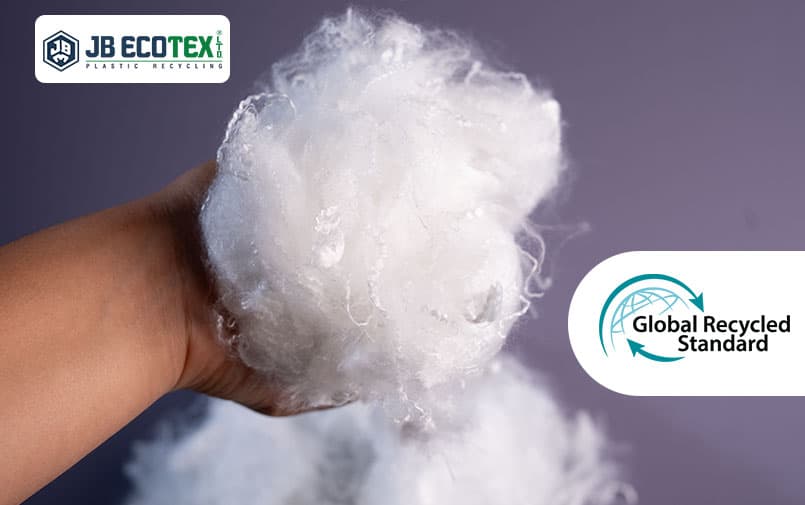
Where GRS Certification Fits Into Buyer Decisions
Many manufacturers now encounter compliance questions during audits and brand negotiations. GRS certified recycled polyester staple fiber provides traceability across the recycling and fiber production chain.
GRS certification focuses on:
- Verified recycled content
- Chain of custody documentation
- Environmental and social criteria within processing
For mills supplying global brands, certification often simplifies documentation rather than changing fiber performance itself. It helps align sourcing with brand policies without altering established production methods.
How Traceability Is Maintained in Post-Consumer Recycled PET for Industry
Traceability begins long before fibre reaches the spinning line. For post-consumer recycled PET for industry, traceability involves documenting material flow across multiple stages.
The process starts with collection of post-consumer PET bottles through formal and informal recovery networks. These materials are sorted based on polymer type and quality.
Sorted PET undergoes cleaning and preparation to remove labels, residues, and contaminants. Processed flakes then move into controlled recycling systems that convert PET into polymer suitable for fibre production.
During fibre manufacturing, batches are monitored to maintain consistency across denier, cut length, and appearance. Documentation tracks recycled content and processing stages.
For buyers sourcing GRS certified recycled polyester staple fiber, this traceability supports audit requirements and brand reporting needs. It allows manufacturers to align procurement with internal compliance frameworks while maintaining production continuity.
JB Ecotex Polyester Staple Fiber Capabilities
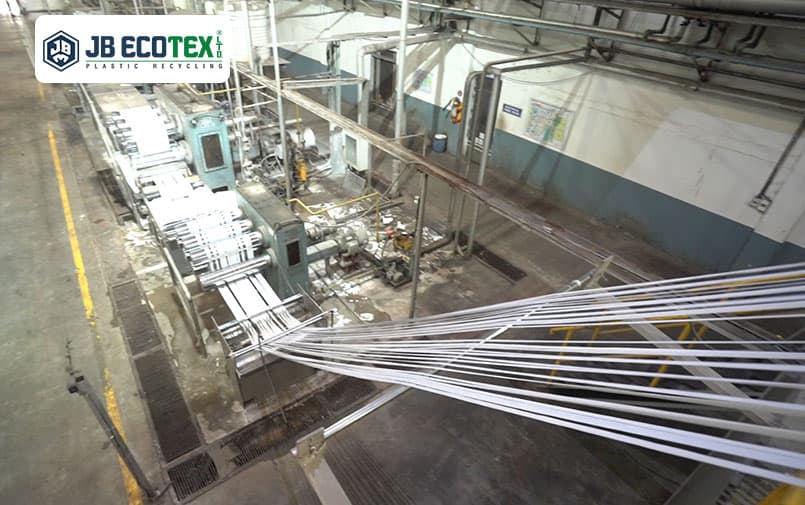
At JB Ecotex, polyester staple fiber production is built around scale, consistency, and flexibility. Our systems are designed to serve spinning mills, nonwoven manufacturers, and technical textile producers with varying specifications.
Denier and Cut Length Availability
We produce polyester staple fiber across a wide denier range, including fine and coarse options suitable for different applications. Common deniers range from sub-denier levels used in fine yarns to higher deniers for nonwovens and filling materials.
Cut lengths are available across industry-standard requirements, with customization for spun yarn, interlining, geotextiles, and nonwoven uses
Fiber Variants Offered
Our portfolio includes:
- Recycled PSF derived from post-consumer PET
- Regenerated polyester staple fiber for controlled applications
- Solid and hollow fiber variants
- Specialty fibers such as cotton-like textures, biodegradable options, flame-retardant grades, and dope-dyed black fibers
These options allow manufacturers to align fiber choice with product function rather than forcing design changes around material limitations.
How Recycled Fiber Integrates Into Existing Textile Systems
One concern manufacturers raise early is system compatibility. Recycled fiber adoption depends on how smoothly it integrates into existing workflows.
At appropriate specifications, recycled PSF supports:
- Carding and drawing without abnormal waste
- Stable blending with natural fibers
- Open-end and ring spinning processes
- Nonwoven bonding and layering operations
This operational familiarity reduces the learning curve for mills transitioning from virgin polyester fiber to recycled alternatives.
PET-Based Fabrics and Market Acceptance
The textile value chain has moved beyond experimental adoption. rPET textile and PET yarn fabric now appear in mainstream apparel, furnishings, and industrial products.
End customers may encounter these materials as polyester fabric made from plastic bottles without recognizing any difference in look or feel. For manufacturers, this acceptance lowers market risk while enabling recycled content integration.
Why Manufacturers Evaluate Suppliers Beyond Price
Fiber sourcing decisions increasingly involve risk assessment. Manufacturers look for suppliers who offer:
- Traceable feedstock
- Batch consistency
- Technical support during trials
- Scalable volume availability
A large-scale recycled polyester staple fiber plant with documented processes provides assurance that supply stability will match production planning needs.
The Role of Post-Consumer Recycled PET for Industry Going Forward
Circularity in textiles depends on systems that function quietly in the background. Post-consumer recycled PET for industry works best when it integrates into manufacturing without disruption.
For textile stakeholders, the focus remains practical:
- Does the fiber run consistently
- Does it meet application requirements
- Does it align with customer expectations
When these conditions are met, recycled inputs move from sustainability initiatives into everyday production decisions.

Questions Textile Manufacturers Ask Before Sourcing Recycled PSF
Can recycled polyester staple fiber
run on existing spinning systems?
Most recycled PSF is designed to operate within
conventional spinning and nonwoven setups when matched with suitable
specifications.
How do manufacturers validate recycled
content?
Buyers rely on supplier documentation, batch records,
and third-party certifications such as GRS to confirm recycled input.
Is recycled polyester staple fiber
suitable for both solid and hollow fibre needs?
Yes. Both solid recycled polyester staple fiber and
hollow recycled polyester staple fiber are available for different functional
requirements.
What industries commonly use recycled
polyester staple fiber today?
Applications span apparel, home furnishing,
filtration, automotive textiles, geotextiles, and technical nonwovens.
How do mills plan volumes when
shifting to recycled fibre?
Manufacturers typically start with trial batches
before scaling procurement based on production feedback and supply consistency.
What Happens to Textiles Made From Recycled Polyester Staple Fiber
Circularity does not stop at fibre production. Textiles made from recycled polyester staple fiber continue the material loop when designed with recyclability in mind.
Fabrics produced from mono-material PET structures support easier recycling at end of life. This includes rPET textile products where polyester remains the dominant fibre component.
Blended textiles may require additional separation steps during recycling. Industry research continues to improve recycling pathways for mixed-fibre fabrics.
As recycling systems evolve, fabrics made from post-consumer recycled PET for industry contribute to future material recovery while maintaining current production efficiency.
Post-Consumer Recycled PET and the Next Phase of Textile Circularity
The textile industry evolves through incremental shifts rather than sudden leaps. Recycled polyester staple fiber reflects this pattern. Its value lies in familiarity, process stability, and adaptability across applications.
At JB Ecotex, our approach to post-consumer recycled PET for industry centers on supporting manufacturers with fiber solutions that respect production realities while enabling circular material flows.
As recycling infrastructure and textile technology continue to mature, the role of recycled fiber will deepen, shaped not by claims but by consistent performance across the supply chain.