
rPET Flakes Manufacturers in India: Turning Post-Consumer PET Waste into Valuable Raw Material
Across industries today, manufacturers are under growing pressure to rethink how raw materials are sourced.
Packaging companies are being asked to incorporate recycled content. Textile manufacturers are exploring sustainable polyester. Plastic processors are searching for stable recycled inputs that can run efficiently in production.
One material sits quietly at the center of this shift.
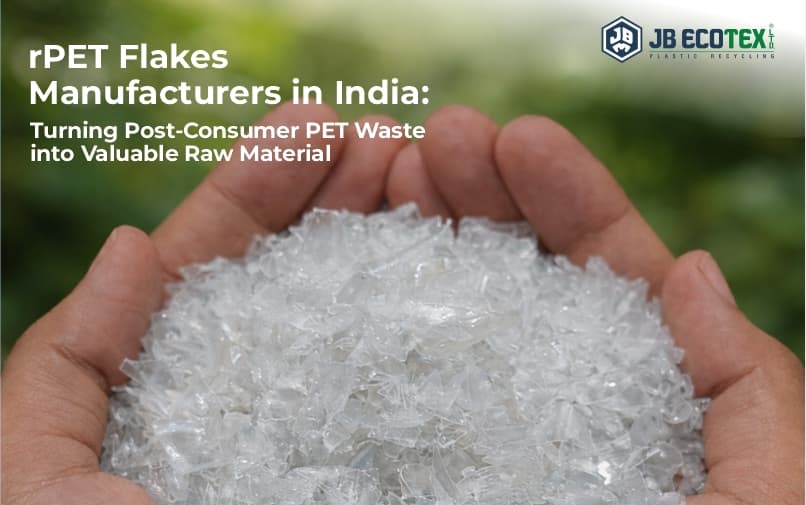
Produced from used PET bottles and containers, these flakes are increasingly becoming a dependable industrial raw material for applications ranging from fiber production to packaging and thermoforming.
As global brands move toward circular packaging commitments and governments strengthen plastic waste regulations, the demand for reliable rPET flakes manufacturers continues to grow.
India has emerged as one of the key global processing hubs for recycled PET materials. With a large PET bottle consumption base, a growing recycling infrastructure, and competitive processing capabilities, Indian producers are supplying rPET flakes to both domestic manufacturers and international buyers.
For companies that depend on recycled PET as a feedstock, understanding how flakes are produced, what quality parameters matter, and how to evaluate suppliers has become essential.
This guide explores how post-consumer PET bottles are converted into flakes, the role of rPET flakes manufacturers in India, and what buyers should look for when sourcing this material.
For Manufacturers Sourcing rPET Flakes as Raw Material
Many manufacturers today are actively searching for dependable recycled PET inputs to support their production processes.
Industries that commonly source recycled flakes include:
- Polyester fiber manufacturers
- Textile producers
- PET sheet manufacturers
- Packaging companies
- Industrial plastic product manufacturers
For these buyers, working with reliable PET flakes suppliers in India helps ensure consistent material availability while supporting sustainability initiatives and circular material use.
The Growing Importance of rPET Flakes in the Circular Plastic Economy
PET, or polyethylene terephthalate, is widely used for beverage bottles, food containers, and packaging.
Its popularity comes from several advantages:
- High clarity
- Strength and durability
- Food safety compatibility
- Excellent recyclability
Unlike many plastics, PET can be recycled multiple times when properly processed.
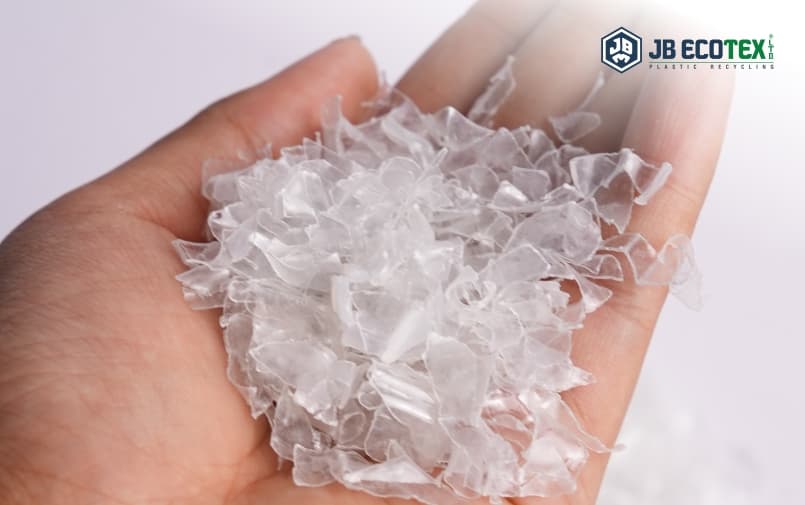
Once used bottles are collected and processed, they are converted into recycled PET flakes, which serve as the base material for several downstream applications.
These flakes can then be used to produce:
- Polyester staple fiber
- Filament yarn
- PET sheets and thermoforming products
- Strapping materials
- Packaging films
- Chemical recycling feedstock
This ability to move from bottle waste back into industrial production is what makes PET recycling one of the most important pillars of the global circular plastics economy.
As sustainability targets expand across industries, the demand for post consumer PET flakes suppliers has grown steadily.
From Waste Bottles to Industrial Raw Material
To understand the value that rPET flakes manufacturers provide, it helps to look at how the transformation process actually works.
PET bottles collected from waste streams are far from ready for industrial use.
They contain:
- Labels
- Caps and rings
- Adhesives
- Dirt and contaminants
- Mixed plastic materials
Processing these bottles into clean flakes requires several stages of sorting, washing, and mechanical processing.
Collection and Sorting
The process begins with the collection of used PET bottles from municipal waste streams, scrap dealers, and recycling networks.
Once collected, bottles are sorted to separate PET from other plastics.
Advanced facilities may use:
- Manual sorting
- Optical sorting technologies
- Density separation systems
Sorting is critical because contamination from other plastics can affect downstream processing.
Label and Cap Removal
Caps are typically made from polypropylene (PP) or high-density polyethylene (HDPE), while labels may contain paper or plastic films.
These materials are removed before bottle processing to ensure purity of the PET stream.
Size Reduction
The bottles are then shredded into small pieces.
This shredding stage converts whole bottles into flakes that can be further processed and cleaned.
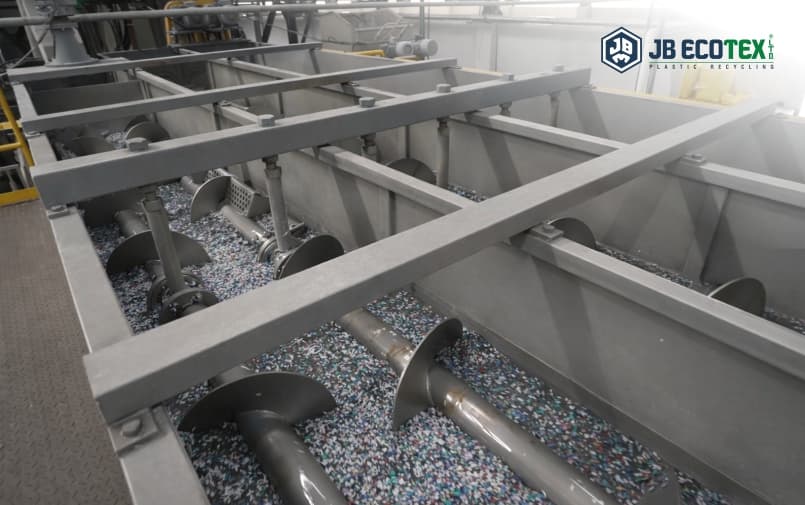
Hot Washing and Cleaning
The flakes undergo intensive washing processes designed to remove:
- Adhesives
- Residual beverages
- Oils
- Dirt and organic contamination
Many modern recycling facilities use hot washing systems, which significantly improve the cleanliness of the flakes. The resulting material is commonly referred to as hot washed rPET flakes.
Drying and Final Sorting
After washing, the flakes are dried and passed through additional sorting and filtering systems.
These steps ensure removal of:
- Remaining contaminants
- Fine particles
- Non-PET materials
The final flakes are then packaged and prepared for sale to downstream industries.
rPET Flakes Manufacturers and Their Role in the Recycling Value Chain
While recycling often appears simple on the surface, producing consistent industrial-grade flakes requires significant expertise and infrastructure.
rPET flakes manufacturers operate facilities that perform the entire conversion process from waste bottles to clean flakes suitable for manufacturing applications.
Their responsibilities typically include:
- Establishing bottle collection networks
- Operating large-scale washing and processing lines
- Maintaining quality control systems
- Ensuring traceability and compliance with recycling standards
- Supplying consistent raw material to manufacturers
For companies using recycled PET as a feedstock, these manufacturers become an essential link in the supply chain.
Without reliable processing facilities, PET waste would remain an environmental challenge rather than a usable resource.
rPET Flakes Manufacturers Supporting India's Recycling Industry
India’s recycling ecosystem has evolved significantly over the last decade.
Several factors have contributed to the growth of the industry:
- Increasing PET bottle consumption
- Strong scrap collection networks
- Export demand for recycled materials
- Sustainability targets from global brands
- Growing domestic demand for recycled polyester
These trends have created a thriving ecosystem of PET flakes suppliers India, many of whom supply both local manufacturers and international buyers.
India today exports recycled PET materials to several regions including:
- Southeast Asia
- Europe
- Middle East
- Africa
As a result, many producers operate not only as domestic processors but also as recycled PET flakes exporters serving global markets.
Clear PET Flakes Manufacturers and Material Quality Considerations
Not all PET flakes are the same.
Material quality plays a critical role in determining how flakes can be used in manufacturing processes.
Among the different grades available, clear PET flakes are often the most sought after.
This is because clear PET bottles provide the highest material purity and allow for better control over final product color and performance.
Many clear PET flakes manufacturers focus on processing transparent bottles separately to produce flakes with consistent appearance and quality.
When sourcing flakes, buyers typically evaluate several parameters.
Color
Flakes may be sorted into different color categories such as:
- Clear
- Light blue
- Green
- Mixed color
Clear flakes are typically preferred for applications where color control is important.
Contamination Levels
Manufacturers closely monitor contamination levels from:
- PVC
- Polyolefins
- Metals
- Paper
Even small amounts of contaminants can affect downstream processing.
Moisture Content
Excess moisture can impact processing efficiency in extrusion or fiber production.
Proper drying ensures flakes remain stable during storage and transport.
Technical Specifications Buyers Evaluate When Sourcing rPET Flakes
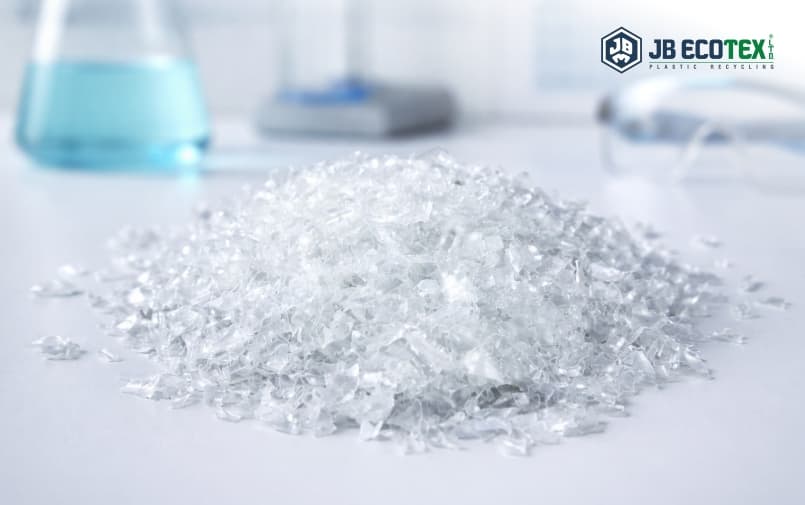
For manufacturers using recycled PET as a feedstock, purchasing decisions are rarely based only on price. Material consistency and technical parameters are critical because flakes must perform reliably during extrusion, fiber spinning, or sheet manufacturing.
Buyers typically evaluate several measurable characteristics before finalizing suppliers.
Moisture Content
Moisture levels affect processing stability. Excess moisture can cause hydrolytic degradation during melting and reduce polymer performance. Properly processed flakes are thoroughly dried to maintain stable moisture levels during storage and transport.
PVC Contamination
PVC contamination is one of the most important quality parameters in recycled PET processing. Even very small quantities can cause degradation and discoloration during melting. Reliable rPET flakes manufacturers implement sorting and separation systems to minimize the presence of PVC particles.
Polyolefin Contamination
Materials such as polypropylene and polyethylene originate from bottle caps and rings. These must be separated during processing to prevent interference with PET processing.
Particle Size Consistency
Uniform flake size ensures smoother feeding during extrusion and consistent melting behavior in manufacturing processes.
Bulk Density
Bulk density determines handling efficiency, packaging, and transportation economics for large-scale industrial buyers.
Color and Transparency
Manufacturers requiring high visual clarity often prefer flakes derived from transparent bottles. Many clear PET flakes manufacturers process these bottles separately to provide consistent appearance and quality.
For companies using recycled PET as a production input, evaluating these specifications helps ensure smooth processing and predictable final product performance.
Why Manufacturers Choose Post Consumer PET Flakes Suppliers
For many industries, recycled PET flakes represent a practical way to integrate recycled content into production.
Manufacturers working with post consumer PET flakes suppliers often benefit from several advantages.
Consistent Feedstock for Polyester Production
Polyester staple fiber and filament yarn producers rely on recycled flakes as a primary feedstock.
These flakes are melted and reprocessed to produce polyester fibers used in textiles, automotive fabrics, and nonwoven materials.
Packaging and Sheet Manufacturing
PET sheets used for thermoforming applications can also be produced using recycled flakes.
These sheets are used in packaging for food containers, clamshell packaging, and trays.
Industrial Applications
Flakes may also be processed into materials used for:
- PET straps
- Films
- Engineering plastics
For manufacturers in these industries, securing a dependable supply of flakes from PET flakes suppliers India is essential.
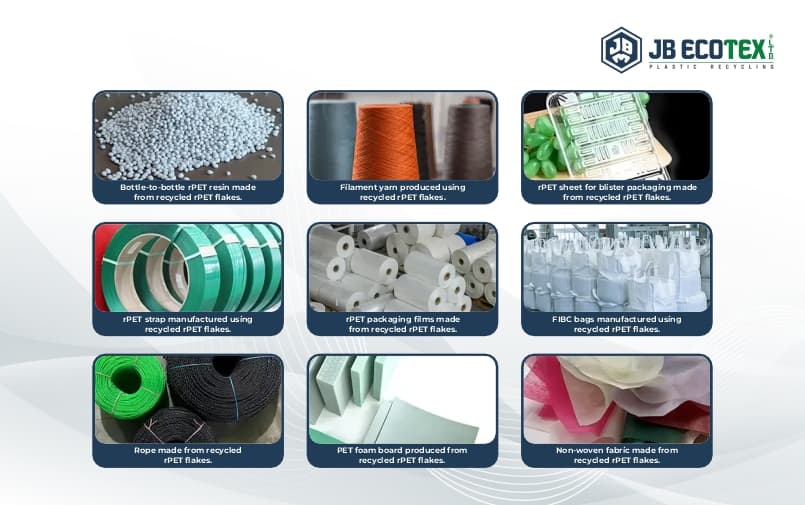
Industries That Use rPET Flakes as Raw Material
Recycled PET flakes are widely used across multiple manufacturing industries. Their versatility allows them to serve as a base material for several industrial products.
Polyester Fiber and Textile Manufacturing
One of the largest uses of recycled PET flakes is the production of polyester staple fiber and filament yarn.
These fibers are widely used in:
- Apparel textiles
- Home furnishing fabrics
- Nonwoven fabrics
- Automotive upholstery
- Industrial textiles
Manufacturers melt the flakes and process them through fiber spinning lines to produce polyester fibers suitable for various textile applications.
Packaging and Thermoforming
Recycled PET flakes are also used to manufacture PET sheets for thermoforming applications. These sheets are commonly converted into:
- Food trays
- Blister packaging
- Clamshell packaging
- Retail product packaging
Consistent flake quality is essential for maintaining clarity and structural performance in packaging materials.
PET Strapping
Industrial PET strapping materials used for packaging and pallet securing can also be produced using recycled PET flakes.
These straps are widely used in logistics, warehousing, and industrial packaging operations.
Engineering and Industrial Plastics
Recycled PET can also be used in applications such as films and industrial molded components depending on the processing methods used.
Because of this versatility, manufacturers around the world source material from PET flakes suppliers India to support their production requirements.
Recycled Plastic Flakes Export and Global Demand
As sustainability commitments expand globally, demand for recycled plastic materials continues to grow.
International buyers often source from countries with strong recycling infrastructure and cost-efficient processing.
India has become an important hub for recycled plastic flakes export, particularly for PET materials.
Export buyers typically look for suppliers capable of meeting specific requirements such as:
- Consistent material quality
- Bulk shipment capabilities
- Documentation and compliance
- Traceability of recycled inputs
Companies operating as recycled PET flakes exporters often maintain dedicated quality systems to support these global supply chains.
Why India Has Become a Major Hub for Recycled Plastic Flakes Export
India plays an important role in the global recycling ecosystem. The country has developed a large network of bottle collection systems, scrap processing operations, and recycling facilities.
This ecosystem enables Indian recyclers to process significant volumes of post-consumer PET bottles into reusable raw materials.
Several factors support India’s position in recycled plastic flakes export.
Large PET Bottle Consumption Base
High consumption of PET packaging generates a steady supply of recyclable bottles.
Established Scrap Collection Networks
India’s informal and organized recycling networks collect large volumes of plastic waste, feeding material into recycling facilities.
Competitive Processing Costs
Efficient recycling infrastructure and labor availability allow Indian processors to operate at competitive production costs.
Growing Export Markets
Manufacturers across Asia, Europe, and the Middle East increasingly source recycled materials from India, making the country an important hub for recycled PET flakes exporters.
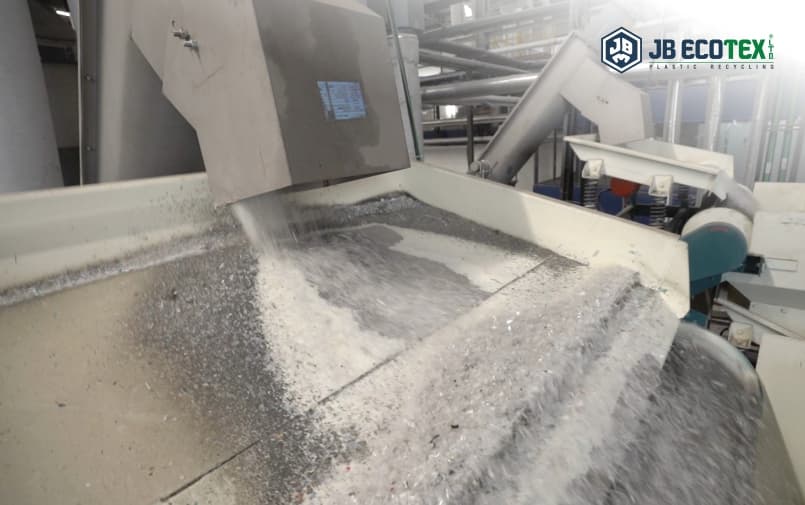
rPET Flakes Manufacturers and Industrial Processing Capabilities
Processing PET bottles into clean flakes requires specialized equipment and process control.
Modern recycling facilities typically include several integrated systems:
- Bottle sorting lines
- Grinding and shredding equipment
- Friction washing systems
- Hot washing tanks
- Density separation tanks
- Drying systems
- Optical sorting technologies
These systems ensure that the final flakes meet the quality standards required by downstream manufacturers.
For buyers, the capabilities of rPET flakes manufacturers directly influence material reliability and processing performance.
How Buyers Evaluate PET Flakes Suppliers in India
Manufacturers sourcing recycled flakes often evaluate suppliers based on several practical factors.
Processing Infrastructure
Facilities with modern washing lines and contamination control systems are generally better positioned to supply consistent material.
Material Traceability
Buyers may request information about the origin of the PET waste stream and processing practices.
Quality Testing
Laboratory testing of flakes ensures that parameters such as contamination levels and moisture content remain within acceptable ranges.
Export Experience
For international buyers, working with experienced recycled PET flakes exporters can simplify logistics and documentation requirements.
Supply Stability
Manufacturers that operate at scale are better able to provide consistent volumes throughout the year.
How Manufacturers Evaluate rPET Flakes Manufacturers Before Sourcing
For companies that rely on recycled PET flakes as a production input, supplier selection is a strategic decision. Material consistency directly influences manufacturing efficiency, product quality, and operational stability.
When evaluating rPET flakes manufacturers, buyers typically consider several practical factors.
Processing Infrastructure
Facilities equipped with modern sorting, grinding, and washing systems are better able to produce consistent recycled material.
Advanced recycling lines help reduce contamination and ensure flakes meet industrial processing requirements.
Material Consistency
Manufacturers require steady material quality across shipments. Reliable suppliers maintain strict process controls to ensure consistency in color, particle size, and contamination levels.
Supply Capacity
Large-scale manufacturing operations require dependable supply volumes. Buyers often prefer suppliers capable of delivering consistent quantities over long-term supply agreements.
Quality Monitoring Systems
Quality control practices such as contamination monitoring, moisture control, and batch testing help ensure flakes remain suitable for industrial use.
Export Readiness
For international buyers, working with experienced recycled PET flakes exporters simplifies logistics, documentation, and regulatory compliance.
Choosing the right supplier helps manufacturers avoid production disruptions and maintain stable manufacturing operations.
How rPET Flakes Fit into the Circular Plastics Economy
The recycling of PET bottles into flakes represents one of the most successful examples of circular material use.
Instead of ending up in landfills or the environment, PET bottles can re-enter industrial production cycles.
This circular approach offers several benefits:
- Reduced dependence on virgin plastics
- Lower environmental impact compared to new polymer production
- Efficient use of existing material resources
- Support for waste management systems
As industries move toward greater sustainability, the importance of post consumer PET flakes suppliers will continue to grow.
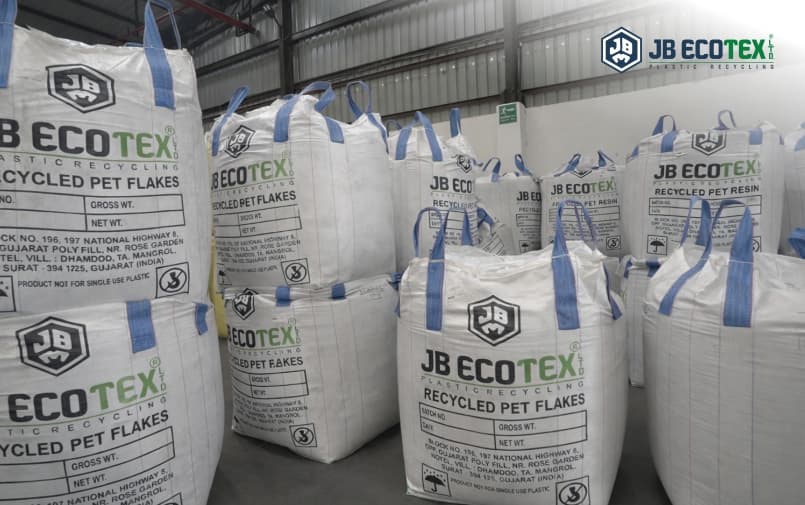
JB Ecotex and the Production of Hot Washed rPET Flakes
Companies such as JB Ecotex operate recycling facilities that process post-consumer PET bottles into high-quality flakes used by downstream industries.
The company produces hot washed rPET flakes, which are cleaned through intensive washing processes designed to remove contaminants and ensure reliable feedstock quality.
These flakes are supplied to manufacturers who use recycled PET in applications such as:
- Polyester fiber production
- Packaging materials
- Industrial PET products
The focus remains on producing flakes that can be efficiently processed by manufacturers relying on recycled PET as a raw material.
Future Outlook for rPET Flakes Manufacturers in India
Several trends in rPET market are expected to influence the future of PET recycling.
Sustainability Targets from Brands
Many global brands have committed to incorporating recycled content into packaging.
These commitments increase demand for recycled PET materials.
Expansion of Recycling Infrastructure
Investments in recycling technologies are improving processing efficiency and material quality.
Stronger Plastic Waste Regulations
Government policies around plastic waste management and recycling are encouraging the growth of recycling industries.
Rising Demand from Polyester Manufacturers
The textile industry remains one of the largest consumers of recycled PET materials.
Together, these trends suggest that the role of rPET flakes manufacturers will become even more important in the coming years.
Supplying High Quality Hot Washed rPET Flakes for Manufacturing Applications
JB Ecotex processes post-consumer PET bottles into hot washed rPET flakes used as raw material by manufacturers across multiple industries.
The recycling process focuses on converting used PET bottles into clean flakes that can be efficiently processed in downstream manufacturing operations.
The flakes are supplied to industries such as:
- Polyester fiber manufacturing
- Packaging and sheet production
- Industrial PET product manufacturing
By processing post-consumer plastic waste into reusable raw material, the recycling process supports both manufacturing supply chains and the broader circular plastics economy.
Companies looking for post consumer PET flakes suppliers often seek reliable processors capable of maintaining consistent material quality and stable supply volumes.
Turning Waste into Industrial Opportunity
The journey of a PET bottle does not end after consumption.
With the right recycling infrastructure, it becomes the starting point for a new cycle of industrial production.
Through sorting, washing, and processing, waste bottles are converted into recycled PET flakes that serve as valuable raw materials for multiple industries.
For manufacturers seeking reliable recycled inputs, working with experienced rPET flakes manufacturers ensures access to consistent feedstock that supports both production efficiency and sustainability goals.
As recycling technologies continue to evolve and global demand for recycled materials grows, PET flakes will remain an essential bridge between waste management and industrial manufacturing.
rPET Flakes Manufacturers and Suppliers: Common Buyer Questions
What do rPET flakes manufacturers do?
rPET flakes manufacturers process post-consumer PET bottles into clean recycled PET flakes that can be used as raw material in manufacturing. The process includes sorting PET bottles, removing labels and caps, shredding them into flakes, and hot washing the material to remove contaminants before supplying it to industries such as textiles, packaging, and plastics.
What are rPET flakes used for?
rPET flakes are used as raw material in several industries including polyester fiber manufacturing, PET sheet production, thermoforming packaging, PET strapping, and industrial plastic products. Manufacturers melt the flakes and process them through extrusion or fiber spinning systems to produce new PET-based materials.
Who are the major rPET flakes manufacturers in India?
India has several rPET flakes manufacturers,such as JB Ecotex, that process post-consumer PET bottles into recycled flakes for industrial use. These manufacturers operate recycling facilities that collect PET waste, clean and process it into flakes, and supply the material to textile, packaging, and plastic product manufacturers in India and global export markets.
What are recycled PET flakes exporters?
Recycled PET flakes exporters are recycling companies that process post-consumer PET bottles and supply the cleaned flakes to international buyers. These exporters ship recycled PET flakes to manufacturers in industries such as textiles, packaging, and plastic products that use recycled PET as a production input.
What are clear PET flakes manufacturers?
Clear PET flakes manufacturers process transparent PET bottles separately to produce flakes with higher visual clarity and lower color contamination. These flakes are commonly preferred by manufacturers producing polyester fiber, PET sheets, and packaging products where color consistency is important.
How are post-consumer PET flakes produced?
Post-consumer PET flakes are produced by collecting used PET bottles, sorting them from other plastics, removing labels and caps, shredding the bottles into flakes, and washing them using hot washing systems. The cleaned flakes are then dried and supplied as raw material for industrial manufacturing.
Why do manufacturers source from PET flakes suppliers in India?
Manufacturers source PET flakes suppliers India because the country has a large PET bottle recycling ecosystem, strong scrap collection networks, and large-scale recycling facilities. Indian suppliers are able to provide consistent volumes of recycled PET flakes for domestic manufacturers as well as international export markets.
What industries buy recycled plastic flakes export shipments?
Companies involved in polyester fiber production, textile manufacturing, PET sheet production, thermoforming packaging, and industrial plastic manufacturing commonly purchase recycled plastic flakes export shipments as a raw material for their production processes.
Why are post-consumer PET flakes suppliers important for recycling?
Post-consumer PET flakes suppliers play an important role in the recycling value chain by converting PET bottle waste into reusable raw materials. Their processing operations help reduce plastic waste while supplying recycled PET flakes that manufacturers can use in new products.
What quality parameters are important when sourcing rPET flakes?
When sourcing rPET flakes, manufacturers typically evaluate parameters such as contamination levels, moisture content, flake size consistency, color, and purity of the PET material. These factors influence how efficiently the flakes can be processed in manufacturing operations.