
Polyester Staple Fibre for Interlining
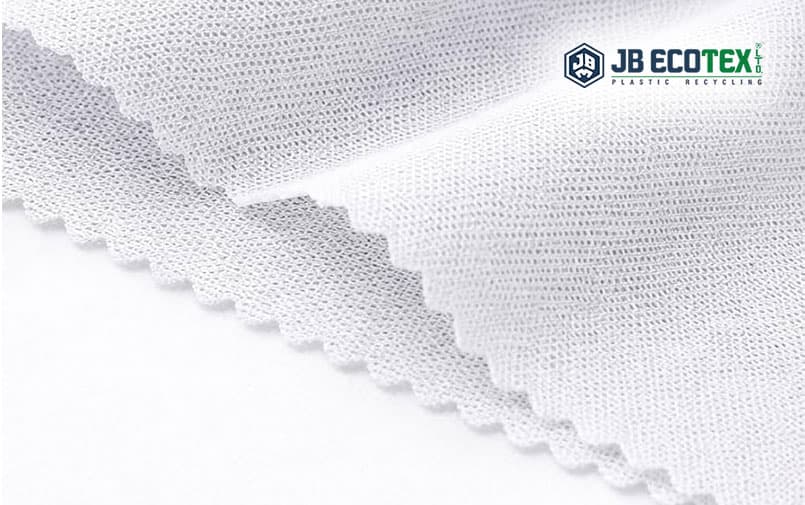
We manufacture recycled polyester staple fibre for interlining factories producing fusible, woven, and non-woven interlining. Available in 1.2D optical white, LHAS, and high-tenacity grades. GRS certified, bulk supply, direct from manufacturer.
Interlining performance is determined before the garment assembly stage. The base substrate, whether it is a fusible woven, a thermally bonded web, or a chemically bonded nonwoven, carries its fibre characteristics all the way through to the finished garment. Collar stiffness, cuff recovery, dimensional stability after washing, and peel strength in fusible types all trace back to the polyester staple fibre used as the interlining raw material.
Procurement teams at interlining factories typically evaluate fibre on four things: denier consistency, whiteness grade, shrinkage behaviour under process temperatures, and recycled content documentation for downstream brand compliance. This page covers all four.
If you are sourcing polyester staple fibre for interlining at volume and want to evaluate a direct manufacturer, this is the starting point. Explore our full recycled polyester staple fibre range or read on for grade-specific information.
rPSF Grades Developed for Interlining Lines
We supply polyester fibre for interlining in grades aligned with how interlining is actually manufactured. Three grades are relevant to most buyers in this category.
Optical White rPSF — Grade 3001 (Super-Whiteness)
For interlining factories where fabric brightness is a final-product requirement. Collar and cuff applications, formal shirting, and suiting interlinings go under light or white shell fabrics where base substrate shade affects the finished garment. Our 3001 grade delivers a high whiteness index with shade consistency across batches. This is the grade most buyers request first when asking for optical white polyester fibre for interlining.
Ultra White High-Tenacity rPSF — Grade 3011
Where the web or scrim needs to survive mechanical stress during bonding, lamination, or high-speed cutting, standard tenacity grades can underperform. Grade 3011 is engineered for higher tensile performance with reliable denier and cut-length control. It is suited to non-woven interlining production lines where draw ratios and opening speeds place more stress on the fibre.
Low Hot Air Shrinkage (LHAS) rPSF
Dimensional instability during hot-air bonding is one of the most common production problems interlining factories report. When the web shrinks through the oven, finished gram weight and cut dimensions become unreliable. Our LHAS grade is engineered specifically to minimise shrinkage under thermal load, so the web holds its geometry through the bonding stage. If your line uses a hot-air oven, LHAS is the grade to run a trial on before evaluating anything else.
All three grades are produced from post-consumer PET, carry GRS certification, and are available for sample and bulk supply. Full specification sheets for each grade are available on request or through our product pages.
Interlining Applications and Where Each Grade Fits: Fibre for Fusible, Thermal, and Chemical Bonded Interlining
Interlining covers a range of construction methods. The fibre requirements shift depending on which process you run. Here is where each grade type sits.
Fusible Interlining
The base web is formed from staple fibre, then coated with a thermoplastic resin for heat-bonded adhesion in garment assembly. Web uniformity and consistent gram weight are the main fibre-driven variables. Fine denier, 1.2D polyester fibre interlining is the standard, produces a tighter, more even web at the gram weights fusible interlining requires. We supply 1.2D grades in optical white for this application.
rPSF for collar and cuff interlining typically falls in this category. Collar and cuff pieces are among the highest-performance interlining components in a garment; they must survive repeated laundering, pressing, and wear cycles. A fibre that delivers consistent web formation and stable peel strength after washing is the minimum requirement. Our optical white and high-tenacity grades are the ones buyers in collar and cuff supply chains request for evaluation.
Thermal Bonding
Fiber suitable for thermal bonding needs a defined melt behaviour and low shrinkage through the oven to produce a dimensionally stable bonded web. Our LHAS grade is the primary recommendation for this process. It maintains web geometry through the hot-air oven, which keeps cut dimensions accurate and reduces waste at the slitting stage. LHAS rPSF runs on standard thermal bonding lines without modification to settings.
Chemical Bonding
For interlining using a chemical binder rather than heat, fibre surface consistency affects how the binder distributes across the web. Uneven fibre surfaces create uneven binder pickup, which shows up as variation in bond strength across the substrate. Our standard optical white grades are compatible with chemical bonding processes and produce even binder distribution across the web area. Fiber for chemical bonding is an area where denier uniformity, controlled at the manufacturing stage, directly affects line output quality.
Why Interlining Factories Are Switching to Recycled rPSF
The argument for recycled polyester staple fibre as interlining raw material is practical, not just environmental. Here is what interlining factories report after switching.
The fibre runs on existing lines. Our recycled grades have been validated on standard card, cross-lapper, and bonding equipment. There is no required modification to line settings or bonding parameters. The transition from virgin to recycled input at 1.2D denier is operationally low-risk when the fibre is sourced from a controlled, consistent manufacturing process.
The recycled content claim is documentable. Our rPSF carries GRS (Global Recycled Standard) certification, which verifies recycled content and chain-of-custody from post-consumer PET through to finished fibre. For interlining factories supplying European, American, or Japanese garment brands with recycled content requirements in their procurement standards, GRS-traceable interlining raw material is the clearest way to support those claims upstream.
The whiteness grades are matched to interlining requirements. Optical white polyester fibre for interlining is produced with whiteness controlled during fibre production rather than applied as a post-process treatment. This means shade stability across batches, which matters when your fabric goes under white or light-coloured shells in volume.
Export volumes are supported. We ship to interlining factories in Turkey, Bangladesh, Vietnam, and other major garment manufacturing regions. Scheduled supply, bulk orders, and consistent lead times are standard for accounts at volume.
What Interlining Buyers Need to Know Before Requesting Samples
Interlining procurement teams typically want to confirm specification fit before committing to a sample trial. Below are the specifications most relevant to this category.
Denier: 1.2D is the primary grade for fusible and non-woven interlining webs. Finer denier produces a more even web at low gram weights. Other deniers available on request.
Cut Length: Matched to your card and web-forming equipment. Standard cut lengths for interlining applications are available in the specification sheet.
Whiteness: Available from standard white through optical white polyester fibre for interlining. Optical white grades suit applications where the substrate goes under light or white fabrics.
Tenacity: Standard and high-tenacity grades available. Grade 3011 is the high-tenacity option for applications where the web faces mechanical stress during processing.
Shrinkage under thermal load: LHAS grade minimises shrinkage in hot-air bonding environments. Specific shrinkage performance data is in the technical specification sheet, available on request.
Recycled content: Post-consumer PET, GRS certified. Certificate documentation supplied for procurement and compliance records.
BPA content: Low-BPA grades available for interlining applications with specific chemical compliance requirements.
Polyester Fibre for Non-Woven Interlining and Related Applications
Interlining and non-wovens overlap in process and in fibre specification. Non-woven interlining, including needle-punched, thermally bonded, and chemically bonded structures used in collar, cuff, waistband, and chest interlining, uses staple fibre input with requirements close to those described on this page.
If you produce polyester fibre for non-woven interlining specifically, our grades for interlining apply directly. If you manufacture a broader range of nonwoven products beyond apparel interlining, geotextiles, hygiene, filtration, or industrial substrates, our dedicated non-woven fibre range covers those applications separately with grades matched to those end-uses.
Explore our fibre for non-woven applications: recycled polyester staple fibre range.
What Our Certifications Mean for Your Supply Chain
For interlining factories operating in regulated markets, the compliance credentials of your fibre supplier affect your own audit standing and your ability to support downstream brand claims.
GRS (Global Recycled Standard): Verifies recycled content and chain-of-custody from post-consumer PET through to finished fibre. This is the certification most brand procurement teams request when specifying recycled interlining raw material. Our GRS certification is transferable through your supply chain.
ISO quality standards: Our manufacturing plant operates under ISO quality management systems covering production consistency, batch traceability, and quality control at each stage from raw material intake to finished fibre.
Zero liquid discharge: Our plant operates with zero liquid discharge to groundwater. For buyers with environmental audit requirements that extend to supplier operations, this is a relevant credential.
Low-BPA options: We manufacture low-BPA grades for applications with specific chemical compliance requirements. BPA content details are available in the product specification documentation.
For a full overview of certifications, see our product and certification page.
How Interlining Factories Start Sourcing From Us
We are a direct manufacturer. Samples, specifications, pricing, and compliance documents come from the facility that produces the fibre. There is no distribution layer between your team and ours.
The standard process for new buyers:
- Share your interlining application, line type, bonding method, and target denier with our technical sales team
- We send the relevant grade specification sheet and arrange a sample where applicable
- Your team runs a trial on your card or bonding line
- We confirm volume, lead time, and commercial terms
For established buyers sourcing interlining raw material on a scheduled basis, we support regular supply arrangements and can align shipment planning to your production schedule.
Contact our team or request a specification through the J B Ecotex enquiry page.
FAQs — Polyester Staple Fibre for Interlining
Q1: What is the standard denier for polyester staple fibre used in interlining?
1.2D (1.2 denier) is the standard denier for fusible and non-woven interlining webs. Fine denier produces a tighter, more even web at the low gram weights interlining requires. Coarser deniers are used in heavier interlining constructions. Buyers should confirm denier against their specific web-forming equipment settings.
Q2: What does LHAS mean in polyester fibre for interlining?
LHAS stands for Low Hot Air Shrinkage. It refers to a fibre grade engineered to hold its dimensions under the heat of a hot-air bonding oven. Standard polyester fibre can shrink during thermal bonding, causing variation in web dimension and cut accuracy. LHAS fibre is the recommended grade for any interlining line using a hot-air bonding process.
Q3: Can recycled rPSF replace virgin polyester staple fibre in interlining production?
Yes. GRS-certified rPSF runs on standard card, cross-lapper, and bonding lines without modification. Denier uniformity and batch consistency from a controlled manufacturing plant match what interlining factories need from their fibre input. The recycled route also produces GRS-documented recycled content that buyers can pass to downstream brand partners.
Q4: What is the difference between fibre for thermal bonding and fibre for chemical bonding in interlining?
Thermal bonding uses hot air or calendar heat to fuse fibres into a web. It requires a fibre with low shrinkage under process temperatures — LHAS grades are best here. Chemical bonding uses a liquid binder applied across the web. It requires a fibre with even surface characteristics for consistent binder pickup. Both processes use 1.2D polyester as the base denier in interlining applications.
Q5: Why is optical white polyester fibre specified for collar and cuff interlining?
Collar and cuff interlining sits directly under the shell fabric in a finished garment. Where the shell is white or light coloured, a low-whiteness base substrate can affect the visual result. Optical white fibre produces a high whiteness index in the finished web, reducing the risk of shade mismatch or show-through in the assembled garment.
Q6: What certifications should an interlining raw material supplier hold?
GRS (Global Recycled Standard) is the key certification for recycled content traceability through the interlining supply chain. ISO quality certification covers production consistency and batch traceability. OEKO-TEX is relevant where the interlining goes into skin-contact garment applications. Request certificate copies and check they are current before placing a sourcing order.
Q7: What is polyester interlining and how is fibre denier chosen for it?
Polyester interlining is an inner layer used in garment construction to add structure, body, or support to outer shell fabrics. It is made from woven, knit, or nonwoven polyester substrates. Denier choice depends on the interlining weight and construction: fine denier (1.2D) for lightweight fusible types, coarser grades for heavier woven or needle-punched constructions.
Q8: Can rPSF be used for filter fabrics and technical interlining applications?
Yes. Standard white and optical white rPSF grades have been used in technical bonded substrates that overlap with interlining construction methods, including filtration applications that use thermally or chemically bonded polyester webs. Specific grade suitability depends on the required filtration rating, gram weight, and bonding method. Contact our technical team for grade recommendations in these applications.