
How PET Flake Colour Sorting Improves Value and End-Use Options
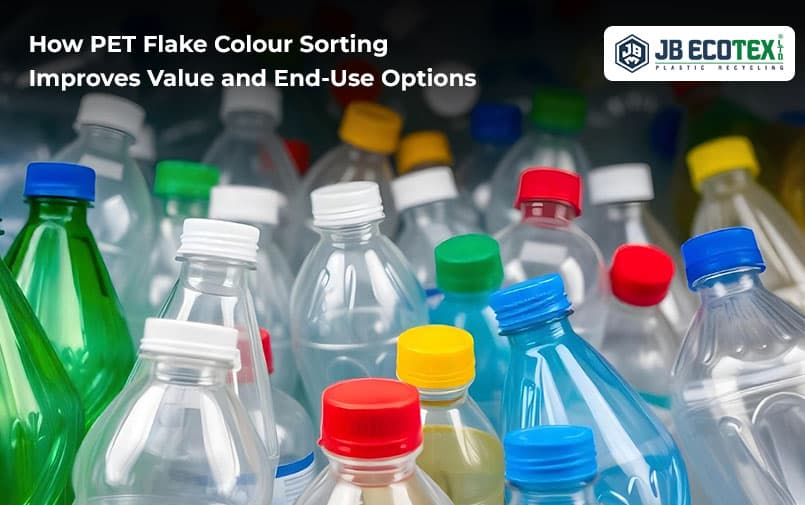
PET flake colour sorting decides where a recycled bottle can go next. Two flakes can be made of the same polymer, washed on the same line and dried to the same moisture level, and a small difference in colour can still open or close a whole set of applications. A clear flake can become a new bottle, a transparent sheet or a white yarn. A green flake has a narrower set of homes.
We produce recycled PET flakes from post-consumer bottles, and colour is one of the parameters we test in every batch. Below, we explain what colour sorting involves, why it matters, how the main colour grades are used, and how we sort our own flakes.
What PET Flake Colour Sorting Means
PET flake colour sorting is the process of separating recycled PET by colour so that each lot contains flakes of a consistent shade. It usually happens at more than one point in a recycling plant, starting with whole bottles and continuing after the bottles have been crushed and washed.
The goal is uniformity. A buyer of colour sorted PET flakes expects each bag or bale to behave predictably in its process and to give a predictable colour in its product. Sorting is how a recycler delivers that consistency from a feedstock that arrives in many shades.
For a broader overview of flake types and grades, see our guide to recycled plastic flakes.
Colour sorting works alongside other separation steps. Recyclers also remove other polymers, metals, labels, caps and contaminants. Colour sorting is one layer in that sequence, focused on shade.
Why Colour Matters Once PET Becomes a Flake
Colour in PET bottles generally comes from pigments or dyes added when the bottle was made. Washing removes dirt, labels and adhesives from the surface of a flake, and the colour within the material stays with it. When flakes are melted, that colour carries through into whatever is made next.
That simple fact shapes the whole market for recycled PET. A manufacturer making a transparent product needs input that will give a transparent result. A manufacturer making a dark or dyed product has more flexibility, since its own colour can cover some variation in the input.
Colour also affects consistency. If a lot of clear flakes contains a scattering of green or blue pieces, the finished product can show specks or a slight tint. For products where appearance matters, even a small share of off-colour flakes can be a problem. For this reason, buyers of clear flakes pay close attention to colour purity.
Colour can also reflect the condition of the material. Discoloured or yellowed pieces may indicate degraded PET, which is why recyclers look for degraded material during sorting as well as for colour differences.
Sorting at Two Stages: Bottles and Flakes
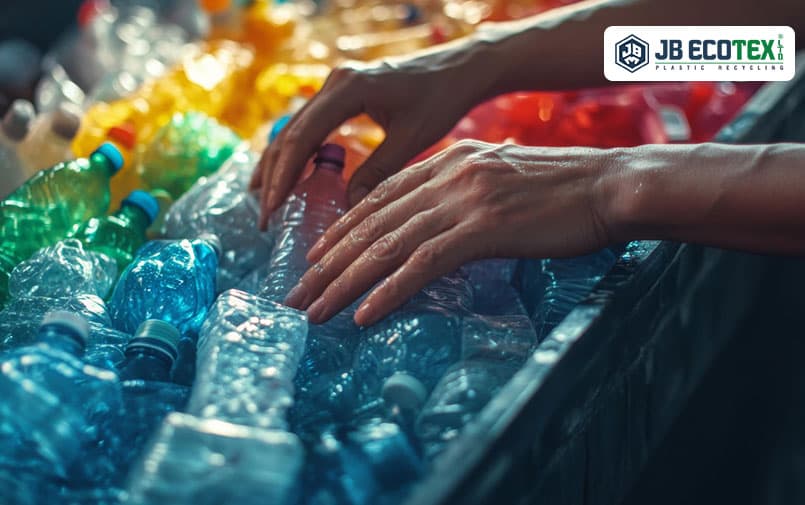
PET bottle sorting is the first opportunity to separate colours. Whole bottles are larger and easier to identify, so removing coloured bottles before crushing keeps the flake stream cleaner from the start.
Bottle-stage sorting also removes items that are unsuitable for the line, such as other polymers and metal. In our own process, bottles are sorted by polymer type and colour, and caps and labels are removed before the bottles are crushed into flakes.
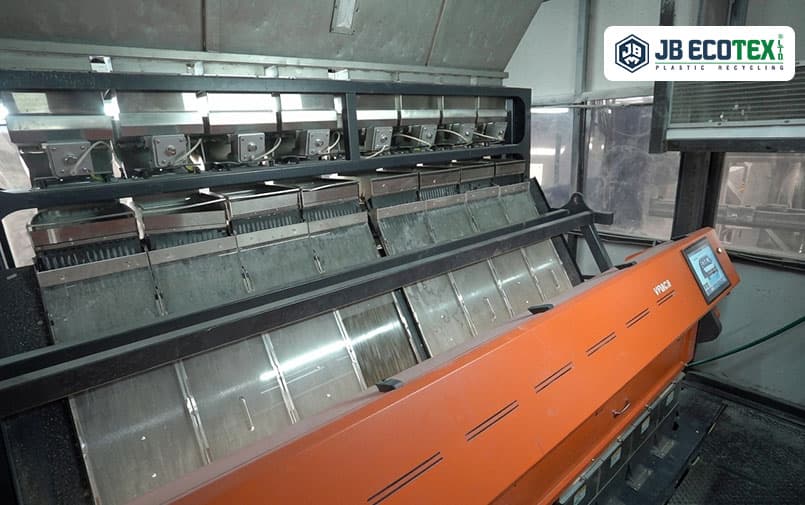
Flake-stage sorting follows washing. Once bottles are crushed and cleaned, some off-colour pieces remain. These may come from a coloured bottle that slipped through, from a coloured component, or from pieces that became discoloured. Optical sorting at the flake stage detects these differences and removes the pieces that fall outside the target shade.
In general terms, optical sorters work by viewing material as it moves along a belt or falls through a chute. Cameras and sensors compare each item or flake against the settings for the target grade, and pieces that fall outside those settings are separated from the stream, typically with short bursts of air. The settings can be adjusted for each grade, which lets one line produce different colour lots over time.
Using both stages gives a recycler two chances to reach the colour purity a buyer needs. Bottle sorting handles the bulk separation. Flake sorting refines the result.
The Main Colour Grades
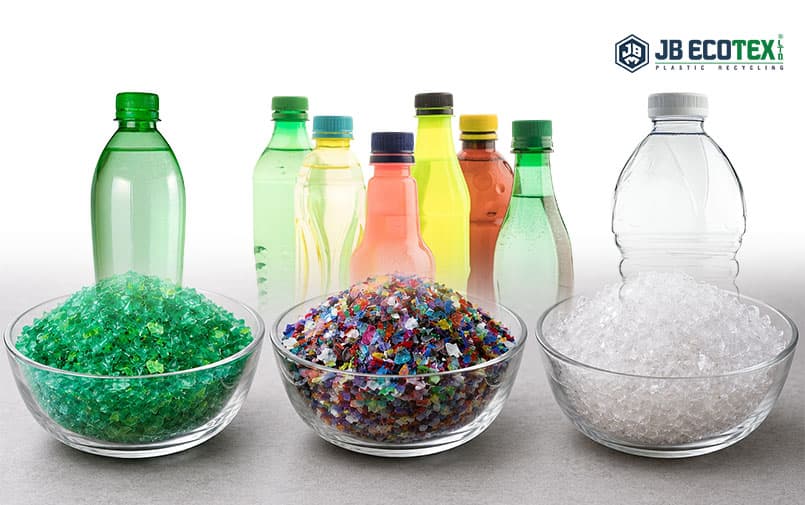
Recyclers group PET flakes into colour grades. The exact names vary between suppliers, and the grades below are the ones most commonly discussed for bottle-derived flakes.
Clear PET Flakes
Clear PET flakes come from transparent bottles, such as those used for packaged drinking water and many other beverages. They are the most versatile colour grade because a clear input can be used for clear products and, when a manufacturer adds its own colour, for coloured products too.
In our process, clear flakes are the input we direct towards food-grade resin, as described in our explainer on the mechanical recycling process of PET. Our clear washed flakes are also supplied for bottle-to-bottle recycling, sheet and yarn applications.
Green PET Flakes
Green PET flakes come from green-tinted bottles. The green shade carries through into the end product, so these flakes suit applications where a green or darker colour is acceptable.
Mixed Colour PET Flakes
Mixed colour PET flakes contain flakes of several shades. They come from bottles of different colours, or from material separated out during sorting of clearer grades. Because the colour varies, they generally suit applications where the finished colour can be dark or where appearance is less critical.
Other Shades
Recyclers also handle other bottle colours, including light blue and brown. Whether these are sold as separate grades or combined with others depends on the recycler, the volume available and what buyers want. Buyers who need a particular shade should ask their supplier how it is graded, since the same colour can be handled differently from one plant to the next, and a clear agreement at the start avoids confusion when the first lot arrives. We buy post-consumer PET bottles in clear, green, brown, blue and mixed colours.
How Colour Sorting Widens End-Use Options
Colour sorting turns a mixed feedstock into several products, each matched to buyers who can use it. Based on how we supply our own washed flakes, the grades map to end uses as follows.
- Clear flakes: food-grade resin for bottle-to-bottle recycling, along with sheet and yarn applications.
- Green flakes: yarn manufacturing and strapping.
- Multi-coloured flakes: yarn manufacturing, foam and strapping.
Without colour sorting, all of these shades would sit in one mixed lot. That lot would still have uses, and applications needing a clear or consistent colour would be out of its reach. Sorting lets the clear portion reach those applications and lets the coloured portions reach buyers who can work with them.
Colour sorting also affects which processes a lot can enter within a recycler's own operations. In our case, clear material can support our food-grade resin production, and other material can move towards applications where colour is less restrictive.
Our range of clear, green and multi-coloured washed PET flakes reflects this approach, with each grade described for the buyers it serves.
How Colour Sorting Supports Value
Colour profile is one of the factors that determines both the downstream application and the market value of recycled PET flakes. The reasoning is straightforward.
A flake that can serve more applications has more potential buyers. Clear flakes can serve applications that sit beyond the reach of coloured flakes, including food-grade resin. Keeping clear material free of off-colour pieces protects its access to those applications.
Colour consistency also reduces risk for buyers. A converter that receives a consistent lot spends less time adjusting its process and faces fewer rejections of finished products. That reliability is part of what a buyer is paying for.
Sorting has a cost of its own. It requires equipment, energy, labour and testing, and it produces a stream of rejected pieces that need their own route. The value of colour sorting comes from matching each grade to the right buyer, so that the effort spent on sorting is reflected in the use each grade can serve.
For buyers comparing a recycled PET flakes manufacturer with another, it is worth looking at colour sorting as part of the overall specification. Two suppliers can describe their flakes with the same name and still deliver different levels of colour consistency.
How We Colour Sort Our Flakes
Our washed flakes are made from post-consumer PET bottles. Colour and polymer separation run through several stages of our process.
At the bottle stage, bottles are collected, segregated and inspected to remove non-PET materials and contaminants. They are sorted by polymer type and colour, and caps and labels are removed before crushing into flakes of uniform size.
The flakes are washed and dried to remove dirt, adhesives, labels, oils and moisture. Flakes are then further sorted for colour and purity, so that each grade meets its target shade.
Testing confirms the result. Every batch of our washed flakes is tested for PVC, metals, colour, bulk density and moisture. We also monitor parameters such as intrinsic viscosity, particle size and material traceability. For material heading to our food-grade resin, colour is also measured later in the process using L*, a* and b* values as part of our quality checks.
The finished flakes are packed by grade. Clear, green and multi-coloured flakes are each supplied to the buyers and applications described above. For a wider view of how our flakes are made and used, see our page on PET bottle flakes.
Where Sorted-Out Material Goes
Every colour sort produces a second stream: the pieces removed because they fall outside the target shade or show signs of contamination or degradation. Handling this stream well is part of running a responsible recycling operation.
Some of this material can join a mixed colour grade, where shade variation is acceptable. Some can go to applications where appearance matters less. Material with higher contamination needs further processing before it can be used.
We also buy sorter reject flakes generated during optical sorting at other recycling plants, along with other PET materials such as regrind and fines, and bring suitable material back into productive use within our operations. Within our group, a separate chemical recycling operation works with PET that mechanical routes find difficult, including mixed and coloured material.
For a recycler, finding a route for every stream matters as much as producing the premium grade. Colour sorting creates value when the clear stream reaches demanding applications and the removed pieces still find a use of their own.
What Buyers Should Check in Colour Sorted PET Flakes
Whether you are buying from a local recycler or looking for an rPET flakes supplier in India for a new application, a few checks help confirm that the colour grade will suit your process.
- Colour grade definition: ask how the supplier defines each grade and what share of off-colour flakes it accepts within a lot.
- Colour testing: ask how colour is measured, how often, and whether results are shared with each batch.
- Other test parameters: check PVC, metals, moisture, bulk density, intrinsic viscosity and particle size against your own requirements.
- Consistency between batches: ask for batch documentation and compare several lots before committing to volume.
- Trial on your own line: run a trial and check the colour of your finished product under the lighting conditions that matter to your customers.
- Certification and traceability: ask which certifications support recycled content claims, such as GRS, and what traceability records come with each consignment.
Clear answers to these questions reduce surprises once regular supply begins. They also give both sides a shared reference if a lot ever falls outside the agreed specification.
Why Sorting at Source Helps
Colour sorting at a recycling plant works best when the material arriving at the gate is already reasonably well separated. Suppliers of baled bottles can help by keeping colours apart where possible.
Clear bottles kept separate from coloured bottles reduce the sorting load at the plant and lower the share of material rejected from the clear stream. Removing obvious non-PET items, such as other plastics and metal, before baling helps in the same way.
We buy baled post-consumer PET bottles in clear, green, brown, blue and mixed colours from collection networks. Suppliers can find our requirements on our page for post-consumer PET bottle buying. A supplier who can describe the colour mix of a lot, and keep that mix consistent, gives the recycler a clearer picture of how the material will sort.
What Colour Sorting Leaves Unchanged
Colour sorting separates shades. It leaves the underlying condition of each flake as it was. A clear flake that is heavily contaminated or degraded still needs to pass washing, sorting and testing before it can serve demanding applications.
For this reason, colour is one part of a flake specification. Buyers who focus on colour alone may overlook parameters such as PVC content, moisture or intrinsic viscosity, each of which affects how the flakes behave on a production line.
The strongest results come from treating colour sorting as part of a complete process: good feedstock, careful washing, polymer and metal separation, colour sorting, and batch testing. Each step supports the next, and together they determine what the finished flakes can be used for.
Frequently Asked Questions
What is PET flake colour sorting?
PET flake colour sorting separates recycled PET flakes by shade so that each lot has a consistent colour. It usually happens at the bottle stage and again after washing, using optical sorting to remove pieces outside the target shade.
Why are clear PET flakes used for more applications?
Clear flakes give a transparent result when melted, so they can be used for clear products and, with added colour, for coloured products. In our process, clear flakes are directed towards food-grade resin, and they also serve sheet and yarn applications.
What are green PET flakes used for?
Green PET flakes come from green-tinted bottles, and their colour carries through into the end product. We supply green washed flakes for yarn manufacturers and strap producers, where a green or darker colour is acceptable.
What are mixed colour PET flakes used for?
Mixed colour PET flakes contain several shades, so they generally suit applications where the finished colour can be dark. We supply multi-coloured washed flakes for yarn manufacturers, foam producers and strap producers.
How does J B Ecotex test flake colour?
Every batch of our washed flakes is tested for colour, along with PVC, metals, bulk density and moisture. We also monitor intrinsic viscosity, particle size and material traceability to keep each grade consistent.