
What Are Recycled Plastic Flakes? A Complete Guide for Manufacturers and Buyers
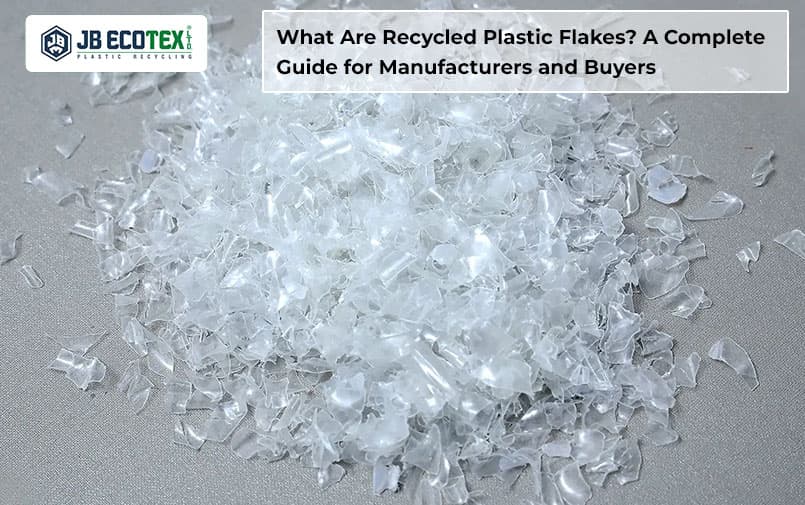
Recycled plastic flakes are the upstream feedstock that holds together a significant portion of modern sustainable manufacturing. Before a bottle becomes fibre, before post-consumer waste becomes food-grade packaging, before collected PET transforms into strapping tape that holds together a pallet of goods, it passes through this intermediate form. For procurement managers, converters, brand owners, and downstream processors, understanding what recycled plastic flakes actually are, how they are graded, and what determines their quality is operational knowledge, the kind that directly affects sourcing decisions and downstream production outcomes.
This guide focuses on PET, since polyethylene terephthalate accounts for the overwhelming share of volume in the recycled plastic flakes trade. The principles around sorting, washing, grading, and downstream suitability apply most directly to rPET flakes, which is what buyers and manufacturers are working with when they deal in this material.
What Are Recycled Plastic Flakes?
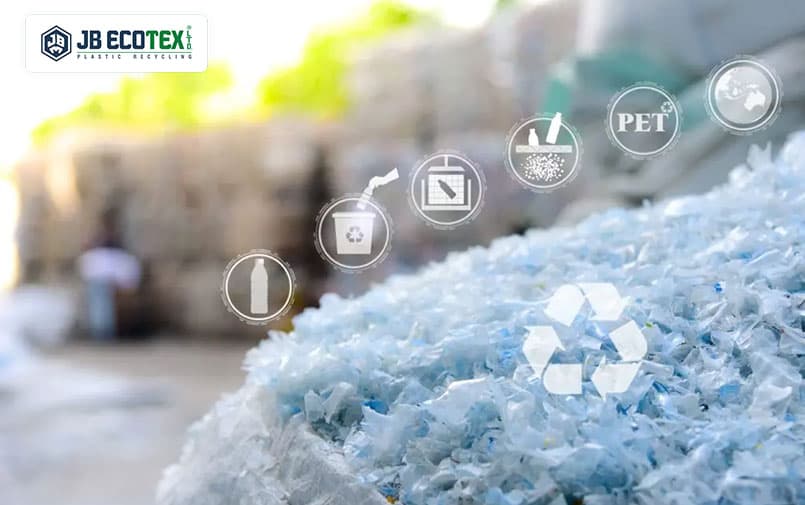
Recycled plastic flakes are small, irregular chips produced by mechanically shredding and processing post-consumer or post-industrial plastic waste. In the context of PET, the source material is predominantly post-consumer bottles, collected from municipal or industrial streams, sorted by resin type, and then put through a multi-stage washing and reduction process that results in a clean, dry, granular output.
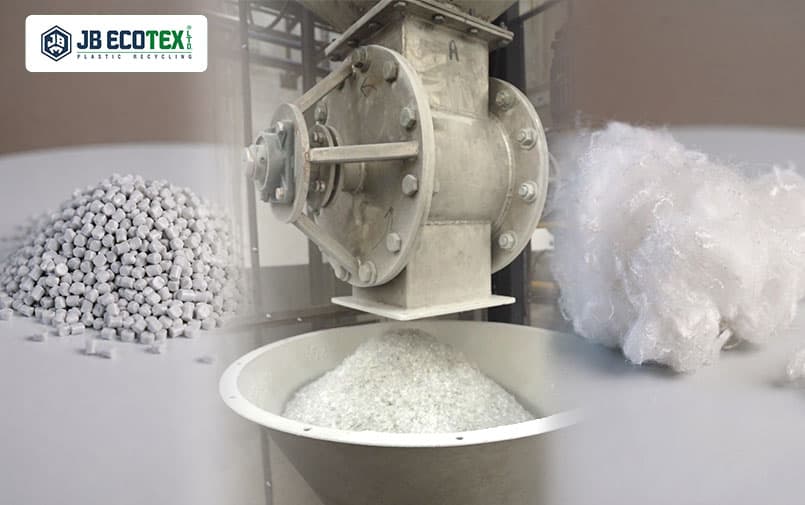
The flake form sits between the raw collected bottle and the pelletised resin. It is neither raw waste nor finished product. Buyers who want to feed flakes directly into a fibre extrusion line or a sheet line can do so. Buyers who require a pelletised resin with a very specific intrinsic viscosity for bottle-to-bottle applications will typically take the flake as a feedstock for further downstream processing.
Plastic flakes recycling is the mechanical recycling pathway, as opposed to chemical recycling, which depolymerises the PET back to monomer level. Mechanical recycling retains the polymer chain and is currently the dominant technology globally at commercial scale. Hot-washed PET flakes are the output of mechanical recycling at its cleanest tier. When industry members refer to hot washed PET flakes, they are describing material that has gone through the full caustic-wash cycle, as opposed to lightly processed or cold-washed alternatives.
The PET Bottle Recycling Process: From Collection to Flake
The process of bottle recycling into usable plastic flakes is multi-stage. Shortcuts at any point in the PET flakes manufacturing process produce material that downstream converters reject. Here is how the sequence works in a properly run operation.
1. Feedstock collection and baling
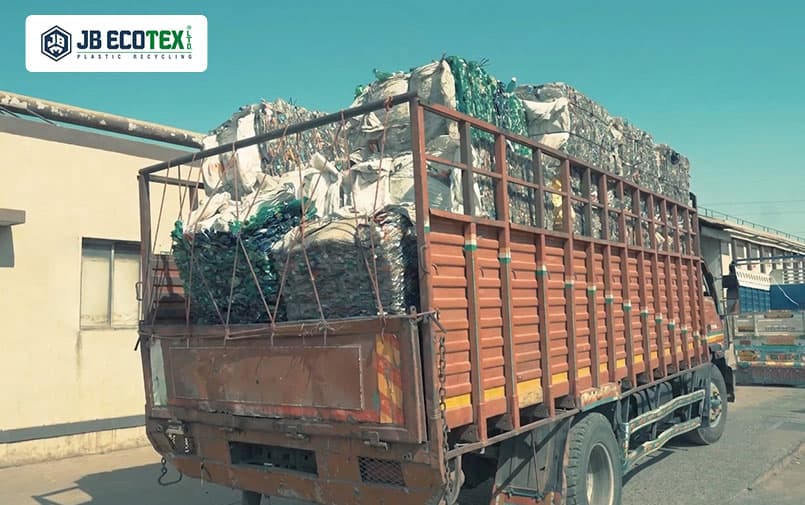
Post-consumer bottles are collected through municipal collection systems, deposit schemes, or industrial aggregators. The quality of the incoming bale has a direct bearing on the output quality. Mixed-colour, heavily contaminated bales require more intensive sorting and result in a lower-value output.
2. Manual and automated sorting
Bales are broken and bottles sorted by resin type and colour. Near-infrared (NIR) optical sorting systems identify PET from PVC, HDPE, PP, and other resin types. This step is where PVC contamination is first controlled. PVC is one of the most damaging contaminants in PET flakes because it has a similar density to PET and is difficult to remove once shredded. Colour sorting separates clear, light blue, green, and opaque bottles since colour profile determines downstream application and market value.
3. Label removal and de-capping
Labels, caps, and collar rings are removed prior to shredding. Caps are typically HDPE or PP and float during the subsequent water bath separation stage. Residual labels, often made from PVC or multi-material films, are the primary source of glue and paper contamination.
4. Shredding and granulation
Sorted bottles are shredded into coarse pieces and then granulated into the target flake size, typically 8 to 12 mm. Fines below 1 mm are screened out and discarded since they carry a disproportionate share of contamination and behave poorly in melt processing.
5. Sink-float separation
The granulated material passes through a water tank. PET sinks due to its density. Polyolefins, primarily PE and PP from caps, float and are removed. This is a critical step for separation of polymers that are incompatible with PET in melt processing.
6. Hot washing
This is what distinguishes hot-washed rPET flakes from cold-washed or less-processed alternatives. The flakes are washed in a heated aqueous solution with caustic soda and detergent at temperatures typically between 75°C and 80°C. Hotwashing saponifies adhesive residues, breaks down organic contamination, dissolves label fragments, and significantly reduces the level of volatile organic compounds in the material. Cold washing removes surface dirt but leaves behind adhesives and organic residues that affect downstream processability. The difference in output cleanliness between the two methods is substantial.
7. Rinsing, dewatering, and drying
After hot washing, the material passes through a rinse stage to remove caustic residue, then through centrifugal dewatering and hot-air drying. Moisture content is critical. Residual moisture above 0.5% causes hydrolytic degradation during melt processing, which reduces the intrinsic viscosity of the final output.
8. Final sorting and quality testing
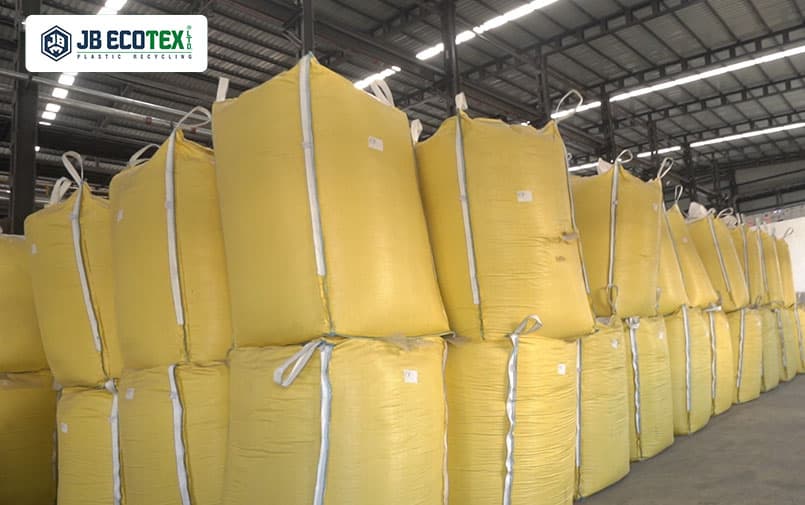
Post-wash flakes go through electrostatic and colour sorting to catch any remaining off-colour or contaminated pieces. Metal detection removes ferrous and non-ferrous fragments. The final product is tested for intrinsic viscosity, PVC content in parts per million, moisture, colour, and other contaminants before bagging.
This is the PET flakes manufacturing process as it runs in a facility built to serve quality-conscious buyers. Abbreviated versions of this process exist in the market, and they produce a different product with different downstream behaviour.
Grades of Hot-Washed PET Flakes
PET bottle flakes are graded primarily by application, and the grade is determined by the contamination thresholds and intrinsic viscosity of the material. There are three broad commercial grades.
Food-grade or bottle-grade
This is the tightest specification. PVC content is typically required below 10 ppm. Intrinsic viscosity for bottle applications sits in the 0.70 to 0.78 dL/g range, though the flake itself is fed into an SSP (solid-state polycondensation) unit to raise IV and decontaminate to food-contact standards before being used in a bottle line. rPET flakes buyers specifying for bottle-to-bottle applications require detailed certification, lab documentation, and often third-party audit verification.
Fibre-grade
The largest volume market globally. IV requirements are lower for staple fibre production than for bottle applications, and contamination thresholds are less stringent though still material. The hot-washed rPET flakes that go into fibre lines are expected to have total contamination below 50 ppm, stable IV, controlled moisture, and consistent colour. For dope-dyed products, colour consistency in the flake feedstock is a process variable that affects batch uniformity.
General or industrial grade
Flakes destined for strapping tape, non-woven felts, or monofilament. Clarity is a secondary consideration in some of these applications. Green PET flakes, for example, command a reliable market in PET strapping because the colour is irrelevant to the final product and the feedstock supply tends to be more stable in some sourcing regions.
The grade also determines price. Food-grade clear flakes command the highest premiums. Coloured or mixed-colour industrial-grade material trades at a significant discount.
Key Quality Parameters Buyers Must Evaluate
When procurement teams evaluate rPET flakes manufacturers, they should be assessing these parameters, with documentation to support each.
PVC contamination in ppm
PVC degrades at PET processing temperatures and produces hydrochloric acid, which accelerates degradation of the polymer and generates yellow discolouration in the final product. Even at low concentrations, PVC causes downstream quality problems. Industry standard specifications for clear hot-washed PET flakes typically set PVC contamination below 30 ppm. Below 50 ppm is the widely accepted ceiling for general fibre-grade material.
Total contamination
Beyond PVC, total contamination thresholds cover metals, paper, glue, and floatable polymers. Buyers assessing hot-washed PET flakes should seek certified lab reports covering intrinsic viscosity, moisture content below 0.5%, and contaminant levels below 50 ppm. Metal contamination in particular matters for fibre lines where spinnerets are vulnerable to hard particle damage.
Moisture content
Moisture above 0.5% causes hydrolytic chain scission during extrusion. For applications running at high melt temperatures, even moisture in the range of 30 ppm (0.003%) can reduce IV and mechanical properties in the output.
Colour and flake size distribution
Colour uniformity affects the downstream product aesthetics. Flake size distribution within the 8 to 12 mm range ensures consistent feed to extruders. Fines below 1 mm are screened out in a well-run operation; their presence in delivered material is a process quality indicator.
Certifications
For buyers procuring for fibre or packaging applications where supply chain transparency is contractually required, certifications matter. GRS (Global Recycled Standard) certification documents the recycled content claim through the chain of custody. ISO certifications indicate the quality management system at the supplier facility. For food-contact applications, FDA No Objection Letters and EFSA compliance are required.
What Are Recycled Plastic Flakes Used For?
The downstream application range for plastic flakes is broad. Understanding which application a given specification of flake is suited for is essential for both suppliers and buyers.
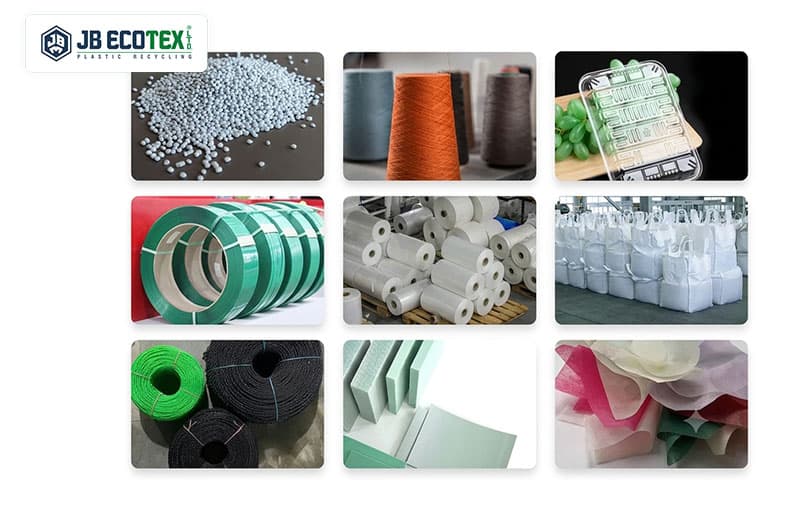
Polyester Staple Fibre
The productionof polyester staple fibre is a large global market for rPET flakes. Fibre-grade flakes are melted and spun into fibres used for clothing, carpets, pillow fill, and automotive interiors. The fibre industry absorbs a large volume of clear and light-blue bottle flakes globally. J BEcotex's own operations sit at the intersection of this supply chain: hot-washed rPET flakes are the primary feedstock for the recycled polyester staple fibre that goes into textiles, nonwovens, and technical fibre applications. This is the bottle-to-fibre pathway, a well-established and high-volume commercial route for recycled plastic flakes.
Bottle-to-Bottle Recycling
The highest-grade clear flakes are used to produce new PET beverage bottles. This pathway requires SSP processing after the flake stage to raise IV and achieve food-contact decontamination levels. Food-grade flakes require extremely low impurity content, typically PVC content below 10 ppm, and undergo special purification treatment before use in packaging that comes into direct contact with food. The EU's Single-Use Plastics Directive has set targets that are driving bottle-to-bottle demand among European brand owners and converters.
PET Sheet and Thermoformed Packaging
rPET flakes are extruded into sheets and then thermoformed into food trays, clamshell containers, fruit punnets, blister packs, and other rigid packaging. Rigid rPET sheets are thermoformed into new packaging formats, and non-woven industrial materials including geotextiles, insulation, and automotive felts also absorb rPET fibre production. Sheet grade requires controlled IV and colour but is generally less stringent than bottle grade.
PET Strapping Tape
PET strapping bands have high tensile strength and serve as a replacement for steel strapping in packaging heavy goods. Green PET flakes find a reliable market here since colour is secondary to mechanical performance. The strapping market values consistent IV and a material that extrudes cleanly without die-face contamination.
rPET Resin Production
Flakes serve as the feedstock for producing rPET resin pellets, which are then sold to converters who require a uniform, pre-pelletised input for injection moulding, blow moulding, or extrusion. The flake-to-resin pathway adds a processing step but widens the addressable buyer base for the material.
Non-Woven Fabrics
Fibre-grade flakes are spun into staple fibres that are then processed into nonwoven fabrics for automotive felts, geotextiles, filtration media, hygiene products, and industrial insulation. The nonwoven sector is a growing end market for rPET fibre.
Monofilament and Engineering Applications
Lower volumes of rPET flakes go into monofilament production for bristles, industrial textiles, and speciality applications. Engineering resin compounders blend rPET with glass fibre or other additives for structural parts in automotive and electronics.
The diversity of downstream applications is why the rPETflakes market is structurally robust. Demand is spread across sectors with different drivers, so a slowdown in one segment rarely collapses aggregate flake demand.
Why Recycled Plastic Flakes Over Virgin PET
For manufacturers evaluating sourcing decisions, the comparison between rPET flakes and virgin PET involves several dimensions beyond price.
Greenhouse gas emissions
The lifecycle emissions difference is material. A study of rPET production at an ALPLA Group facility found that rPET has a carbon footprint of 0.45 kg CO₂ equivalent per kilogram, compared with 2.15 kg CO₂ equivalent per kilogram for virgin PET, a reduction of 79%. A separate lifecycle assessment cited in peer-reviewed literature found that for every kilogram of recycled PET flake used, greenhouse gas emissions and energy consumption can be reducedby 71% and 84% respectively compared with virgin PET.
These numbers are relevant for manufacturers reporting Scope 3 emissions, meeting science-based targets, or supplying customers who embed carbon criteria into their procurement specifications.
Regulatory compliance
The regulatory environment is shifting in the direction of recycled content requirements. The EU's Single-Use Plastics Directive, which requires 25% recycled content in PET beverage bottles from 2025 and 30% from 2030, creates structural demand for certified rPET that virgin material simply cannot satisfy. Brand owners operating in those markets require a certified recycled content supply chain, and rPET flakes with GRS documentation provide the traceability that virgin material cannot.
Supply chain transparency
GRS-certifiedr PET flakes carry a traceable chain of custody from post-consumer waste collection through to the final flake. This documentation is increasingly required by buyers in Europe and North America. GRS is the standard of choice for European ESG compliance requirements in this supply chain.
Performance parity
For the applications that absorb the largest flake volumes, rPET performs equivalently to virgin material in processed outputs. Polyester staple fibre produced from well-specified hot-washed rPET flakes achieves the tenacity, denier consistency, and processing behaviour required by downstream textile manufacturers. The performance gap that historically existed between recycled and virgin PET has narrowed substantially as washing and sorting technology has improved.
The circular economy case for rPET flakes extends beyond an environmental argument. It is becoming an operating requirement for manufacturers selling to buyers who have embedded recycled content into their product specifications and supplier qualification criteria.
What Buyers Look for When Sourcing rPET Flakes
Sourcing criteria have tightened over the past several years. PET bottle flakes buyers are no longer evaluating on price alone. Whatbuyers look for in rPET flakes increasingly encompasses specification consistency, certification documentation, and supply chain transparency.
Consistency across batches
For manufacturers running continuous extrusion or fibre spinning lines, batch-to-batch variation in IV, colour, or contamination creates process problems. A supplier who can demonstrate a controlled washing process and testing protocol for every lot is categorically different from one who provides a single indicative specification sheet.
Third-party test reports
Self-reported specifications have limited value without independent verification. Buyers of any scale should expect certified lab reports covering IV, moisture, PVC ppm, and total contamination.
Certification documentation
GRS certification for recycled content claims. ISO 9001 for quality management systems. For food-contact pathways, FDA No Objection Letters or EFSA compliance documentation. These are baseline requirements for buyers operating in regulated markets.
Supply continuity
Seasonal variation in bottle collection affects feedstock availability. Buyers with stable procurement needs should assess whether their flake supplier has the collection infrastructure, washing line capacity, and storage capability to maintain consistent monthly supply.
Traceability
Brand owners requiring post-consumer recycled content documentation need a supplier who can provide chain-of-custody records linking the delivered flake to post-consumer bottle collection. This is where GRS certification and rigorous internal tracking protocols matter operationally.
J B Ecotex's hot-washed rPET flakes are produced from post-consumer bottles with contamination levels held below 50 ppm, GRS certification, and ISO compliance. The flakes serve as feedstock for bottle-to-bottle resin production, fibre manufacturing, and sustainable packaging. For buyers evaluating rPETflakes from a certified manufacturer, the documentation trail behind the product is as important as the specification itself.
Factors That Affect rPET Flake Quality
Quality in the plastic flakes recycling process is a cumulative result of decisions made at every stage of the process.
Feedstock quality
Clean, well-sorted post-consumer bottle streams produce higher-quality flakes with less processing effort. Feedstocks containing a high proportion of mixed resin contamination, heavily soiled bottles, or off-grade material require more intensive washing and generate higher rejection rates.
Washing temperature and chemistry
Hot washing at the right temperature with the correct caustic concentration and dwell time is the step that removes adhesives, organic contamination, and volatile residues. Insufficiently hot washing, or inadequate dwell time, leaves behind contamination that shows up in downstream processing as colour variation, odour, or mechanical defects.
Sorting technology
NIR optical sorters, colour sorters, and electrostatic separators are the equipment that determines how effectively different contaminants are removed. Facilities without this equipment produce material with higher contamination variance. Buyers of recycled plastic flakes should understand what equipment is present in a supplier's washing line, rather than reading the output specification alone.
Drying and moisture control
Insufficiently dried flakes arrive at the customer's facility with moisture that has to be handled before melt processing. Excess moisture in delivered material is a process burden for the buyer and indicates incomplete production.
Testing protocol
The rigor of the outgoing quality control process determines how reliably the specification reflects what is in the bag. Suppliers who test every lot with calibrated equipment and retain test records provide a different level of assurance from those who test periodically or rely on visual inspection.
The Circular Economy Position of rPET Flakes
rPET flakes sit at the functional centre of the plastics circular economy. The bottle-to-fibre and bottle-to-bottle pathways that account for the bulk of rPET flake consumption are the commercial proof points that mechanical recycling at scale is viable and productive.
The rPET flakes market is expanding at a CAGR of 11.40%, driven by increasing need for sustainable materials particularly in packaging, ongoing innovations in recycling technology, and government regulations supporting circular economy principles.
The role of flakes in this system is structural. Without a reliable, high-quality supply of hot-washed rPET flakes, the downstream industries that consume recycled content cannot source at scale. The circular economy narrative around PET depends on the flake stage being executed to specification. A convertor producing fibre from poorly washed flakes fails to deliver the performance or the certified recycled content that their buyers require. Quality at the flake stage is a supply chain requirement that reaches through to finished goods sold in retail.
The growth in brand owner commitments to recycled content, the regulatory mandates on packaging, and the expansion of textile sustainability programmes have all increased the demand signal reaching back to rPETflakes manufacturers. The market for recycled plastic flakes is growing because the end-market demand for documented recycled content is growing.
Recycled Plastic Flakes — FAQ
What is the difference between hot-washed and cold-washed PET flakes?
Hot-washed PET flakes are processed at elevated temperatures using caustic soda and detergent, which removes adhesives, organic residues, and volatile contamination that cold washing leaves behind. Cold-washed flakes have higher residual contamination and are typically suited only for lower-grade applications. For fibre, bottle-grade, sheet, or any application where process cleanliness matters, hot-washed material is the appropriate specification.
What are green PET flakes used for?
Green PET flakes come from coloured beverage bottles. They have a reliable market in PET strapping tape, where colour is irrelevant to the end product. They also go into non-woven applications and lower-grade fibre. They typically trade at a discount to clear material.
What certifications should a buyer require from an rPET flakes supplier?
PET bottle flakes buyers operating in regulated markets should require GRS (Global Recycled Standard) certification for recycled content traceability. ISO 9001 for quality management systems. For food-contact pathway applications, FDA No Objection Letter documentation or EFSA compliance documentation. Third-party lab reports for IV, moisture, and contamination ppm should accompany every commercial lot.
Can rPET flakes be used for food packaging?
Flakes alone are typically insufficient for direct food-contact applications. They need to go through a decontamination step such as SSP to raise IV and remove volatile organic compounds before being used in food packaging. The starting flake specification matters: food-grade applications typically require PVC content below 10 ppm in the input flake and involve special purification treatment.
What is the typical contamination threshold for fibre-grade rPET flakes?
Total contamination below 50 ppm is the broadly accepted threshold for fibre-grade material. This covers PVC, metals, paper, glue, and other non-PET residues. PVC specifically should be below 30 to 50 ppm for standard fibre applications. Buyers running sensitive fibre lines with fine denier products may set tighter limits.
Why does PVC contamination matter so much in PET flakes?
PVC has a similar density to PET, making separation difficult in a sink-float system. At PET melt temperatures, PVC degrades and releases hydrochloric acid, which degrades the PET polymer and causes discolouration and quality defects in the processed product. Even at a few parts per million, PVC can cause problems in sensitive applications. This is why optical sorting before shredding is essential, and why well-run hot-wash lines use electrostatic separators as a secondary removal step.
How are plastic bottles converted into recycled flakes?
The process involves 7 key stages: collection, sorting, pre-washing, shredding, flake washing, pelletizing (optional), and reforming into end products. According to Recycling Today's step-by-step production guide, after shredding, float-sink separation is used, PET sinks in water while lighter contaminants (caps, labels) float, ensuring high purity. The final flakes are dried to below 1% moisture content before being packaged for sale to downstream industries.
What products can be manufactured using recycled plastic flakes?
Recycled PET flakes are used across textiles, packaging, bottles, carpets, sheets, and industrial fabrics. Hot-washed clear flakes with high purity are also approved for food-grade packaging and beverage bottle manufacturing.
Can recycled plastic flakes be reprocessed or recycled multiple times?
Yes. Unlike many materials, rPET can be recycled over and over again without losingits crucial physical properties, making it one of the most circular plastics available. Each recycling cycle does reduce polymer chain length slightly, which is why processors blend recycled and virgin PET for applications requiring the highest clarity or tensile strength. Importantly, rPET production consumes up to 50% less energy than virgin PET and carries a carbon footprint that is 79% lower.
What are recycled flakes and what types are available?
Recycled flakes are small plastic fragments produced by shredding post-consumer plastic waste, most commonly PET bottles. The two primary categories are neutral/blue (clear) flakes and colored flakes: clear flakes command premium prices due to their suitability for food packaging, textile fiber, and beverage bottles, while colored flakes are used in non-food applications. Other common flake types beyond PET include HDPE(₹12–20/kg), LDPE, PP, and PVC, each with different applications and market rates.
What are recycled polyester flakes used for in the textile industry?
rPET flakes are the primary raw material for recycled polyester fiber and yarn, used extensively in activewear, jackets, home textiles, bags, footwear, and curtains. The conversion process involves heating PET flakes to 260–280°C, extruding through spinnerets to form continuous filaments, then drawing and texturing to create polyester fibers. The PET-flake-to-fabricvalue chain in India is growing rapidly as global fashion brands push for GRS-certified recycled content in their supply chains.
Disclaimer: All data presented is on a consolidated basis for JB Ecotex Limited and its wholly owned subsidiary, JB RPET Industries Private Limited, as of 31 March 2026.