
Recycled Resins: A B2B Sourcing Guide to Grades, Compliance, and Applications
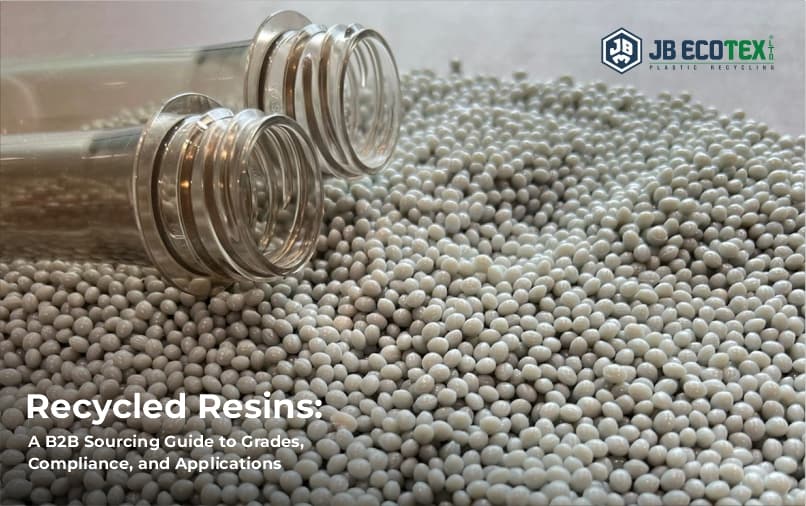
A buyer sourcing recycled resins meets a wall of terminology before meeting a single supplier. PET resin, rPET resin, PCR resin, post-consumer recycled resin, food-grade rPET: the labels overlap, shift by region, and hide real differences in what the material can do and where it can legally go. For a procurement or packaging team, sorting the terms is the first step toward sorting the suppliers.
The sections here work through what these terms cover, how recycled resin moves from bottle to packaging, and what compliance a food-contact application demands. At J B Ecotex, we produce Food-Grade B2B rPET Resin from post-consumer PET bottles, so the compliance and sourcing questions below are the ones we answer for buyers every day.
PET Resins and rPET Resins: What the Terms Actually Cover
Start with the base terms, since everything else builds on them. PET resin is polyethylene terephthalate in the pellet or granule form that converters melt into bottles, sheets, and other products. When you source from a PET resin supplier, the material arrives as these pellets ready to process. Virgin PET resin comes from petrochemical feedstock. rPET resin is recycled PET resin, made by processing used PET back into resin form.
The r simply marks the recycled origin. rPET resin can serve many of the same applications as virgin PET resin, provided it meets the quality and compliance the application requires. For a buyer, the practical difference sits in provenance and documentation: rPET carries a recycled-content story and the certification to back it, where virgin resin faces a different set of expectations.
Within rPET, the biggest divide is the intended use. Resin bound for food-contact packaging follows a tighter production and compliance path than resin for general applications. That distinction runs through the rest of this discussion, because it decides which grade a buyer should even be looking at.
PCR Resin and Post-Consumer Recycled Resin Explained
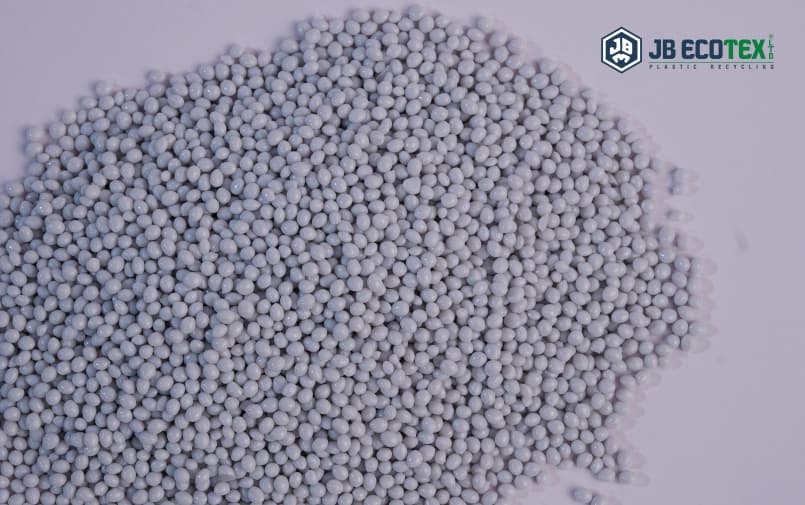
PCR resin and post-consumer recycled resin describe the same idea from two directions. PCR stands for post-consumer recycled, so PCR resin and post-consumer recycled resin both mean resin made from plastic that has already served its first life with a consumer and been collected for recycling.
The post-consumer part matters for claims. A used beverage bottle returned through a collection stream is post-consumer material. Factory offcuts and production scrap are pre-consumer or post-industrial material. Brands and regulators treat the two differently, and many recycled-content commitments count post-consumer content specifically. When a buyer asks for PCR resin, they are usually asking for verifiable post-consumer origin, documented through chain-of-custody certification. You can see how post-consumer recycled PET feeds recycled products across industries.
Our resin sits firmly on the post-consumer side. We make Food-Grade B2B rPET Resin from 100% post-consumer PET bottles, so the PCR content is the whole of the material rather than a blended fraction. For a buyer building a post-consumer recycled-content claim, that origin is the starting point the documentation rests on.
Recycled Plastic Resin Across Packaging and Manufacturing
Recycled plastic resin is the broad umbrella, covering recycled resin of any polymer used across packaging and manufacturing. rPET is one part of that picture, and for packaging it has a long track record, because PET recycles well and is widely used in bottles and containers.
In packaging, recycled plastic resin goes into rigid and flexible formats: bottles, jars, trays, sheets, films, and personal care containers. In broader manufacturing, PET-based material also reaches non-packaging products through fibre and other routes. The point for a buyer is that one polymer family can serve many end products, so the grade and specification matter more than the label alone.
For packaging specifically, the questions narrow quickly to clarity, strength, processing behaviour, and compliance. A resin that performs in an opaque container might struggle in a clear bottle. A resin cleared for general use might miss food-contact requirements. Reading the grade against the exact application is what keeps a sourcing decision sound.
Recyclable Materials for Food Packaging
Food packaging raises the bar on materials, because whatever touches food has to clear safety requirements before it reaches a shelf. Among recyclable materials, PET holds a central place in food packaging, since it can be recycled back into food-contact resin through a bottle-to-bottle route.
That bottle-to-bottle path is what makes recyclable materials for food packaging more than a sustainability line. A used PET bottle, collected and recycled correctly, can become the resin for a new food-grade bottle, closing the loop on the material rather than downcycling it into a lesser use. For a beverage brand, this is the route that lets recycled content go back into the same product it came from, keeping the material at its original value rather than stepping it down. For a brand under recycled-content pressure, that closed loop is the difference between recycled content it can use in primary food packaging and recycled content limited to other applications.
The condition attached to all of this is compliance. A recyclable material only counts as a food-packaging material once the resin made from it meets food-contact requirements, which brings the discussion to how that resin is produced and certified. You can read more on recyclable materials for food packaging and how the circular loop works.
Food-Grade B2B rPET Resin and What Compliance Requires
Food-grade rPET resin is recycled PET resin produced for direct food contact. Making it takes more than clean feedstock, because food-contact use brings decontamination and compliance requirements that reach beyond general recycling.
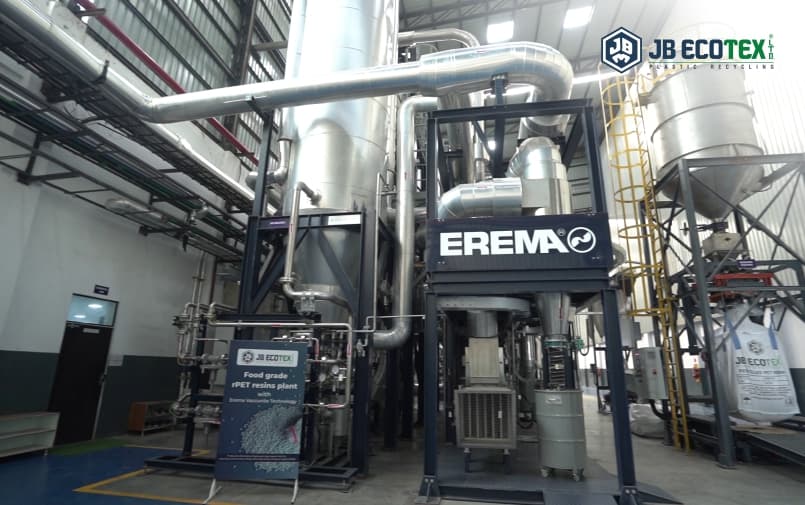
At J B Ecotex, we make Food-Grade B2B rPET Resin from 100% post-consumer PET bottles. The bottles are collected, sorted, washed, and processed into rPET flakes, and those flakes are then processed using EREMA VACUNITE or EREMA VACUREMA technology, followed by Solid State Polycondensation from Polymetrix. Quality control runs at various stages to produce resin with specified intrinsic viscosity and the other parameters food-contact packaging depends on.
These stages are designed to bring the material to a food-contact level and to build the intrinsic viscosity the resin needs for packaging, with quality control checking the output at each step. Traceability supports the result. Batch records tie the resin back to its post-consumer feedstock and its processing, which is what a food brand relies on to stand behind a recycled-content claim to its own customers and auditors.
Intrinsic viscosity, or IV, is the parameter that leads at the resin stage. We produce Food-Grade B2B rPET Resin in multiple IV grades, including 0.76, 0.80, and 0.84, to match different processing and packaging needs. Different processing and packaging applications call for different IV, so grade selection starts from what a converter is making.
Compliance is what clears the resin for food contact. Our Food-Grade B2B rPET Resin is produced to comply with the requirements of the Food Safety and Standards Authority of India (' FSSAI') and the United States Food and Drug Administration ('USFDA' ) for food-contact applications, and our recycling is certified under the Global Recycled Standard (' FSSAI'). For a buyer, those three reference points, FSSAI, US FDA, and GRS, are the documentation that lets a food brand adopt the resin with assurance.
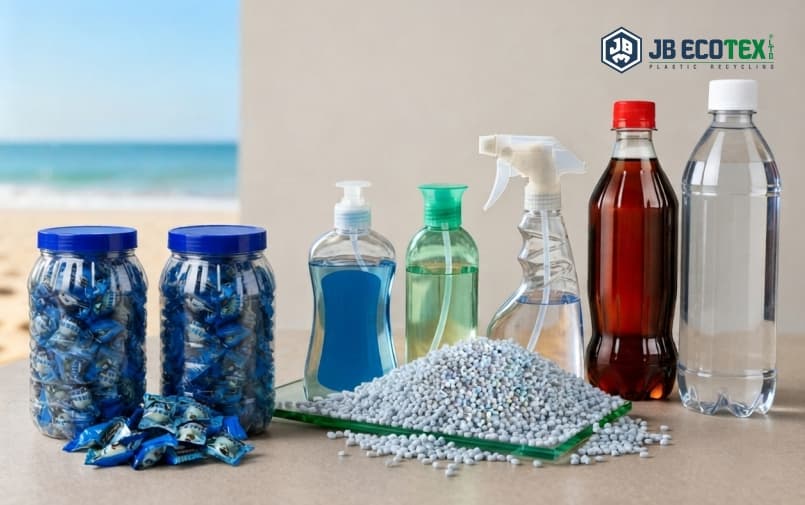
Once cleared, the resin serves a wide span of packaging. Food-Grade B2B rPET Resin goes into rigid and flexible packaging, including bottles for packaged drinking water, carbonated soft drinks, juices, and alcoholic beverages, along with PET jars, PET sheets, thermoformed food trays, films, personal care packaging, and other food and non-food packaging. One resin, cleared to the right standard, covers much of the packaging a food or beverage brand relies on.
Sourcing from Recycled Plastic Packaging Manufacturers
Once the terminology and compliance are clear, sourcing comes down to the manufacturer behind the resin. Recycled plastic packaging manufacturers vary in feedstock, process, certification, and the documentation they can put in a buyer’s hands, and those differences decide how smoothly a resin moves from trial to supply.
A few questions separate a dependable source from a risky one:
- Where does the feedstock come from, and is it verifiably post-consumer?
- Which compliance references apply, and can the manufacturer produce the certificates?
- What IV grades are available, and do they match the application?
- Can the manufacturer trace a batch back to source and hold quality steady across repeat orders?
A manufacturer who answers these openly gives a buyer a resin they can plan a product around. There is also a case for integration. A manufacturer who recycles its own feedstock into flakes and then into resin holds visibility across the whole chain, from bottle to finished resin. At J B Ecotex, our resin runs on rPET flakes we produce ourselves from post-consumer bottles, which keeps the origin and the quality record in one place. When you evaluate recycled plastic packaging manufacturers, that end-to-end control is worth weighing alongside price and grade.
Choosing Recycled Resin With Confidence
Sourcing recycled resins gets simpler once the terms line up with what a buyer actually needs. PET and rPET describe the polymer and its recycled origin. PCR and post-consumer recycled resin describe where the material came from. Food-grade rPET resin describes what it is cleared to do. Match those to your application and your compliance obligations, and the field of suppliers narrows to the ones who can genuinely serve it.
At J B Ecotex, we produce Food-Grade B2B rPET Resin from 100% post-consumer PET bottles, in IV grades built for packaging, and produced to meet food-contact requirements with GRS-certified recycled content. To review grades and compliance for your packaging programme, tell us your application and IV target, and our team can share specifications and samples for qualification.
Frequently Asked Questions
What are recycled resins?
Recycled resins are plastic resins made from recycled material rather than virgin feedstock. For PET, recycled resin (rPET) is produced from used bottles and can serve packaging and manufacturing, including food-contact applications when it meets the required compliance.
What is the difference between PET resin and rPET resin?
PET resin is polyethylene terephthalate in pellet form for melting into bottles, sheets, and containers. rPET resin is recycled PET resin made from used PET. rPET can serve similar applications when it meets the quality and compliance the use requires.
What does PCR resin mean?
PCR resin means post-consumer recycled resin, made from plastic that served a first life with a consumer and was collected for recycling. It differs from pre-consumer or post-industrial scrap, and recycled-content claims often count post-consumer content specifically.
Is rPET resin safe for food packaging?
Food-grade rPET resin is produced to meet food-contact requirements. J B Ecotex Food-Grade B2B rPET Resin is made from post-consumer PET bottles to comply with FSSAI and US FDA requirements, with recycled content certified under the Global Recycled Standard.
What IV grades of food-grade rPET resin are available?
J B Ecotex produces Food-Grade B2B rPET Resin in multiple intrinsic viscosity grades, including 0.76, 0.80, and 0.84. Different processing and packaging needs call for different IV, so grade selection starts from the application.
What can food-grade rPET resin be used to make?
Food-Grade B2B rPET Resin is used for rigid and flexible packaging, including bottles for water, soft drinks, juices, and alcoholic beverages, plus PET jars, sheets, thermoformed food trays, films, and personal care packaging.