
Recycled Polyester Staple Fibre for Non-Woven Fabric Manufacturing
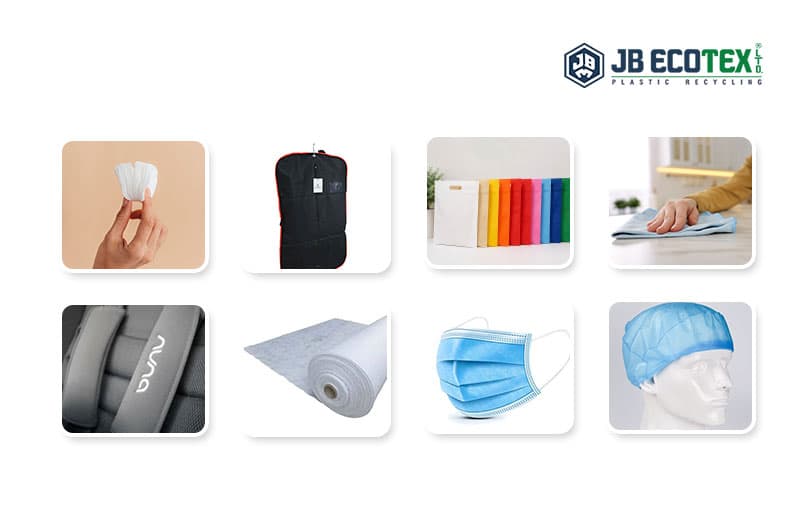
Non-woven manufacturers run on fibre quality. Inconsistent denier, poor crimp, or contamination in the input fibre translates directly into web defects, bonding failures, and downstream production losses. At J B Ecotex, we produce recycled polyester staple fibre for non-woven applications with tight control over denier, cut length, and crimp frequency because those three variables determine whether your carding line runs cleanly or keeps stopping.
Our rPSF is manufactured from post-consumer PET bottle waste, processed through controlled recycling and melt spinning, and supplied to non-woven producers across automotive, hygiene, geotechnical, filtration, and industrial end-uses. If you are sourcing fibre as a non woven polyester fibre manufacturer, this page covers what we supply, in which grades, and for which applications.
Why Non-Woven Lines Run Better on Well-Processed Recycled PSF
The argument against recycled fibre in non-woven production used to have merit. Feedstock variability was real. Contamination was a genuine processing risk. That has changed with how recycling technology has evolved.
At J B Ecotex, our recycling process starts with sorted, washed post-consumer PET, processed to below 50 ppm contamination before fibre spinning begins. The fibre that comes off our line carries consistent denier across the batch, uniform cut length with minimal fines, and controlled crimp that suits both needle-punch and thermal bonding processes.
What this means for your line:
- Carding stability — uniform fibre length and crimp frequency produce even webs with fewer draft variations
- Bonding reliability — consistent denier ensures predictable thermal bonding points across the cross-section
- Machine uptime — low contamination means fewer stops for cleaning and less risk of spinneret or card wire damage
- Lot-to-lot consistency — our controlled feedstock sourcing and process monitoring reduce the variability that typically plagues recycled fibre supply
Grade Selection for Non-Woven Applications
Different end-uses need different fibre configurations. Below are the grades we supply specifically for non-woven processing, along with the applications they are suited for.
High-Tenacity Grade — Geotextile and Industrial Non-Wovens
Engineered for high-strength needle-punch applications. Offers high tensile performance with reliable denier and cut-length control. Suitable for non woven polyester geotextile manufacturing, roofing felts, and heavy industrial filtration fabrics. For buyers producing fiber for geotech applications, this grade delivers the mechanical consistency that geotechnical performance specifications demand.
Standard White Grade — Hygiene and Medical Non-Wovens
Our super-whiteness and low-BPA white grades are suited to hygiene non-wovens where cleanliness of input fibre matters. Produced in facilities powered by over 85% renewable energy, these grades carry GRS certification for buyers with recycled content disclosure requirements. Relevant for manufacturers of polyester fibre for hygiene nonwoven fabrics including coverstock, absorbent cores, and medical drapes.
Flame-Retardant Grade (EF-R) — Technical and Automotive Non-Wovens
Our EF-R grade incorporates phosphorus-based flame-retardant chemistry into the polymer, producing inherent FR behaviour rather than a surface treatment. Available in 1.5D and 2D, in white and dope-dyed black. Suitable for automotive interior non-wovens, transport upholstery, and technical safety applications where LOI performance is specified
High Denier Grades — Automotive Stuffing and Acoustic Non-Woven
Available in higher deniers for automotive, filtration, acoustic insulation, and furniture padding applications. High denier recycled polyester fibre in this range suits heavy needle-punch lines and provides the bulk and resilience these applications require.
AquaLoop OBP Grade — Ocean Bound Plastic Route
For brands requiring Ocean Bound Plastic sourcing claims on finished non-woven products. Available in white and dope-dyed black. Suitable for packaging non-wovens and sustainable product lines where OBP sourcing needs to be declared.
See all fibre grades for non-woven production →
Non-Woven Fabric Types We Supply Into
Non woven polyester material covers a wide range of fabric constructions, each with its own fibre requirements. We supply rPSF into the following fabric types and end-uses:
Needle-punch fabrics for geotextiles, automotive carpet, roofing underlays, and filtration media require fibre with high tenacity and controlled crimp. Thermal-bonded fabrics for hygiene products, wipes, and disposables require clean fibre with precise denier and suitable thermal bonding behaviour. Dry-laid fabrics for industrial wipes, packaging, and furniture require consistent web formation from uniform cut-length fibre.
For non woven polyester fabric producers sourcing across all three construction routes, we supply grades that are specified for each bonding method. Our technical team can support trials and help match grade selection to your specific production line configuration.
PET Fiber for Industrial Non-Woven Applications
PET fiber is the category-level term for what we produce. Polyethylene terephthalate-based staple fibre offers a combination of properties that synthetic alternatives in non-woven production cannot easily replicate: high tensile strength, chemical resistance to oils, solvents, and moisture, dimensional stability under environmental stress, and reliable thermal bonding behaviour in bicomponent and single-component configurations.
For buyers producing geotextiles, filtration fabrics, automotive insulation, roofing materials, or furniture non-wovens: PET fibre remains the reliable standard, no matter the non-woven application. Recycled-route PET now matches virgin performance in most of these applications. J B Ecotex produces from post-consumer PET feedstock with GRS-certified recycled content, which satisfies procurement requirements where chain-of-custody documentation is needed.
rPSF for nonwoven fabric production from J B Ecotex is available with.
- Denier range: 1.5D to high denier variants depending on end-use
- Cut lengths: 32 mm, 38 mm, and 44 mm, with customisation available
- Crimp: calibrated to carding and air-lay line requirements
- Finishes: standard, hydrophilic, and flame-retardant depending on grade
- Colours: bright white, super-white, and dope-dyed black depending on grade
Certifications That Matter for Your Procurement
Non-woven buyers sourcing into regulated end-uses need documentation, and we supply it.
GRS (Global Recycled Standard) certification confirms recycled content and traceability from PET waste source through to finished fibre. OEKO-TEX compliance covers chemical safety for skin-contact applications. Our flame-retardant grades are available with LOI data for technical specifications. We supply full lot traceability documentation with each shipment.
For buyers who need to make recycled content claims on finished products, whether for retailer sustainability requirements, brand sustainability reporting, or regulatory compliance, our GRS-certified rPSF provides the chain-of-custody documentation needed.
Scale, Reliability, and Supply Planning
Non woven polyester production plants operate continuous manufacturing systems. A supply interruption in input fibre means production downtime, and downtime at scale is expensive. Manufacturers sourcing from J B Ecotex work with an integrated supplier, we control the recycling process, the fibre extrusion, and the quality at every stage.
Our plant operates at scale, with high-volume production capacity and reliable feedstock sourcing from post-consumer PET collection. We supply rPSF for nonwoven applications across Asia, Europe, the Middle East, and the Americas, with consistent lot documentation and lead times that allow production planning rather than reactive sourcing.
For procurement teams consolidating supply or qualifying a second source, we can support full technical documentation including grade specifications, batch certificates, and traceability records.
What Non-Woven Manufacturers Ask Before Ordering
What denier range is available in recycled polyester staple fibre for non-woven applications?
Recycled polyester staple fibre for non-woven production is available from 1.5D through to high denier variants. Lower deniers suit hygiene and medical non-wovens. Higher deniers are used in geotextiles, automotive insulation, acoustic non-wovens, and heavy needle-punch applications. Custom denier is available on request.
What cut lengths are supplied for non-woven fibre?
Standard cut lengths for non-woven grades are 32 mm, 38 mm, and 44 mm. Cut length selection depends on the bonding process and line configuration. Needle-punch lines typically run longer cuts. Thermal-bonding lines for hygiene non-wovens generally run shorter cuts. Customisation is available for specific production requirements.
Is flame-retardant recycled polyester fibre available for technical non-woven production?
Yes. The EF-R grade carries inherent phosphorus-based flame-retardant chemistry embedded into the polymer, available in 1.5D and 2D in white and dope-dyed black. It is suited to automotive interiors, transport upholstery, and safety-specification non-wovens where LOI performance is part of the material specification.
What certifications does recycled PSF for non-woven carry?
GRS (Global Recycled Standard) certification covers recycled content traceability from PET waste through to finished fibre. OEKO-TEX compliance covers chemical safety for skin-contact applications. FR grades are supplied with LOI data. Full lot traceability documentation and batch certificates are available with every shipment.
Can recycled polyester staple fibre be used in needle-punch machines?
Yes. High-tenacity and standard grades are engineered for needle-punch processing. Controlled crimp frequency and uniform cut length ensure stable web formation and consistent needling performance. These grades are used in geotextile, roofing, automotive carpet, filtration media, and heavy industrial needle-punch non-woven production.
What is the contamination level in rPSF supplied for non-woven production?
Contamination in J B Ecotex rPSF is controlled to below 50 ppm before fibre spinning begins. This is achieved through sorting and hot-washing of post-consumer PET feedstock. Low contamination reduces card wire damage, minimises machine stoppages, and protects bonding quality in thermal and needle-punch non-woven lines.
Is Ocean Bound Plastic recycled polyester fibre available for non-woven production?
Yes. The AquaLoop OBP grade is produced from Ocean Bound Plastic-sourced PET and is available in white and dope-dyed black. It is suited to packaging non-wovens and sustainable product lines where OBP sourcing needs to be declared to brand or retail customers.
How does recycled polyester fibre perform on carding lines compared to virgin PSF?
Recycled PSF from controlled feedstock processes runs comparably to virgin on carding lines when denier, cut length, and crimp are consistent. J B Ecotex fibre is engineered to minimise fines and denier variation, which are the two factors most likely to cause draft irregularity on high-speed carding equipments.