
PET Packaging Material for Food, Beverage, and Consumer Packaging Applications
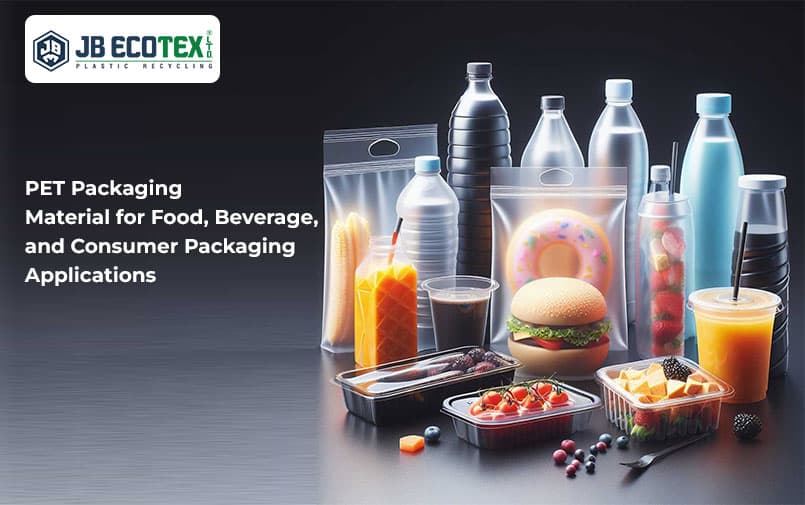
Packaging decisions today are no longer driven by cost alone. Manufacturers across food, beverage, and consumer goods are balancing performance, compliance, supply continuity, and long-term sustainability expectations from brands, regulators, and end consumers.
At the center of this shift sits PET packaging material, a polymer that has quietly become the backbone of modern packaging systems. From bottled beverages and edible oils to personal care and household products, PET continues to dominate because it solves multiple problems at once.
What has changed in recent years is not the relevance of PET, but how it is sourced, processed, and evaluated. Recycled PET, commonly known as rPET, is no longer experimental. It is now a serious material option for manufacturers who want consistency without compromising performance.
This blog breaks down how PET packaging material works across applications, where rPET fits in realistically, and why more manufacturers are re-evaluating their assumptions around recycled PET in injection moulding and food contact packaging.
What Is PET Packaging Material?
PET packaging material refers to Polyethylene Terephthalate used specifically for packaging applications across food, beverages, and consumer goods. It is a thermoplastic polymer that belongs to the polyester family and is valued for its clarity, strength-to-weight ratio, chemical resistance, and recyclability.
From a manufacturing standpoint, PET offers a stable processing window, predictable mechanical properties, and compatibility with high-speed production lines. This combination is what made PET the default material for beverage bottles, jars, trays, and rigid containers.
What is often overlooked is that PET is not a single uniform product. The performance of PET packaging material depends on resin quality, IV consistency, contamination control, and thermal management during processing. These factors become even more important when evaluating recycled PET pellets for packaging use.
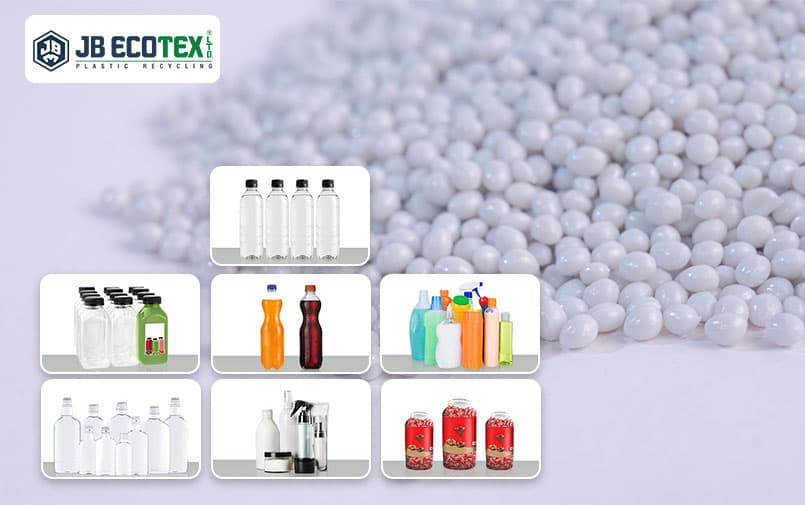
Key Areas of Application of PET Packaging Material
The versatility of PET packaging material comes from its ability to perform consistently across a wide range of packaging formats and end-use conditions. Its adoption spans industries not because it is trendy, but because it works reliably at scale.
In food packaging, PET is used for edible oil bottles, dry food containers, ready-to-eat trays, dairy packaging, and condiment jars. Its compatibility with food contact packaging materials and its resistance to moisture make it suitable for both short-shelf and extended-shelf applications.
Within beverage packaging solutions, PET dominates bottled water, carbonated drinks, juices, and functional beverages. Its lightweight nature combined with structural strength allows manufacturers to optimize logistics without compromising container integrity.
PET packaging material also plays a critical role in consumer and household packaging. Personal care bottles, liquid detergents, cosmetic containers, and pharmaceutical packaging rely on PET for clarity, durability, and chemical resistance.
From an industrial perspective, PET packaging applications extend into injection moulded preforms, caps, closures, jars, and rigid containers. These applications demand tight dimensional control and thermal stability, making material consistency a non-negotiable requirement.
As sustainability expectations rise, these same application areas are increasingly evaluating recycled PET pellets as a direct input without changing form factors or tooling.
Is PET Packaging Suitable for Food and Beverages
This is one of the most common and important questions manufacturers ask when evaluating material changes.
Yes, PET packaging material is suitable for food and beverages, provided it meets applicable food contact regulations and quality standards. PET has a long history of safe use in food contact packaging materials across global markets as long as global standards for rPET are maintained.
For rPET food packaging, suitability depends on the recycling process, decontamination efficiency, traceability, and compliance certifications. Food-grade rPET is not the same as generic recycled plastic material. It must be produced under controlled conditions with documented processes designed to remove contaminants and ensure safety.
Manufacturers evaluating rPET for food contact packaging should focus on supplier transparency, certification frameworks, and batch-level quality control rather than making assumptions based solely on recycled content.
PET Packaging Material in Injection Moulding Applications
Injection moulding remains one of the most critical processes for rigid PET packaging applications such as preforms, caps, closures, jars, and thick-wall containers.
From a processing perspective, PET packaging material performs well in injection moulding because of its melt stability, flow characteristics, and dimensional consistency. What often concerns manufacturers is whether rPET can match this performance reliably.
Technical processing data shows that rPET can operate within a similar processing window to virgin PET when thermal management is handled correctly.
In practical terms:
- Dryer temperatures for rPET can be slightly lower than virgin PET
- Extruder barrel temperatures can be optimized to run cooler
- Hot runner and mould temperatures can also be reduced
This controlled thermal profile is particularly beneficial in injection moulding, where excessive heat can degrade polymer chains. With rPET, running cooler is not a compromise. It is an advantage when the resin quality is consistent. For manufacturers already running PET injection moulding lines, this means rPET integration does not require line redesign. It requires process optimization and disciplined temperature control.
PET Packaging Material for Food, Beverage, and Consumer Packaging Performance
When evaluating PET packaging material, manufacturers look at three non-negotiable factors.
First is mechanical performance. Containers must maintain shape, withstand filling pressures, and perform during transportation and stacking.
Second is visual consistency. Clarity, colour stability, and surface finish are essential for brand-facing packaging.
Third is process reliability. Downtime, scrap rates, and cycle consistency directly impact cost and throughput.
High-quality rPET, when produced from well-sorted feedstock and processed under strict quality protocols, can meet these expectations. This is why rPET food packaging adoption is increasing in markets where traceability and process discipline are prioritized.
Understanding rPET Food Packaging and Its Role Today
rPET food packaging is not about replacing virgin PET everywhere. It is about strategically integrating recycled PET pellets where performance requirements align.
Food-grade rPET is commonly used today in water bottles, edible oil packaging, dairy containers, and secondary food contact applications. Its role continues to expand as recycling technology and quality control systems improve.
What matters for manufacturers is understanding where rPET adds value without increasing operational risk. This is where supplier capability becomes more important than the recycled content percentage itself.
PET Packaging Material and the Circular Economy in Packaging
The shift toward circular economy plastic packaging is not driven by marketing narratives. It is driven by regulatory direction, brand mandates, and long-term material security.
PET is uniquely positioned within the circular economy in packaging because it can be recycled multiple times when handled correctly. Unlike many polymers that downcycle quickly, PET retains functional value when processed through advanced recycling systems.
Using recycled PET pellets supports circular economy plastic packaging by reducing dependency on virgin fossil-based inputs while keeping material in active use.
For manufacturers, this is not about ideology. It is about future-proofing supply chains in an environment where raw material volatility and regulatory pressure are increasing.
Bottle to Bottle Recycling and Food-Grade Bottle to Bottle PET Resins
Bottle to bottle recycling is a closed-loop recycling pathway within the broader PET packaging ecosystem. It is designed to convert post-consumer PET bottles back into packaging-grade PET resin, including grades suitable for food contact and non-food consumer packaging applications.
PET packaging material itself spans a wide range of formats. Beyond bottles, it includes thermoformed trays, clamshells, blisters, rigid containers, wrappers, and other flexible or semi-rigid packaging formats used across food, beverage, personal care, household, and consumer goods segments. Bottle to bottle recycling focuses specifically on recovering PET from bottle streams because they offer a controlled and consistent input for high-quality resin production.
Food-grade bottle to bottle PET resins are produced only when the recycling process is validated for food contact packaging materials. This involves controlled feedstock sourcing, defined decontamination stages, and monitored processing conditions that allow the recycled PET to be used safely in direct food and beverage packaging.
The same bottle to bottle PET resins can also be applied to non-food-grade packaging, including personal care bottles, household product containers, and consumer goods packaging, where regulatory requirements differ but performance expectations remain high.
What differentiates bottle to bottle PET resin is not the final packaging format, but the process intent and material control embedded in the recycling system. The objective is to maintain polymer integrity and consistency so that the recycled PET pellets can be processed across injection moulding, extrusion, and thermoforming applications without unpredictable variation.
Within circular economy in packaging, bottle to bottle recycling allows PET packaging material to remain in high-value packaging uses rather than being diverted into lower-performance applications, supporting both food and non-food packaging systems without altering existing manufacturing infrastructure.
PET Resin for Packaging and Quality Control Expectations
Whether using virgin PET resin or rPET for packaging, quality control remains central to performance and compliance.
Key parameters include:
- Intrinsic viscosity consistency
- Moisture control before processing
- Contaminant monitoring
- Thermal degradation management
In the quality control in packaging industry, rPET requires equal, and sometimes greater, attention to process discipline. This is not a disadvantage. It simply reflects the reality that recycled materials demand better systems, not more tolerance.
Manufacturers who already operate with tight process controls often find rPET integration smoother than expected.
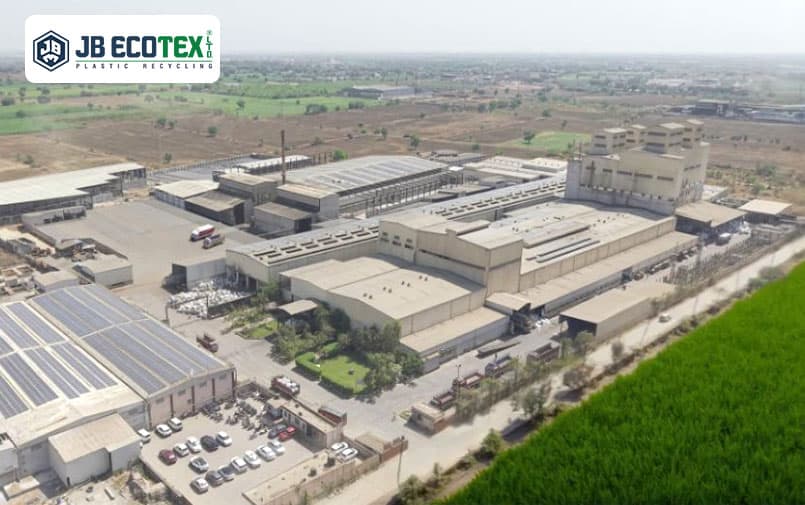
JB Ecotex and Its Role in PET Packaging Material Supply
When manufacturers evaluate PET packaging material, the focus often shifts from resin type to supplier capability. Material performance in packaging is not defined only by polymer chemistry. It is defined by how consistently that polymer is produced, tested, and supported at scale.
JB Ecotex operates within this exact gap. As a specialized PET recycling and PET resins manufacturing company, JB Ecotex focuses on producing recycled PET pellets that align with real manufacturing requirements rather than theoretical sustainability targets.
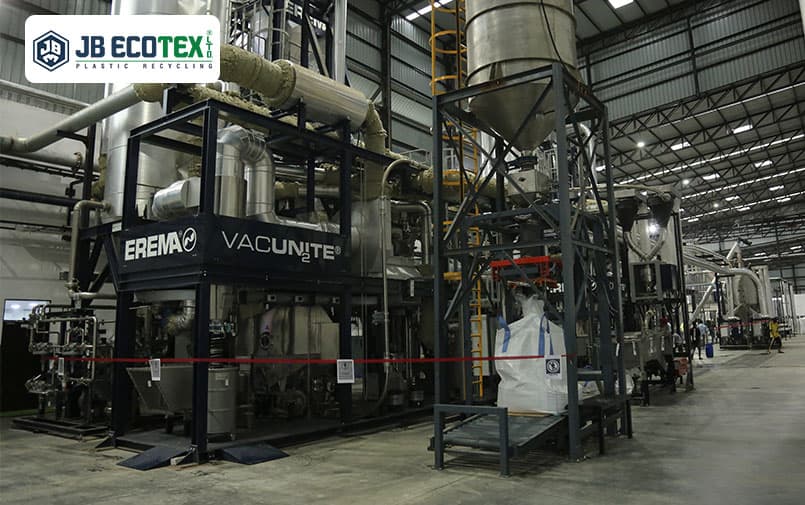
The company’s approach to PET packaging material is rooted in process discipline. Feedstock selection, controlled recycling, and precision thermal management are treated as core engineering variables, not secondary checks. This matters because packaging manufacturers require stability across batches, especially in injection moulding and high-speed packaging lines.
JB Ecotex’s recycled PET resins are developed keeping food contact packaging materials, injection moulded components, and rigid packaging applications in mind. The emphasis remains on repeatability, traceability, and process compatibility rather than pushing recycled content at the cost of performance.
For manufacturers exploring rPET food packaging or beverage packaging solutions, this operational mindset reduces the learning curve and lowers integration risk.
Recycled PET Pellets in High-Volume Packaging Operations
One concern manufacturers raise is whether recycled PET pellets can support high-volume operations without variability.
The answer depends on sourcing. rPET produced under industrial-scale, audited systems offers consistency suitable for continuous production environments. When pellet quality, IV range, and moisture control are standardized, rPET performs predictably in injection moulding and extrusion.
This reliability is what allows rPET to move beyond pilot projects into mainstream packaging operations.
PET Chips, Recycled Plastic Material, and Traceability
PET chips are the raw input form used by processors to create packaging products. For rPET, chip traceability is critical.
Manufacturers should evaluate:
- Feedstock sourcing
- Decontamination processes
- Batch traceability systems
- Compliance documentation
Recycled plastic material without traceability may be cheaper upfront but introduces risk in food contact packaging and brand-facing applications.
Sustainable Product Packaging Without Compromising Performance
Sustainable product packaging is often misunderstood as a trade-off. In reality, sustainability in packaging is about maintaining performance while reducing material impact.
PET packaging material supports this balance because it offers durability, recyclability, and compatibility with existing infrastructure. rPET strengthens this position when implemented responsibly.
This is why many manufacturers exploring innovative sustainable packaging solutions are not abandoning PET. They are refining how PET is sourced and processed. Thus ensuring that circular raw materials find their place in the manufacturing process.
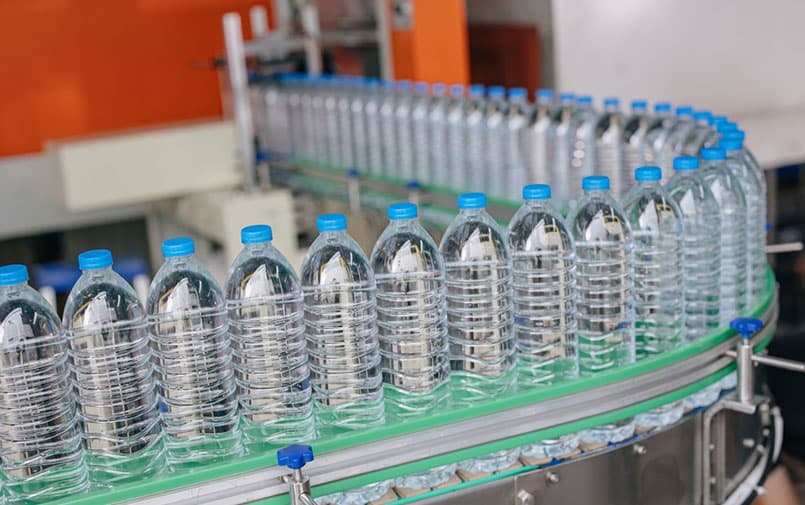
Beverage Packaging Solutions and rPET Integration
Beverage packaging solutions demand high clarity, pressure resistance, and consistency. PET has delivered on these needs for decades.
Today, rPET is increasingly being integrated into beverage packaging solutions where regulatory approvals and quality assurance systems are in place. The shift is gradual and deliberate, driven by data rather than perception.
For injection moulded preforms, rPET’s ability to run at optimized temperatures offers additional benefits in energy efficiency and material stability.
Eco Friendly Packaging Materials and Realistic Choices
The term eco friendly packaging materials is often used loosely. In practice, the most sustainable material is one that works within existing systems, maintains performance, and can be recovered at scale.
PET packaging material meets these criteria better than many alternatives. rPET enhances this position by closing the loop without requiring new infrastructure or radical process changes.
How rPET Is Used in Packaging Applications
So, how rPET is used in packaging applications today is not as a replacement, but as an evolution.
Manufacturers start with partial integration, validate performance, and scale based on results. This approach allows data to guide decisions rather than assumptions.
Injection moulding, extrusion, and thermoforming applications are all viable entry points for rPET when supported by quality supply partners.
PET Packaging Applications Moving Forward
As regulations evolve and brand expectations rise, PET packaging applications will continue to adapt. The material itself is not the problem. How it is sourced and managed defines its future.
Manufacturers who understand these innovations and trends in rPET are already positioning themselves ahead of the curve by evaluating rPET through a technical, not emotional, lens.
Frequently Asked Questions About PET Packaging Material
What is PET packaging material?
PET packaging material is Polyethylene Terephthalate used for food, beverage, and consumer packaging applications due to its strength, clarity, and recyclability.
Where is PET packaging used?
PET packaging is used in food containers, beverage bottles, personal care packaging, household products, and pharmaceutical applications.
Is PET packaging suitable for food and beverages?
Yes. PET packaging material is suitable for food and beverages when it complies with food contact regulations and quality standards.
How rPET is used in packaging applications?
rPET is used in packaging applications through controlled recycling systems, producing recycled PET pellets suitable for injection moulding, extrusion, and thermoforming.
Final Perspective for Packaging Manufacturers
Switching materials is not about following trends. It is about understanding performance, compliance, and long-term viability.
PET packaging material, supported by high-quality rPET such as the ones manufactured by JB Ecotex, offers a realistic path forward for manufacturers who want to balance operational stability with evolving sustainability expectations.
The question is no longer whether rPET
can work.
The real question is whether your systems are ready to use it well.